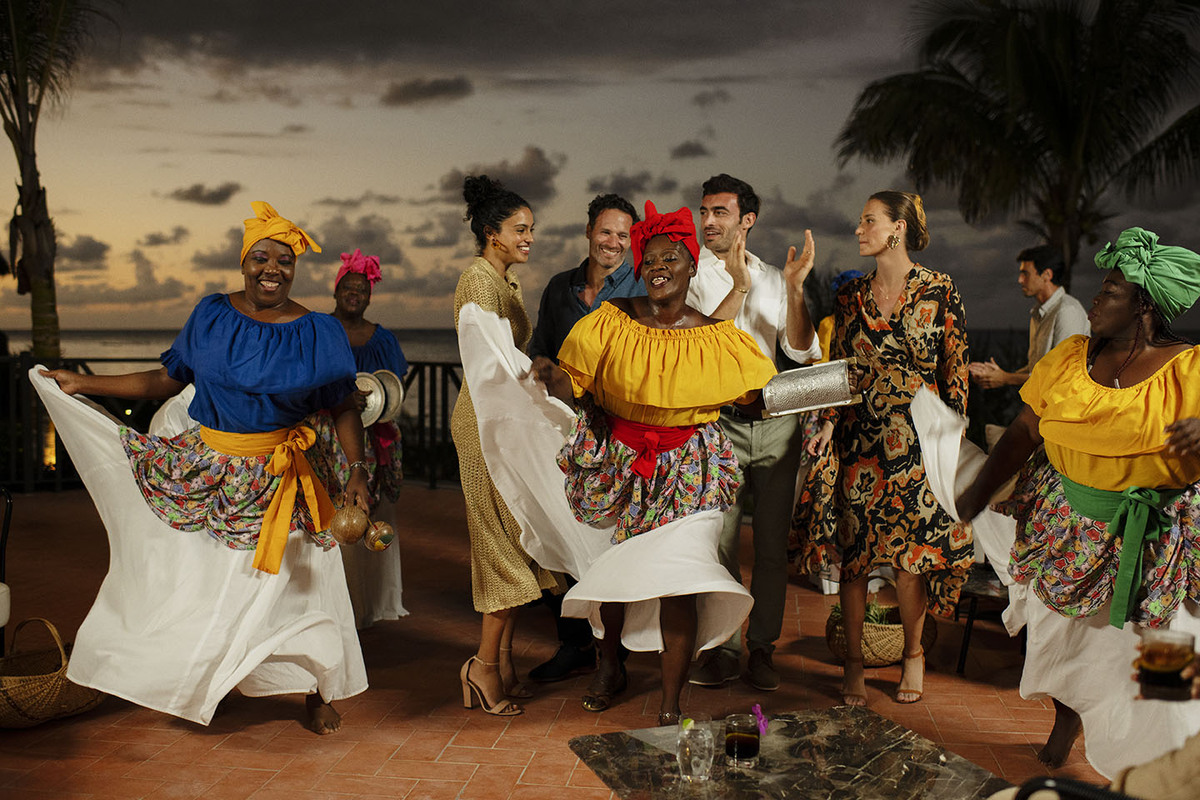
The Creole populations across the Americas forged a distinct linguistic and cultural identity out of the brutal constraints of colonial contact zones. You won't find a single uniform Creole group. Instead, you'll encounter a diverse spectrum of communities spanning the Caribbean, Louisiana, Central America, and South America. They transformed mixed colonial lexicons and displaced African traditions into fully formed, vibrant societies.
Understanding this mosaic means looking beyond simplistic historical narratives. Creole communities built sophisticated linguistic systems, dynamic culinary traditions, and resilient social structures that continue to shape modern nations. Let's examine how these communities formed, how their languages operate, and what challenges they face today.
Origins of the Creole Identity
The term Creole carries a complex history tied directly to European colonization. Originally derived from the Portuguese word crioulo—meaning someone born and raised in the master's house—the label initially distinguished white colonists born in the New World from those born in Europe.
As colonial societies expanded across the 17th and 18th centuries, the definition shifted. The term grew to encompass the children of enslaved Africans, indigenous populations, and people of mixed heritage. This linguistic shift reflects the reality of plantation economies. As reported in detailed articles by Reuters, the implications are worth noting.
Enslaved people from diverse linguistic backgrounds were forcibly brought together in the Americas. To communicate with one another and with their overseers, they initially developed pidgins—simplified contact languages with limited grammatical structures. When children grew up hearing these contact codes as their primary input, they naturally added complex grammatical rules, inflection systems, and deep syntax.
This linguistic alchemy produced native languages overnight. Rather than being broken variations of French, Spanish, or English, these new tongues emerged as fully functional linguistic systems.
Linguistic Heritage and Classification
Misconceptions about Creole languages persist. Many people mistakenly view them as slang or deficient dialects. Modern linguistics has thoroughly debunked this view, confirming that Creoles possess intricate structural rules and rich expressive capacity.
Across the Americas, these languages generally fall into four major families:
- French-based Creoles: Spoken widely in Haiti, Martinique, Guadeloupe, Dominica, and Louisiana. Haitian Creole (Kreyòl Ayisyen) boasts millions of native speakers and formal recognition as an official language.
- English-based Creoles: Found throughout the Caribbean basin, including Jamaica, Belize (Kriol), Trinidad and Tobago, and the Atlantic coast of Central America.
- Spanish-based Creoles: Present in specific pockets of the Caribbean and parts of Colombia, such as the Palenquero language spoken in San Basilio de Palenque.
- Portuguese-based Creoles: Documented in various contact zones and historic trading posts, influencing regional dialects and cultural phrasing throughout South America.
Grammatically, these languages often use particle systems for tense and mood rather than heavy verb conjugation. For example, marker words precede verbs to indicate past or future actions, streamlining communication while maintaining high precision. Younger generations now blend these traditional structures with global languages, ensuring that the linguistic mosaic keeps evolving.
Cultural Expressions: Cuisine, Music, and Spirituality
Creole culture expresses itself most visibly through daily practices that blend European, African, and indigenous elements. These traditions form the heartbeat of local identities in regions like New Orleans, Port-au-Prince, and Kingston.
Culinary Traditions
Food serves as a direct window into Creole history. In Louisiana, Creole cooking merges French culinary foundations—such as the classic mirepoix—with West African, Spanish, and Native American ingredients. The substitution of bell peppers, onions, and celery creates the local aromatic base, while dishes like gumbo integrate okra (an African import) and file powder (Choctaw dried sassafras leaves).
Similarly, Caribbean Creole cuisine relies on heavy seasoning, local tubers, and complex spice rubs. These recipes survived because enslaved cooks creatively transformed meager food rations into nourishing, celebratory meals.
Music and Rhythm
Syncopated rhythms define Creole music across the hemisphere. The brass-heavy syncopation of New Orleans jazz, the driving percussion of Haitian Kompa, and the festive beats of Caribbean Soca all trace back to ancestral gatherings where drumming and communal dance preserved cultural memory under repressive laws.
Syncretic Spirituality
Religious practices among Creole populations often blend European Catholicism with traditional African cosmologies and indigenous beliefs. Practices like Haitian Vodou, Cuban Santería, and Louisiana Hoodoo provide spiritual community support and cosmological frameworks. These systems helped practitioners preserve sacred herbal knowledge, ritual art forms, and community solidarity despite centuries of suppression.
Political Recognition and Modern Challenges
For generations, state authorities suppressed Creole languages in favor of standard national tongues like French, Spanish, or English. Schools routinely punished children for speaking their native Creole, branding it as backward or uneducated.
Change has arrived slowly through grassroots advocacy and legal battles. In Haiti, decades of activism led to the 2012 constitutional recognition of Haitian Creole as an official language alongside French, opening doors for education and government administration in native tongues. In Louisiana, cultural non-profits and university programs actively work to record remaining speakers and teach Louisiana Creole to new generations.
Urban migration creates a new set of challenges. Younger Creoles often feel caught between honoring ancestral roots and assimilating into fast-paced national cultures. Navigating this tension requires community centers, digital archives, and local media to keep the language and history accessible.
Frequently Asked Questions
Are Creole languages mutually intelligible?
No. While many share structural similarities due to common European lexicons, a speaker of Haitian Creole cannot automatically understand Jamaican Patois or Louisiana Creole. Each developed independently based on the specific colonial languages and African linguistic inputs present in its region.
How do Creoles differ from pidgins?
A pidgin is a simplified contact language used temporarily for trade between groups who do not share a common tongue. It has no native speakers. A Creole develops when children learn that pidgin as their native language, instinctively adding complete grammatical rules, complex syntax, and a robust vocabulary.
Is Louisiana Creole the same as Cajun culture?
No, though they share geographic space. Cajun culture stems from French Acadians who migrated from Nova Scotia to Louisiana in the 18th century. Creole culture in Louisiana developed earlier, rooted in the descendants of French, Spanish, African, and Caribbean settlers living in and around New Orleans.
Can you learn to speak a Creole language online?
Yes. Platforms like Duolingo offer courses in Haitian Creole, and various cultural preservation websites provide dictionaries, audio guides, and grammar books for regional variations like Louisiana Creole.



