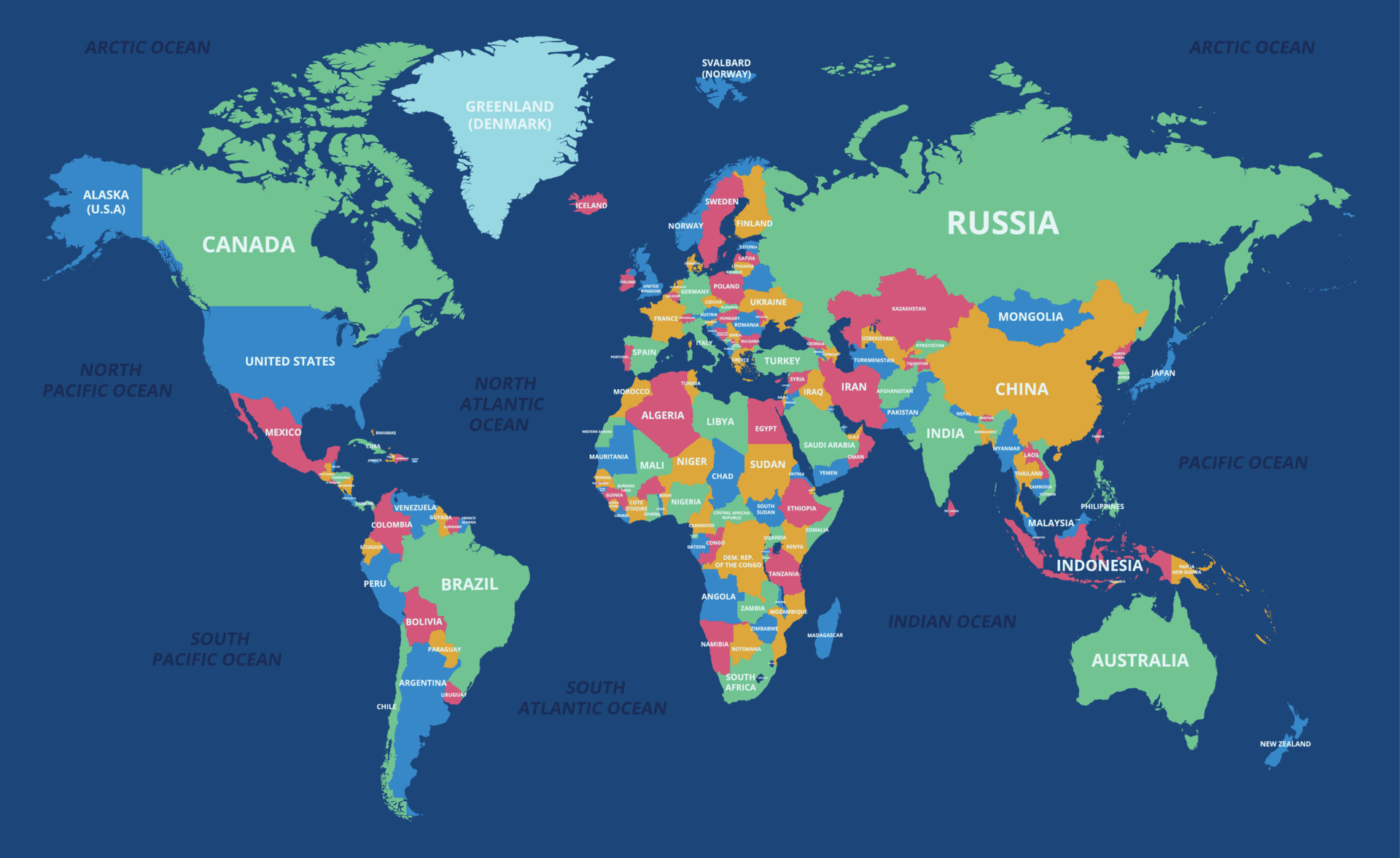
Are there any countries starting with X? If you've ever spent time playing geography trivia games, pouring over world maps, or trying to win an argument about global borders, you've probably searched for a nation beginning with this rare letter. The short answer is simple: there are zero sovereign countries starting with the letter X recognized by the United Nations.
While that might seem like a disappointing end to a geographic treasure hunt, it opens up a much more fascinating look at linguistic quirks, disputed territories, autonomous regions, and why certain letters are entirely absent from the official roster of independent states. Let's break down the truth behind the letter X on the global map, examine why no sovereign nations bear this initial, and explore the regions, cities, and cultural zones that often spark confusion.
Why No Sovereign Countries Start With X
To understand why zero UN member states begin with X, you have to look at how languages evolve, how countries are named, and the phonetic history of global nomenclature. Out of the 195 sovereign countries recognized worldwide (including Vatican City and Palestine), names derive from indigenous roots, colonial histories, descriptive geographical features, or historical figures.
Phonetically, the letter X is one of the rarest initial sounds in global languages. In English, Spanish, French, and many other Indo-European tongues, words starting with X are almost exclusively loanwords from Greek, Nahuatl, or Mandarin Chinese romanization (pinyin). Indigenous languages in regions that eventually formed major modern nation-states simply did not use an "ks" or "z" sound at the beginning of primary tribal or regional identifiers in a way that survived modern cartography as an initial X.
Furthermore, when cartographers and international bodies standardized country names in English and French during the colonial and post-colonial eras, names were transliterated based on local pronunciations. Sounds represented by X in pinyin (like Xi) are pronounced like "sh" or "ch" to an English speaker, which is why regions like Xizang are commonly known by entirely different anglicized names in everyday speech.
Autonomous Regions and Territories Often Mistaken for Countries
Because people desperately want an answer when playing word games or trivia, several sub-national entities, autonomous zones, and historical places are frequently misidentified as countries starting with X. Let's clear up what these places actually are and why they don't count as independent nations.
Xizang (The Tibet Autonomous Region)
The most common geographic entry starting with X on official maps is Xizang, which is the official pinyin romanization used by the government of China for the Tibet Autonomous Region.
While Tibet has a distinct culture, history, and spiritual lineage tied to Tibetan Buddhism, it is not an independent country. It is legally and administratively administered as an autonomous region of the People's Republic of China. Spanning the high-altitude Tibetan Plateau, the region covers over 1.2 million square kilometers. While its unique linguistic and religious heritage makes it feel like an entirely different world to travelers, it holds no seat at the United Nations as a separate sovereign state.
Xiamen
Another frequently cited entry is Xiamen, a major port city on the southeast coast of Fujian Province, China. Known historically to Westerners as Amador or Amoy, Xiamen is famous for its sea gardens, colonial-era architecture on Gulangyu Island, and status as a major special economic zone.
Despite its global trade significance and distinct Hokkien dialect culture, Xiamen is a municipality—not a country. It serves as a vital economic hub, but mixing it up with a sovereign nation is a common cartographic error.
Historical and Indigenous Enclaves
If you dig deep into anthropological maps or linguistic distributions, you'll encounter groups like the Xhosa people of South Africa. The Xhosa nation is an ethnic group and linguistic community comprising millions of people primarily in the Eastern and Western Cape provinces of South Africa. They speak isiXhosa, a click language known for its distinctive phonetic sounds. While they possess a proud, distinct national identity and rich cultural heritage, they reside within the sovereign borders of the Republic of South Africa rather than holding a separate nation-state.
Similarly, various indigenous place names in the Americas—such as regions in Mexico influenced by Nahuatl or Zapotec languages containing the letter X—refer to local towns, municipalities, or archaeological sites (like Xochimilco), none of which hold sovereign country status.
The Alphabetical Gap: How Other Rare Letters Fare
If X is completely shut out of the sovereign country list, how do other unusual letters perform on the world stage? Looking at the complete roster of UN member states reveals interesting patterns about linguistic representation in global politics.
- The Letter Q: Home to Qatar, a sovereign Arab emirate situated on the Qatar Peninsula in the Middle East. Qatar breaks the drought for rare initial letters with its globally influential economy fueled by natural gas reserves.
- The Letter W: There are zero sovereign countries starting with W. While Wales is globally famous, it is a constituent country of the United Kingdom rather than an independent UN member state.
- The Letter Y: Represented by Yemen, located at the southern end of the Arabian Peninsula. Yemen has a rich ancient history as a center of trade and spice routes.
- The Letter Z: Home to Zambia and Zimbabwe, both landlocked nations in southern Africa that derived their modern names from historical rivers and ancient stone city ruins.
Compared to W and X, which sit completely empty at the sovereign level, letters like Q, Y, and Z manage to claim at least one or two spots on the official map.
Common Mistakes and Trivia Traps
When people look for countries starting with X online, they often fall victim to fictional maps, AI-generated cartography myths, or internet hoaxes. Understanding these traps can save you from spreading misinformation.
One common issue is confusing fictional nations from literature, gaming, or fantasy universes with real geography. Online worldbuilding communities frequently invent fictional island chains or lost continents starting with X for tabletop roleplaying games or alternate history forums. When these map concepts circulate on social media without context, casual readers sometimes mistake them for newly discovered real-world territories.
Another trap is misreading geographic abbreviations. For example, postal codes, international vehicle registration codes (like transport markers), or weather tracking designations sometimes use X as an administrative prefix for experimental zones or unassigned sectors, leading automated web scrapers to misclassify them as nations.
Frequently Asked Questions
Are there any territories or islands starting with X?
There are very few. Most places starting with X are local administrative districts, cities like Xiamen in China, or autonomous regions like Xizang (Tibet). Truly independent island nations do not use this initial.
Why doesn't the UN recognize any countries starting with X?
Country names emerge from historical and linguistic evolution. Because no major indigenous root language that gave rise to a modern sovereign state utilized an initial X sound that persisted through Western translation, no nation fits the criteria.
Is Tibet a country starting with X?
No. Tibet is officially romanized as Xizang in Chinese administrative maps, but it is an autonomous region within China, not an independent UN-recognized country.
What is the rarest starting letter for a country name?
Both W and X have zero sovereign countries. However, Q is the rarest letter to feature an internationally recognized UN member state, represented solely by Qatar.



