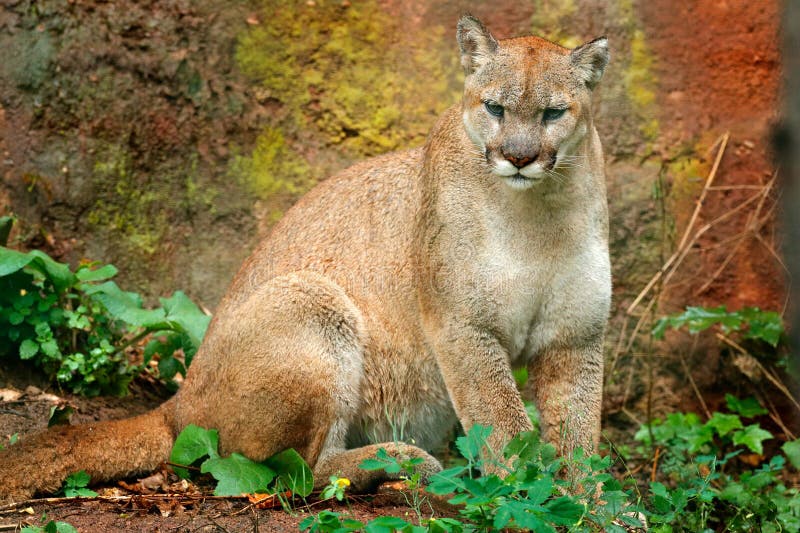
Cougar sightings in Illinois spark intense public curiosity, but resident populations don't exist in the Prairie State. If you spot a large cat, it's almost certainly a young male passing through from western breeding grounds. Native populations vanished before 1870 due to habitat loss and hunting, meaning every modern encounter involves a transient traveler rather than a permanent local resident.
Understanding the reality behind these rare encounters requires looking at how state biologists track them, why these big cats show up, and what you should do if you ever cross paths with one.
The History of Cougars in Illinois
Before European settlement, mountain lions ranged freely across every county in Illinois. As pioneers cleared forests for agriculture and hunted relentlessly, the local ecosystem collapsed. By 1870, the species was completely extirpated from the state.
For more than a century, Illinois remained entirely free of large wild cats. That changed in the early 2000s as western populations in states like South Dakota rebounded and expanded. Young male cougars, desperate to find new territory and avoid dominant older males, began walking hundreds of miles eastward.
State records show that since 2002, the Illinois Department of Natural Resources (IDNR) has confirmed only a handful of individual animals. These rare visitors have turned up in various corners of the state, from rural southern river bottoms to suburban northern neighborhoods, usually identified by trail cameras, tracks, or unfortunate vehicle collisions.
Why Young Males Wander Into the Prairie State
The cougars appearing in Illinois aren't escaping from captivity, nor are they part of a secret breeding population. They are natural wanderers known as dispersers.
When a young male cougar reaches maturity—typically around two years old—dominant males chase him away from his home range. To find an unoccupied territory and potential mates, the young cat must travel. This instinct drives them across vast distances, pushing them through unfavorable terrain like agricultural fields, interstate highways, and fragmented woodlots in the Midwest.
DNA testing on previous Illinois arrivals confirmed a genetic link to the Black Hills population in South Dakota. A journey of that magnitude spans hundreds of miles. Along the way, these cats use river corridors, railroad tracks, and forested strips to move undetected, occasionally triggering a trail camera or startling a landowner.
How Wildlife Officials Confirm a Sighting
Distinguishing an actual mountain lion from a domestic pet or native wildlife takes strict verification. The IDNR sets a very high bar before logging an official record. Blurry photographs or unverified footprints aren't enough.
Biologists look for physical evidence that leaves no room for doubt:
- Clear, high-resolution photographs or video footage showing distinct anatomical features.
- Physical tracks measuring three to four inches across with visible lobed pads and no claw marks.
- Biological samples such as hair, scat, or DNA collected from a kill site.
- Direct physical evidence like a carcass recovered by conservation police.
Most public reports turn out to be bobcats, large domestic dogs, or coyotes. Bobcats are smaller, have short bobbed tails, and feature spotted coats, but panic often turns a normal bobcat into a massive cougar in the observer's mind.
What to Do If You Encounter a Mountain Lion
Encounters remain extraordinarily rare, but knowing how to react keeps you safe if the unexpected happens. Because cougars are ambush predators, running triggers their chase instinct.
Stand your ground immediately. Pick up small children and pets so they don't appear as easy prey. Make yourself look as large as possible by raising your arms, opening a jacket, or standing on higher ground. Speak to the animal in a firm, loud voice, but avoid high-pitched screaming.
Back away slowly while keeping your eyes on the cat. Never turn your back and run. Give the animal an obvious escape route so it doesn't feel cornered. If the cougar behaves aggressively, throw rocks, sticks, or whatever is nearby, and fight back aggressively if it makes physical contact.
Frequently Asked Questions
Are cougars protected by law in Illinois?
Yes. Even though they don't have a resident breeding population, mountain lions are protected under the Illinois Wildlife Code. You cannot hunt, trap, or kill a cougar unless it presents an immediate, direct threat to human safety.
Could a cougar population re-establish itself in Illinois?
Biologists consider a permanent return unlikely. Illinois lacks the vast, contiguous tracts of deep forest and remote wilderness required to sustain a healthy breeding population of large apex predators. Most animals that arrive are transient males that eventually move on or perish.
How can I tell a cougar track from a dog track?
Cougar tracks are round, typically three to four inches wide, and show distinct lobes on the heel pad with no claw impressions. Domestic dogs and coyotes almost always leave claw marks in their prints because their claws don't retract fully.
Where should I report a suspected sighting?
If you find physical evidence or capture clear photo proof of a large cat, you can submit your observations directly through the Wildlife Illinois reporting system. Local conservation police and state biologists review every submission to monitor animal movements.



