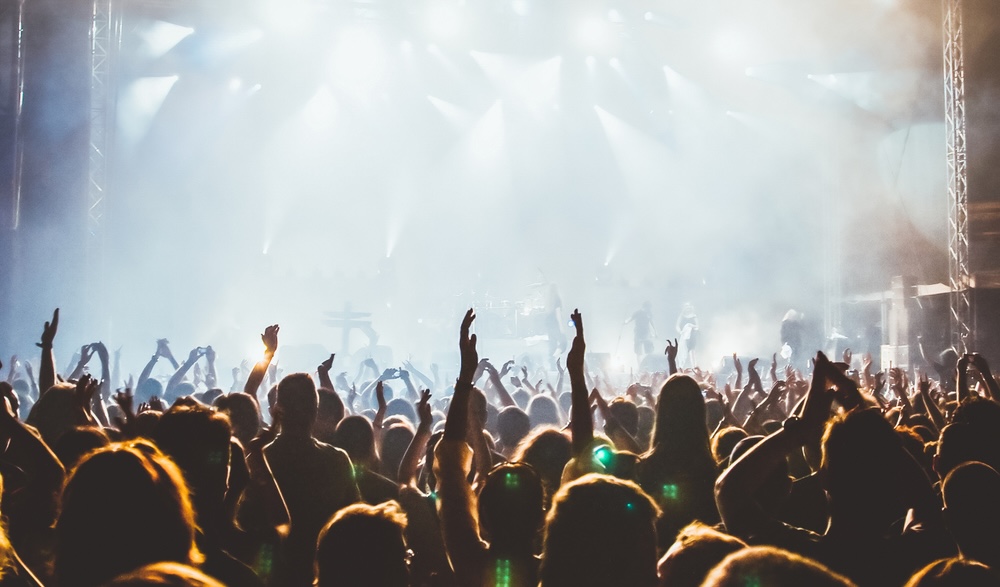
A concert review is rarely just about the setlist or the quality of the sound mixing. Years after the house lights come up and the stadium empties, a piece of writing about a live performance transforms into something entirely different. It becomes a time capsule. When you read a review you penned or clipped years ago, you aren't just remembering a band; you are remembering who you were, who you stood next to in the crowd, and what the world felt like on that specific night.
Live music operates in the present tense, fleeting and impossible to fully replicate. Yet, capturing that experience in words preserves a sensory snapshot that photos and ticket stubs often miss. Whether you are chronicling an arena show at a massive venue like MetLife Stadium or an intimate basement gig, writing about live music anchors ephemeral moments into permanent history. This guide explores why concert writing endures, how to craft reviews that capture the true spirit of an event, and how these personal archives shape our connection to art over time.
The Psychology of Live Music Memory
Human memory is notoriously unreliable, especially when filtered through the sensory overload of a live concert. Strobe lights, deafening bass, crowd adrenaline, and late-night exhaustion conspire to blur the edges of even the most unforgettable nights.
When you write down your thoughts immediately after a show, you fight against this natural decay. You lock in details that would otherwise vanish by morning:
- The exact moment the crowd realized the opening act was joined by a surprise guest.
- The weather condition walking out of the amphitheater into the cool night air.
- The specific lyric that made everyone around you look at each other and scream in unison.
- The physical sensation of the kick drum vibrating straight through the concrete floor.
Psychologists note that sensory triggers like music and writing activate autobiographical memory far more effectively than passive observation. A concert review serves as an emotional anchor. When you revisit it years later, your brain doesn't just recall the concert; it reconstructs the entire era of your life associated with it.
Why Standard Reviews Fall Short as Time Capsules
Many music publications churn out formulaic concert reports that read like automated spreadsheets. They list the opener, critique the lighting cues, tally the number of tracks played from the latest album, and offer a sterile verdict on the performance. While this informs a casual reader looking for ticket advice, it fails miserably as a personal time capsule.
To build a review that survives the test of time, you have to look beyond the technical execution of the tour. Great concert writing balances objective observation with subjective honesty.
Capturing the Cultural Milieu
A truly resonant concert review places the performance inside its cultural context. What was happening in the world when the band took the stage? What was the general mood of the city?
For instance, a stadium tour in the summer of 2021 carried a vastly different emotional weight than a show played in 2026. The relief of communal gathering after years of isolation changed how every guitar chord landed. Ignoring the surrounding atmosphere turns a review into a dry report rather than a living document of history.
The Venue as a Character
Venues hold stories. A concrete monolith like MetLife Stadium creates a starkly different experience than a historic theater or a sweaty club. A time-capsule-worthy review acknowledges the environment. It mentions the concourse lines, the obstructed sightlines, the acoustics bouncing off the upper deck, and the sea of humanity spilling out into the parking lots afterward.
How to Write a Concert Review That Ages Well
If your goal is to create a piece of writing that remains compelling to read a decade from now, your approach needs to shift away from standard journalistic detachment. You are writing a letter to your future self, even if an audience reads it today.
1. Write Immediately After the Show
Do not wait three days to draft your thoughts. The best time to write is while your ears are still ringing on the train ride home or sitting in a parked car outside the venue. The raw adrenaline preserves your unfiltered perspective. You can clean up the prose later, but capture the visceral reactions while they are sharp.
2. Focus on Human Details
Setlists change and albums fade from relevance, but human behavior remains constant. Pay attention to the people around you.
- Notice the teenager seeing their favorite band live for the very first time.
- Observe the older couple holding hands in the aisle, singing every word to a deep cut from 1998.
- Describe the shared nod of respect with a stranger when the band drops into an unexpected transition.
These details ground the review in reality, making it infinitely more relatable when read years down the line.
3. Acknowledge Your Own Flaws and Biases
A great time capsule doesn't pretend to be an objective decree from on high. Admit if you were exhausted, if you were hoping they would play an obscure song they skipped, or if you drank too many overpriced stadium lemonades. Honesty ages much better than manufactured authority.
The Shift from Physical Memorabilia to Digital Archives
For generations, concert time capsules consisted of physical artifacts: paper ticket stubs torn at the gate, t-shirts bought at the merch booth, guitar picks caught in the front row, and newspaper clippings shoved into scrapbooks.
Today, the landscape has shifted heavily toward digital preservation.
- Digital ticketing apps replace physical stubs, robbing fans of tangible souvenirs.
- Social media highlights and phone videos capture shaky 15-second clips that rarely reflect the actual feeling of being in the room.
Because physical ephemera is disappearing, the written word has become more vital than ever. A detailed paragraph written in a notes app or published on a personal blog preserves the texture of the night in a way a compressed video file cannot. It forces you to articulate the experience rather than just recording it passively.
Common Pitfalls in Concert Writing
Writers often fall into predictable traps when documenting live music. Avoiding these mistakes ensures your writing remains engaging and authentic.
- Overusing superlatives: Saying every show was the "best night of my life" dilutes the impact when you actually experience a once-in-a-lifetime performance.
- Ignoring the flaws: Perfection is boring. If the singer's voice cracked during the ballad or the sound system cut out for two songs, mention it. Those imperfections make the memory human.
- Treating the opening act as an afterthought: The opening band often defines the era just as much as the headliner. Documenting who was on the bill provides crucial context for future readers.
Frequently Asked Questions
Why do concert reviews make good time capsules?
Concerts are sensory-heavy, emotional experiences tied to specific eras of our lives. A well-written review captures not just the music, but the cultural climate, personal mindset, and physical environment of that exact night, allowing you to vividly relive it years later.
Should I focus on the setlist or the atmosphere?
A balanced review includes both, but atmosphere and personal reaction age much better than a simple list of songs. Setlists can easily be looked up online, whereas your unique perspective and emotional state cannot be replicated.
How do I write a review if I am not a professional music critic?
You don't need press credentials to write a meaningful review. Write honestly about how the music made you feel, what you noticed in the crowd, and why the night mattered to you. Personal sincerity always outperforms academic critique.
What is the best way to preserve concert memories digitally?
Keep a dedicated journal, a personal blog, or organized digital notes alongside your photos. Adding a date, venue name, and a few paragraphs about who you attended with transforms a simple photo gallery into a rich historical archive of your life.



