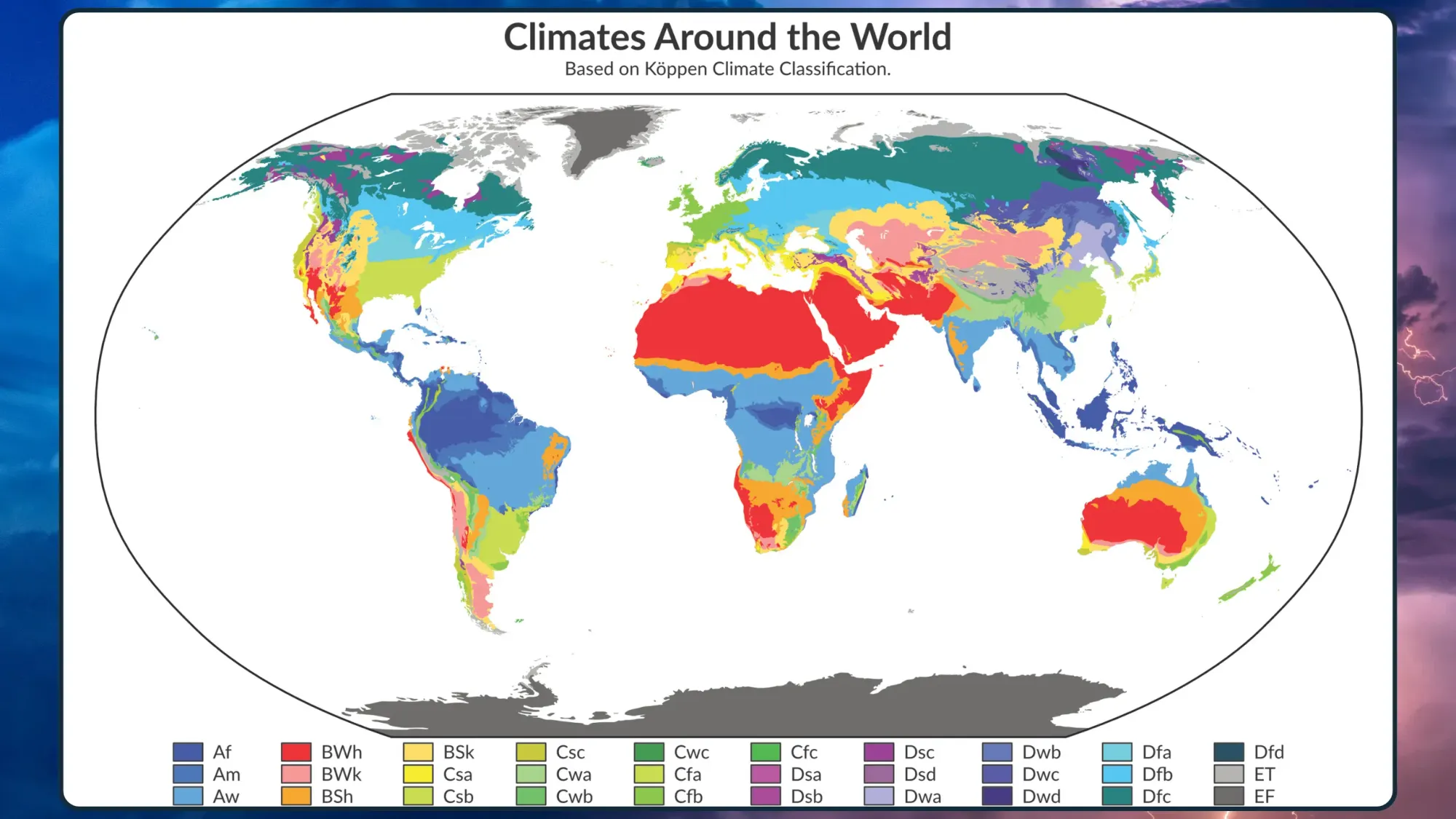
Discussions surrounding climate change often generate intense debate, pitting catastrophic predictions against skepticism regarding data integrity and policy impacts. Understanding the actual state of environmental research requires looking past political rhetoric and examining how scientists gather, analyze, and test global temperature and weather records.
At its core, modern climate research relies on empirical observation, historical proxy data, and atmospheric physics. Rather than depending on alarmist rhetoric or dismissive skepticism, researchers evaluate long-term trends using standardized methodologies subject to peer review. This article examines the fundamentals of climate science, the methods researchers use to model future scenarios, and how the scientific community separates robust evidence from speculation.
The Foundations of Modern Climate Science
Scientific understanding of the Earth's climate system rests on well-established principles of physics, particularly how greenhouse gases absorb and emit thermal radiation. When carbon dioxide, methane, and water vapor enter the atmosphere, they trap heat that would otherwise radiate back into space. This mechanism, known as the greenhouse effect, has been understood in laboratory physics since the nineteenth century.
To track changes over time, scientists rely on multiple independent data streams rather than a single source. These include:
- Direct instrumental temperature records gathered from weather stations worldwide since the late nineteenth century.
- Ocean temperature and salinity measurements collected via global buoy networks such as NOAA's Global Ocean Observing System.
- Ice cores extracted from glaciers and polar ice sheets, which preserve atmospheric composition samples dating back hundreds of thousands of years.
- Tree rings and sediment layers that act as natural proxies for historical temperature and precipitation patterns.
By combining these datasets, researchers construct a comprehensive picture of global climatic shifts. The Intergovernmental Panel on Climate Change synthesizes these findings through periodic assessment reports, which undergo rigorous multi-stage reviews by independent experts worldwide.
Evaluating Predictive Models and Uncertainty
A central point of contention in public discourse involves the accuracy of climate computer models. Critics often argue that climate projections are unreliable because they rely on complex simulations of future human behavior and natural feedbacks.
Climate models are mathematical representations of the Earth's atmosphere, oceans, land surface, and ice. To test their validity, scientists use hindcasting. They input historical data from past decades—such as 1950—into a model and run the simulation forward to see how accurately it predicts known outcomes up to the present day. Models that successfully replicate past climate trends gain credibility for projecting future conditions.
However, uncertainty remains an inherent part of modeling. Researchers categorize projections into different scenarios based on future greenhouse gas emissions, policy interventions, and technological shifts. These scenarios don't predict a single inevitable future; instead, they outline a range of plausible outcomes to help policymakers prepare for various risks.
Separating Evidence from Hyperbole
Public debates frequently amplify extreme viewpoints on both sides. On one end, sensationalized media headlines sometimes exaggerate near-term catastrophes, stripping away nuance and scientific qualification. On the other end, blanket dismissals of established data often mischaracterize normal scientific debate as evidence of widespread scientific fraud.
Real scientific inquiry thrives on skepticism. Researchers constantly question assumptions, re-examine datasets, and test alternative hypotheses regarding solar variability, cosmic rays, and oceanic cycles. When anomalies appear, scientists investigate them rather than sweeping them under the rug.
For instance, past discrepancies between surface thermometer readings and satellite measurements sparked intense debate in the scientific community. Rather than ignoring the conflict, researchers spent years refining satellite calibration techniques and correcting instrumental drift until the underlying causes of the discrepancies were understood and resolved.
Practical Steps for Assessing Environmental Claims
Navigating the vast amount of information regarding global climate trends requires a critical eye. When you encounter a claim about environmental science, evaluate it using a few straightforward guidelines.
- Check the source. Prioritize peer-reviewed journals, institutional reports from recognized scientific bodies, and data from established meteorological agencies.
- Look for consensus versus outlier studies. Science advances through accumulated evidence, not single isolated papers that contradict decades of multidisciplinary findings.
- Distinguish between weather and climate. Weather reflects short-term atmospheric conditions in a specific location, whereas climate describes long-term statistical trends over decades or centuries.
- Examine the methodology. Credible reports transparently explain how data was collected, what assumptions were made, and where limitations exist.
Frequently Asked Questions
How do scientists know current warming isn't just part of a natural cycle?
Historical climate shifts, such as ice ages and medieval warm periods, were driven by natural factors like orbital changes, solar output, and volcanic activity. Current warming trends occur at a rate vastly faster than historical natural cycles. Furthermore, isotopic analysis shows that the excess carbon dioxide accumulating in the atmosphere comes specifically from burning fossil fuels rather than natural volcanic outgassing.
Why do climate predictions sometimes change?
As new data becomes available and computer modeling technology improves, scientific projections are refined. Adjusting models in light of new evidence represents the normal functioning of the scientific method, not a failure of the research process.
Is there a true consensus among scientists regarding global warming?
Multiple independent surveys of peer-reviewed climate literature show that over ninety-seven percent of actively publishing climate scientists agree that human activities are the primary driver of recent global temperature increases. This consensus stems from the convergence of independent lines of evidence rather than political alignment.
What role do oceans play in regulating global temperatures?
Oceans absorb more than ninety percent of the excess heat trapped by greenhouse gases and roughly a quarter of human-generated carbon emissions. This oceanic heat uptake buffers atmospheric warming but leads to secondary impacts, including marine heatwaves, sea level rise, and ocean acidification.



