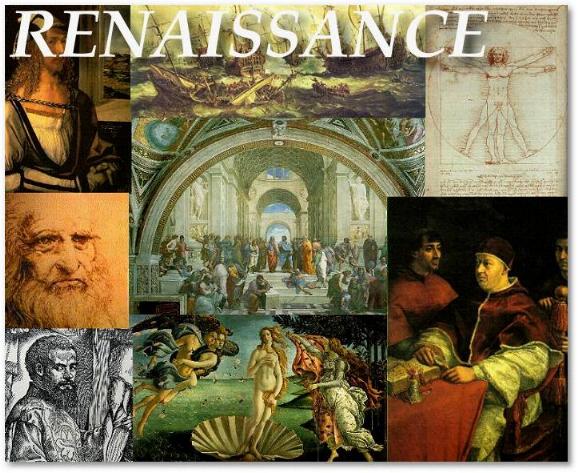
History rarely moves in a straight line. Instead, it loops back on itself, pulling old threads to weave entirely new fabrics. When European thinkers in the fourteenth through seventeenth centuries began digging through monastery libraries for lost Greek and Roman manuscripts, they weren't just indulging in nostalgia. They were hunting for tools to dismantle a rigid intellectual gridlock. This recovery of classical wisdom triggered a cultural reawakening that reshaped governance, science, art, and individual identity, forging the blueprints of the modern world.
At its core, this transformation wasn't a passive worship of antiquity. It was an active, often radical interrogation of medieval orthodoxies. Thinkers didn't accept ancient texts as infallible dogmas; they used them as springboards for independent inquiry. By reviving classical humanism, mathematics, and empirical observation, the era bridged the gap between ancient philosophy and modern empirical science. Understanding how this intellectual engine room operated reveals why our contemporary institutions, legal systems, and cultural norms look the way they do today.
The Recovery of Lost Texts and the Birth of Humanism
The intellectual shift began in dusty archives. Scholars like Petrarch scoured European monasteries for forgotten works by Cicero, Quintilian, and Livy. These manuscripts offered a startling alternative to medieval scholasticism, which focused heavily on theological disputation and commentary. Classical texts presented a worldview where human agency, civic duty, and earthly life mattered deeply.
This rediscovery birthed Renaissance humanism, an educational and cultural movement that prioritized grammar, rhetoric, history, and moral philosophy—the studia humanitatis. Humanists argued that studying the best minds of Greece and Rome could cultivate virtuous, effective citizens.
- Civic Humanism: Centered in active city-states like Florence, intellectuals argued that education must serve the public good rather than retreat into monastic isolation.
- Textual Criticism: Scholars developed philology—the critical analysis of language—to date manuscripts, expose forgeries, and restore corrupt texts to their original forms.
- Secular Education: Curriculum expanded beyond clerical training to include history, poetry, and ethics, shaping a new class of literate diplomats, merchants, and administrators.
This emphasis on critical reading trained people to question authority, a habit of mind that proved explosive when applied to both religious institutions and natural philosophy.
Shifting Paradigms in Science and Empirical Inquiry
Classical revival wasn't restricted to literature and philosophy. The recovery of ancient Greek scientific and mathematical treatises—particularly those of Archimedes, Euclid, and Pythagoras—re-energized European mathematics and physics. Crucially, the rediscovery of texts like Lucretius’s De Rerum Natura introduced atomism and mechanical views of nature to a continent dominated by Aristotelian physics.
Renaissance scholars didn't just translate these works; they tested them. When observations clashed with ancient texts, observers trusted their instruments over inherited authority. This friction gave birth to the Scientific Revolution.
- Mathematical Rigor: The translation of ancient geometric texts allowed artists and engineers to master linear perspective, which bled directly into accurate mapping, navigation, and structural design.
- Empirical Anatomy: Andreas Vesalius dissected human corpses directly, correcting centuries of medical errors derived from the second-century physician Galen.
- Astronomical Upheaval: Nicolaus Copernicus used ancient mathematical critiques of Ptolemy to formulate his heliocentric model, setting the stage for Galileo and Kepler.
By treating nature as a physical system governed by discoverable mathematical laws rather than arbitrary divine whim, the era laid the groundwork for modern technology and industrial capability.
Political Philosophy and the Reinvention of the State
Medieval governance was largely decentralized, fragmented by feudal loyalties and dominated by the universal claims of the Papacy and the Holy Roman Emperor. Classical political philosophy, particularly the rediscovery of Aristotle’s Politics and the histories of Livy and Tacitus, offered a radically different model: the sovereign civic state.
Niccolò Machiavelli analyzed Roman history in his Discourses on Livy, extracting hardheaded lessons on how republics survive, expand, and maintain civil order. He stripped politics away from medieval Christian morality, treating statecraft as a practical, secular art based on human psychology and power dynamics.
Concurrently, thinkers resurrected the concept of natural rights and civic participation. While many Italian city-states devolved into oligarchies or princedoms, the intellectual space created by classical political theory established the vocabulary of modern republicanism. Concepts like the rule of law, the separation of civic duties, and the balancing of constitutional powers trace their intellectual lineage directly back to these Renaissance readings of classical antiquity.
Art, Proportion, and the Individual Perspective
Before this cultural pivot, European art was largely symbolic, flat, and focused on otherworldly transcendence. The revival of classical statuary and architectural ruins changed visual culture entirely. Artists looked at ancient Greek and Roman sculptures not as pagan relics, but as masters classes in anatomical truth, dynamic balance, and emotional resonance.
This aesthetic revolution mirrored the philosophical rise of individualism. Portraiture emerged not merely as a record of royal status, but as a psychological exploration of the unique human subject.
- Linear Perspective: Developed by architects like Filippo Brunelleschi, this geometric system allowed artists to render three-dimensional space accurately on a two-dimensional plane.
- Anatomical Precision: Artists performed dissections to understand muscle groups and skeletal structures, treating art as an empirical science.
- Human-Centric Design: Architecture shifted away from intimidating, soaring Gothic verticality toward classical proportions, symmetry, and human scale, which influenced urban planning for centuries.
You can explore more about how these shifts altered visual culture through resources like the The Metropolitan Museum of Art.
Common Misconceptions About the Classical Revival
Popular culture often paints the era as a sudden, magical lightning strike that instantly cured Europe of medieval backwardness. The reality was messier, slower, and fraught with contradictions.
- Myth 1: The Middle Ages were entirely dark and ignorant. In truth, medieval monks preserved the very classical manuscripts that humanists later found. The transition was an evolution, not a clean break.
- Myth 2: Renaissance thinkers abandoned Christianity. Almost all major humanists were deeply religious. They believed that recovering classical wisdom would purify, rather than destroy, Christian thought by uniting classical eloquence with biblical scholarship.
- Myth 3: Classical wisdom was universally accessible. The revival was initially an elite phenomenon, driven by wealthy patrons, courts, and university scholars, even if the printing press eventually democratized its outputs.
Recognizing these nuances prevents us from viewing history as a simple narrative of progress and helps us see it as a continuous dialogue with the past.
Frequently Asked Questions
What role did the printing press play in spreading classical wisdom?
Invented by Johannes Gutenberg in the fifteenth century, the printing press transformed the classical revival from an isolated Italian scholarly movement into a continental phenomenon. It allowed cheap, standardized copies of Greek and Latin texts, alongside vernacular translations, to circulate rapidly among merchants, artisans, and thinkers across Europe.
Did Renaissance thinkers invent humanism?
No. The term humanism comes from the nineteenth-century descriptor for the Renaissance studia humanitatis, but the roots of human-centered inquiry go back to ancient Greek sophists and philosophers like Socrates and Protagoras. Renaissance intellectuals revived and adapted these ancient educational frameworks for their own contemporary needs.
Why did the revival of antiquity happen specifically in Italy?
Italy was geographically littered with physical remnants of the Roman Empire, from broken aqueducts to ruined columns. Additionally, Italian city-states like Florence, Venice, and Milan accumulated immense commercial wealth, creating a merchant elite eager to spend money on art, architectural revivals, and scholarly patronage.
How does Renaissance classical humanism influence us today?
Our modern educational systems, legal concepts of civic responsibility, democratic ideals, and empirical approaches to science all draw heavily from the intellectual foundations laid during this period. The fundamental premise that human reason can understand and improve the world remains a direct inheritance of the era.



