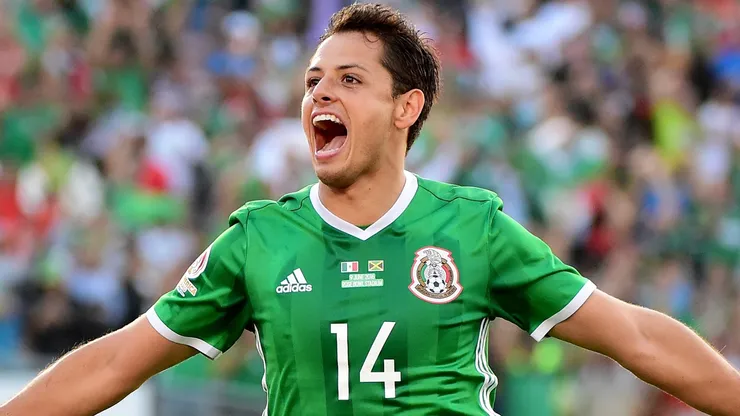
Javier Hernández arrived at Old Trafford in July 2010 with little fanfare, known mostly to dedicated scouts and Mexican football followers. Within months, the striker nicknamed Chicharito transformed into a cult hero and a lethal weapon for Sir Alex Ferguson. He didn't need elaborate build-up play or ninety minutes of heavy involvement to change a game. Instead, his razor-sharp movement and uncanny knack for being in the right place at the right time made him one of the most efficient goalscorers of the Premier League era.
The primary search intent behind exploring Chicharito's tenure at Manchester United centers on understanding how an unheralded signing from Liga MX became a high-impact European star. Fans and readers look for his exact statistics, his iconic moments under Ferguson, and the reasons why his movement inside the penalty box baffled elite defenders. This article breaks down his tactical value, his standout campaigns, and the lasting footprint he left behind in English football.
The Unlikely Ascent from Guadalajara to Old Trafford
Before joining Manchester United, Chicharito spent four years developing his craft at Chivas Guadalajara. United's chief scout Jim Lawlor tracked his progress closely, leading to a stealthy transfer agreement completed before the 2010 FIFA World Cup. That timing proved brilliant; after he scored impressive goals against France and Argentina in South Africa, his value skyrocketed, but United had already secured his signature for a reported fee of around seven million pounds.
His debut offered an immediate preview of what was to come. During the 2010 FA Community Shield against Chelsea at Wembley, Hernández scored an accidental yet hilarious goal, smashing a rebound straight into his own face and past Petr Čech. It wasn't pretty, but it crossed the line. It set the tone for a career defined by opportunistic poaching where aesthetics mattered far less than the final outcome.
The Sensational 2010-2011 Debut Season
Chicharito's first campaign in Manchester remains one of the most productive debut seasons for any foreign import in Premier League history. He netted 20 goals across all competitions, quickly benching seasoned veterans and forming a devastating partnership with Wayne Rooney.
Several key factors fueled his instant success:
- Elite Spatial Awareness: He read the trajectory of crosses and deflections milliseconds faster than central defenders.
- First-Time Finishes: He rarely took unnecessary touches, often striking the ball first-time with either foot.
- Super-Sub Impact: Even when used from the bench, he disrupted tired defenses with relentless, intelligent running.
His goals weren't just window dressing; they won crucial points. A looping header against Stoke City, a crucial brace against Marseille in the Champions League, and a record-breaking opening goal against Chelsea after just thirty-six seconds in May 2011 practically secured United their nineteenth league title. Fans voted him the Sir Matt Busby Player of the Year for that stellar debut.
Tactical Evolution and the Ferguson Era
Under Sir Alex Ferguson, Chicharito thrived because the managerial legend understood how to maximize the Mexican forward's distinct strengths. Ferguson rarely asked him to hold up the ball or engage in bruising physical battles with center-backs. Instead, he deployed Hernández as a pure penalty-box predator, stretching opposition defensive lines and punishing mistakes.
Even as Robin van Persie arrived in 2012 to spearhead the attack, Chicharito remained remarkably lethal. During the 2012-2013 title-winning season, he scored 18 goals, often operating in a rotational role. His hat-trick against Aston Villa and a dramatic late winner against Newcastle United highlighted his knack for delivering when the team needed a spark.
According to official Premier League records, Hernández finished his Premier League career with 53 goals across 158 appearances, boasting an elite minutes-per-goal ratio that outranked many regular starters of his era.
Life After Manchester: Departure and Legacy
When Ferguson retired in 2013, the club entered a turbulent transitional phase under David Moyes and Louis van Gaal. Following a productive loan spell at Real Madrid—where he scored the winning goal against Atlético Madrid in the Champions League quarter-finals—Chicharito permanently transferred to Bayer Leverkusen in August 2015.
Despite leaving Old Trafford years ago, his legacy has only grown stronger in hindsight. Modern football tactics often prioritize high-pressing forwards and multi-functional attackers, but Chicharito proved that the pure poacher still holds immense value at the highest level. His professional journey is documented extensively in archives like Wikipedia, reflecting his status as one of Mexico's greatest football exports.
Frequently Asked Questions
How many total goals did Chicharito score for Manchester United?
Chicharito scored 59 goals in 157 appearances across all competitions during his official tenure with Manchester United.
Did Chicharito win the Premier League with Manchester United?
Yes, he won two Premier League titles during his time at Old Trafford, claiming the trophy in both the 2010-2011 and 2012-2013 seasons.
Who discovered Chicharito for Manchester United?
United's chief scout Jim Lawlor played a pivotal role in monitoring Hernández in Mexico and recommending his signing to Sir Alex Ferguson prior to the 2010 World Cup.
Why did Manchester United sell Chicharito?
Following Sir Alex Ferguson's retirement, subsequent managers shifted tactical setups toward possession-heavy systems and forwards who offered more build-up play, leading Louis van Gaal to sell him to Bayer Leverkusen in 2015.


.jpg)
