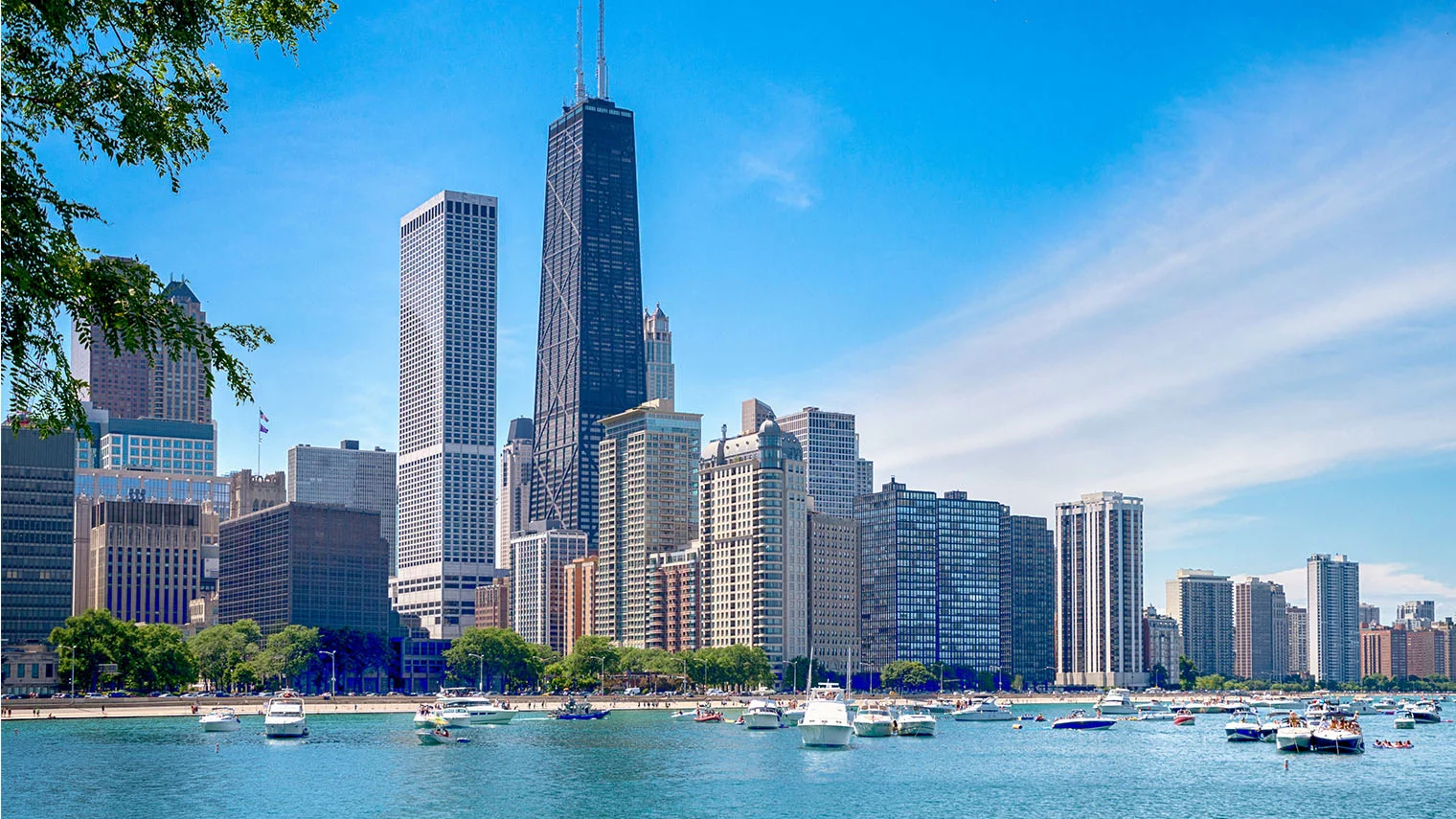
Chicago zip code 60601 anchors the northern edge of the downtown Loop and the southern bank of the Chicago River, packing intense commercial power, high-rise residential towers, and historic architecture into less than four-tenths of a square mile. While many casual visitors associate downtown Chicago strictly with sprawling municipal districts, this specific zone operates as a dense engine of wealth, corporate governance, and professional services. It bridges the gap between the commercial grandeur of Michigan Avenue and the gritty administrative machinery of the central business district.
Understanding how this micro-neighborhood functions requires looking past generic travel guides and examining its actual physical borders, demographic realities, and economic output. From the iconic towers lining Wacker Drive to the high-density residential high-rises soaring above ground level, this section of Cook County tells a very specific story about modern American urban core redevelopment.
Geographic Boundaries and Spatial Layout
The 60601 zip code occupies a compact footprint of roughly 0.39 square miles. Its borders stretch roughly from the Chicago River on the north and west, eastward toward Michigan Avenue and portions bordering Millennium Park, and south toward Randolph Street or Washington Street, depending on the exact block layout.
This hyper-vertical geography changes how space is used. Because ground-level land is scarce and expensive, buildings stretch thousands of feet into the air. Pedestrians navigate not just the surface streets, but also the multi-level system of Wacker Drive—with upper tiers for traditional traffic and lower levels dedicated to loading docks, service vehicles, and through-traffic. Beneath many of these buildings lies the Chicago Pedway network, an underground pedestrian system connecting commuters to transit hubs and office complexes without stepping outside during harsh Midwestern winters.
Economic Engine and Corporate Footprint
As part of the Loop, 60601 punches far above its weight class in economic terms. The area is heavily skewed toward professional, scientific, and technical services, alongside corporate headquarters, financial advisory firms, and high-end hospitality.
The presence of major multi-story office buildings along East and West Wacker Drive means thousands of workers commute into this zone daily. Law firms, accounting agencies, and tech startups occupy glass towers that command some of the highest commercial lease rates in the Midwest. Unlike industrial or manufacturing districts, the economy here runs on digital data, legal contracts, financial transactions, and corporate strategy.
Demographics and Residential Real Estate
Living in 60601 is a distinct urban experience. The population hovers around 15,000 residents, translating to an extreme population density of over 40,000 people per square mile. The demographic makeup leans heavily toward single professionals, young adults in their late twenties and thirties, and empty nesters who prefer high-rise living over suburban yards.
Household incomes in this zip code skew high, with median household incomes regularly topping $120,000, and a significant percentage of households earning well over $200,000. Housing stock consists almost entirely of high-rise condominium buildings and luxury rental apartments. Single-family detached homes do not exist here. Instead, residents live in vertical communities where amenities like 24-hour doormen, fitness centers, and rooftop terraces replace traditional backyards.
- High population density driven by high-rise apartment and condo towers.
- Median household income significantly higher than the national average.
- Predominantly single-person households or couples without children.
- Walkable access to public transit, including the Chicago Transit Authority rail lines.
Architectural Landmarks and Historic Evolution
The skyline within 60601 represents a living museum of architectural evolution. You can trace Chicago's structural history simply by walking a few blocks along the river. Older masonry and steel-frame structures sit blocks away from postmodern glass monoliths.
Wacker Drive itself was designed to relieve traffic congestion and elevate the city's aesthetic appeal along the riverfront, inspired by European boulevard design. Over the decades, old industrial warehouses and obsolete commercial buildings were torn down or gutted to make room for mixed-use skyscrapers. This continuous cycle of tearing down and rebuilding keeps the zip code modern, ensuring that prime real estate facing the Chicago River never stays vacant for long.
You can explore more about regional urban statistics through the U.S. Census Bureau or review local municipal guidelines via the City of Chicago Official Site.
Common Misconceptions About 60601
Out-of-towners often treat the entire Loop as a monolithic concrete jungle, but micro-neighborhoods like 60601 have distinct personalities. Another common myth is that nobody actually lives downtown. While older decades saw downtown empty out completely after 5:00 PM, the residential boom of the 21st century transformed 60601 into a 24/7 community with neighborhood grocery stores, dog parks, and local dining spots.
People also assume that all downtown zip codes are identical. In reality, 60601 balances riverfront views and park adjacency, setting it apart from the more purely financial or government-heavy blocks found further south in zip codes like 60602 or 60604.
Frequently Asked Questions
What neighborhoods are included in zip code 60601?
This zip code sits entirely within the Chicago Loop, bound by the Chicago River to the north and west, and stretching toward Michigan Avenue on the east.
Is 60601 a residential or commercial area?
It is a hybrid zone. While it features massive commercial office towers and corporate headquarters, it also contains thousands of high-rise residential apartments and condominiums.
What is the average cost of living in 60601?
The cost of living is high compared to the national average, driven primarily by steep housing costs, high-rise rental rates, and premium property values.
How do residents commute from 60601?
Most residents rely on public transportation, walking, or biking. The area offers immediate access to multiple Chicago Transit Authority train lines, buses, and the underground Pedway network.



