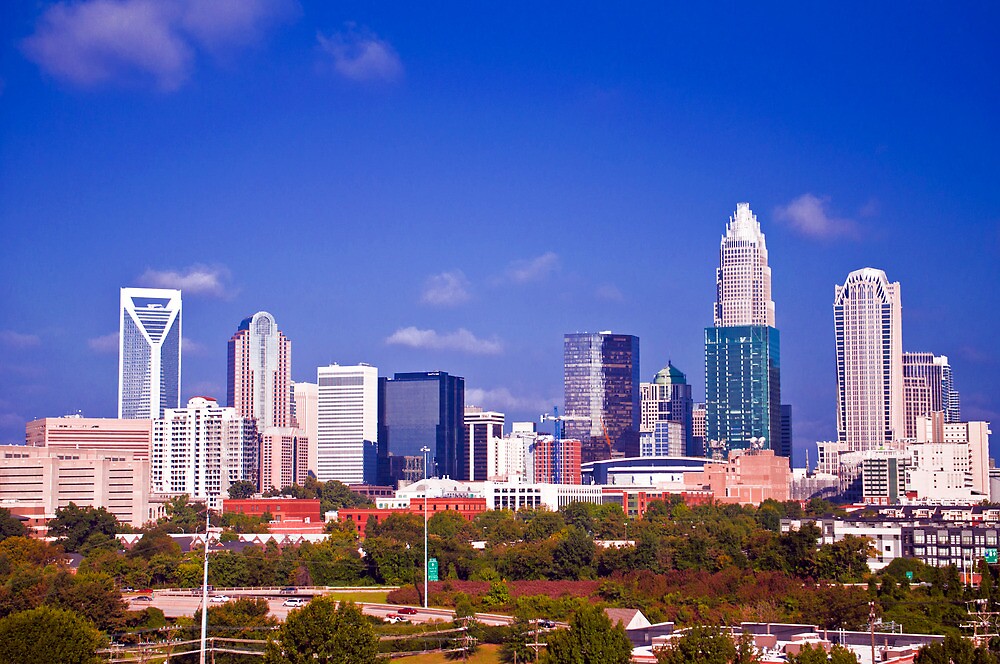
Charlotte didn't become a major American powerhouse by accident. Decades ago, this southern hub transitioned from a textile and manufacturing textile town into the second-largest banking center in the United States, anchored by bold civic choices and aggressive corporate recruitment. Today, the Queen City represents a textbook study in modern metropolitan expansion, balancing rapid population influx with complex infrastructure demands.
Understanding this trajectory requires looking past standard growth metrics. City leaders didn't just wait for people to arrive; they built an economic engine, expanded transit corridors, and continuously rewrote local land-use policies. If you want to grasp how a mid-sized regional hub scales into a top-tier national contender, you have to examine the specific choices that shaped Charlotte's urban landscape.
The Banking Boom and Economic Diversification
In the latter half of the twentieth century, local leadership recognized that relying solely on traditional manufacturing left the local economy vulnerable. Visionary bankers and civic champions aggressively courted financial institutions. This push transformed local banks into national giants, most notably Bank of America and Wells Fargo's eastern operations.
Downtown skyscrapers began to pierce the skyline, signaling a shift in financial gravity from northern metropolises to the Southeast. Yet, municipal leaders avoided single-industry traps. Over the subsequent decades, the city diversified into energy, healthcare, technology, and logistics. Attracting major corporations like Duke Energy and Lowe's created a resilient commercial ecosystem that withstood broader national recessions.
Infrastructure as a Growth Catalyst
Physical expansion requires a backbone of reliable transit and global connectivity. Charlotte didn't leave mobility to chance.
- Charlotte Douglas International Airport: Consistently ranking among the busiest airports globally, this aviation hub acts as a primary international gateway for commerce.
- Light Rail Investment: The LYNX Blue Line proved that southern car-centric cities could successfully integrate fixed-rail transit, sparking billions in transit-oriented development along its corridor.
- Highway Networks: Strategic highway planning connected the surrounding counties, drawing a massive regional workforce into the urban core every single day.
Modern Policy Shifts and the 2040 Comprehensive Plan
As population growth surged past hundreds of thousands of new residents, traditional single-family zoning created housing affordability pressures and traffic congestion. City planners realized that old blueprints wouldn't survive the twenty-first century.
This realization led to the creation of the Charlotte Future 2040 Comprehensive Plan. Unlike previous zoning approaches that locked neighborhoods into rigid low-density patterns, the new framework legalized duplexes and triplexes across single-family residential zones. This shift aimed to increase housing supply, curb urban sprawl, and foster transit-friendly neighborhoods where residents could live, work, and shop without relying entirely on automobiles.
Challenges of Rapid Urbanization
Growth rarely happens without friction. As property values climbed, long-term residents in historic neighborhoods faced displacement pressures. Balancing historic neighborhood character with the urgent need for high-density housing remains a central debate at City Hall.
Furthermore, environmental pressures mounted. Paving over green spaces to build subdivisions and commercial centers increased stormwater runoff issues. To counteract this, municipal agencies integrated greenways, tree preservation ordinances, and innovative land-use modeling tools like FUTURES to map alternative development scenarios and protect natural assets.
Lessons from Charlotte's Transformation
Other regional cities looking to emulate this trajectory can extract several practical takeaways from the Queen City's playbook.
- Prioritize Public-Private Partnerships: Economic growth accelerated when city government, private developers, and banking institutions aligned their financial goals.
- Invest Early in Transport: Building transit corridors ahead of peak congestion prevents gridlock before it paralyzes the local economy.
- Update Zoning Proactively: Waiting until a housing crisis peaks makes policy changes painful; flexible frameworks must be adopted early.
You can explore more about these municipal strategies directly through the City of Charlotte Growth and Development portal or review regional data insights via the Charlotte Urban Institute.
Frequently Asked Questions
What sparked Charlotte's initial economic boom?
The pivot toward banking in the 1970s and 1980s served as the primary catalyst. By fostering a pro-business regulatory environment and encouraging local financial institutions to scale nationally, the city established itself as a premier financial capital.
How is Charlotte addressing housing affordability?
Through the 2040 Comprehensive Plan, the city removed exclusive single-family zoning barriers, encouraging higher-density housing options like townhomes and multi-family units near transit lines to increase overall supply.
What role does the airport play in local growth?
Charlotte Douglas International Airport provides direct non-stop access to hundreds of domestic and international destinations, making it a massive draw for corporate headquarters, logistics operations, and business travelers.
How does the city manage environmental impact amid growth?
Urban planners use advanced spatial modeling and strict tree canopy preservation rules to balance real estate development with ecological conservation, minimizing the negative impacts of suburban sprawl.



