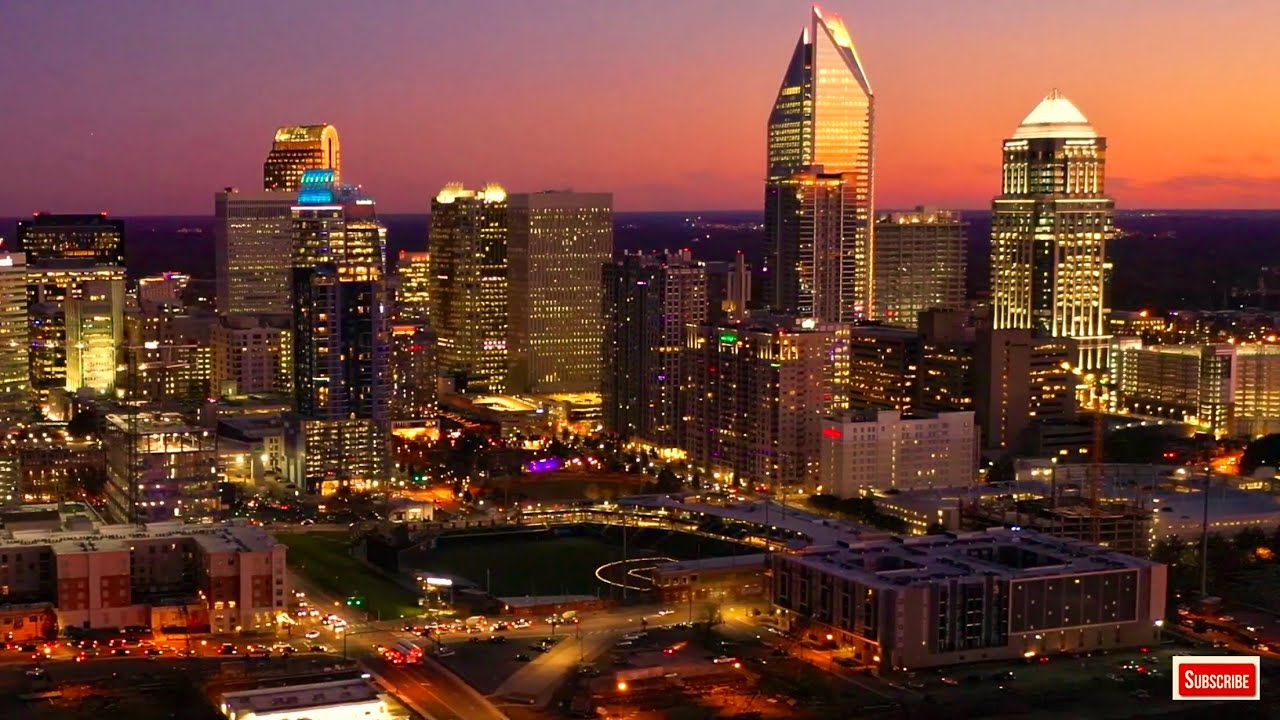
Charlotte operates as a masterclass in urban reinvention. Long before glass skyscrapers crowded the skyline, the city existed as a simple trading post where two Native American trails crossed. Today, that physical intersection at Trade and Tryon streets anchors a bustling metropolis balancing deep Southern roots with modern financial and technological might. Understanding Charlotte requires looking past the glossy exterior to examine how a modest inland settlement transformed into a primary economic hub of the American Southeast.
The city's trajectory isn't defined by a single static era, but rather by constant adaptation. From a colonial crossroads to the nation's early gold mining capital, through a massive textile boom into the second-largest banking center in the United States, Charlotte reinvents its identity every few generations. Urban life here moves fast, driven by newcomers and local visionaries who respect the past while building upward.
From Trading Paths to the Hornet's Nest
Long before European settlers arrived, the Catawba Indian Nation inhabited the Piedmont region, maintaining trade routes that crisscrossed the Carolinas. In the 1740s and 1750s, European traders and settlers—largely of Scotch-Irish, English, and German descent—began following these paths. By 1768, a permanent settlement took root around the intersection of two major Native American trading routes, later named Trade and Tryon Streets.
The community received its moniker in honor of German princess Charlotte of Mecklenburg-Strelitz, who had recently married King George III of Great Britain. The surrounding county adopted her birthplace name, Mecklenburg.
Revolutionary fervor took hold early. In May 1775, local patriots allegedly signed the Mecklenburg Declaration of Independence, proclaiming themselves free from British rule months before the national document. British General Lord Cornwallis later occupied the town briefly during the Revolutionary War, famously writing that Charlotte was a "rebellious colony" and a veritable "hornet's nest." That phrase stuck, giving the city its enduring symbol and professional basketball moniker.
The 1799 Gold Rush and Industrial Roots
For decades, Charlotte remained a sleepy agrarian village. That changed in 1799 when a twelve-year-old boy named Conrad Reed fished a 17-pound yellow rock out of a creek on his family's farm. That rock turned out to be solid gold, sparking America's first documented gold rush.
Miners, metallurgists, and entrepreneurs flooded Mecklenburg County, establishing a mint branch in Charlotte by the 1830s. Though the California gold discoveries eventually overshadowed local extraction, the mining era planted seeds of commerce and finance that shaped the local mindset.
Following the Civil War, industrialization reshaped the Southern landscape. Prominent local figures like D. A. Tompkins championed a "New South" philosophy, advocating for textile manufacturing and cotton processing. Railroad lines connected Charlotte to coastal ports, turning the city into a bustling distribution center. Mill villages sprouted across the perimeter, drawing rural workers into urban manufacturing environments.
Banking Growth and Modern Infrastructure
The twentieth century marked Charlotte's pivot from textile production to corporate finance. Local banking leaders pioneered statewide branching laws in North Carolina, allowing regional institutions to scale aggressively. During the 1980s and 1990s, visionary bankers spearheaded interstate acquisitions that consolidated financial power within Uptown.
Institutions that eventually became Bank of America and Wells Fargo established their primary operational footprints here. This financial engine funded a skyscraper boom, transforming a low-rise mercantile town into a gleaming corporate capital.
Infrastructure investments kept pace with economic gains. The completion of Douglas International Airport as a major global aviation hub paired with the introduction of the LYNX Blue Line light rail system. The transit corridor spurred high-density residential and commercial development, changing how residents navigate urban life outside their cars.
Neighborhood Dynamics and Historic Preservation
Urban life in Charlotte thrives through its distinct neighborhood mosaic. Each district tells a different chapter of the city's story.
- Fourth Ward: Located within Uptown, this historic Victorian-era neighborhood features winding brick sidewalks, wrought-iron fences, and restored late-nineteenth-century homes. It stands as a testament to successful downtown residential preservation amid high-rise development.
- Historic West End: Anchored by Johnson C. Smith University—founded in 1867—this corridor preserves foundational African American history, culture, and civil rights milestones.
- NoDa (North Davidson): Once a textile mill community centered around the Johnston and Highland Park mills, NoDa evolved into Charlotte's primary arts district, filled with independent galleries, live music venues, and local eateries.
- Camp North End: A massive former Ford motor assembly plant and military supply depot that now operates as a sprawling innovation incubator, housing creative offices, retail spaces, and food stalls.
Navigating Change: Challenges and Community Identity
Rapid population influx brings growing pains. Housing affordability, traffic congestion, and equitable urban development remain central topics of debate among civic leaders and residents. Urban renewal projects from past decades—such as the displacement of the historic Brooklyn neighborhood in the mid-twentieth century—left deep community scars that contemporary planners and historians work actively to document and remember.
Despite these hurdles, the city's culture remains anchored in adaptability. Cultural institutions like the Mint Museum and the Levine Museum of the New South preserve regional heritage while engaging with modern social dynamics.
Frequently Asked Questions
Why is Charlotte called the Queen City?
Charlotte earned the nickname in 1768 when European settlers named the new municipality after Queen Charlotte, the German-born wife of British King George III.
What sparked Charlotte's initial economic growth?
The city's early economy shifted from subsistence farming after a 1799 gold discovery triggered America's first gold rush, followed by the expansion of railroads and textile manufacturing in the late nineteenth century.
How did Charlotte become a major banking center?
State laws permitting statewide banking branches allowed local institutions to expand aggressively during the late twentieth century, leading national consolidation trends and establishing Uptown as a dominant financial capital.
What are some historic areas to visit in Charlotte?
Visitors can explore the Victorian homes of Fourth Ward in Uptown, tour the historic campus of Johnson C. Smith University in the Historic West End, or walk through the restored industrial spaces at Camp North End.