Cells come in all shapes and sizes, but why aren't there microscopic elephants made of trillions of tiny cells, or giant single-celled organisms the size of a basketball? The answer comes down to geometry, transport efficiency, and physical laws that govern how materials move across membranes. When working through the cell size POGIL, students explore why cells stay small and how surface area to volume ratios dictate biological limits.
At its core, a cell isn't just a bag of chemicals; it's a bustling factory that relies on constant diffusion to acquire nutrients and get rid of waste. As a cell grows larger, its volume increases much faster than its surface area. This mathematical mismatch creates a crisis for the cell's survival, making efficient transport impossible beyond a certain threshold. Understanding this relationship helps explain everything from why multicellular organisms exist to how specialized tissues maximize their internal exchange surfaces.
The Surface Area to Volume Ratio Problem
To understand cellular dimensions, you need to look at basic math. Imagine a cell as a simple cube. As the linear dimensions of that cube increase, the surface area scales quadratically while the volume scales cubically.
Let's break down what happens as a cell grows:
- A smaller cell has a high surface area relative to its internal volume. This means the membrane is spacious enough to serve every part of the interior quickly.
- A larger cell experiences an explosion in volume without a matching expansion in membrane area. The demand for nutrients skyrockets, but the supply lines don't keep up.
Diffusion is remarkably fast over tiny distances, but it slows down drastically across longer paths. If a cell doubles in linear size, the distance molecules must travel to reach the center doubles, but the volume they must support increases eightfold. Molecules simply can't diffuse fast enough to keep the deep interior of a large cell alive.
This fundamental constraint is why you don't see single-celled bacteria the size of a coin. Physics sets a hard ceiling on how large a single, unspecialized cell can become before its core starves or drowns in its own metabolic waste.
How Cells Overcome Size Limits
Evolution didn't just accept these geometric constraints; it found clever ways around them. When organisms need to grow larger, they generally take one of two evolutionary paths rather than building massive individual cells.
Multicellularity and Division of Labor
Instead of scaling up a single cell, organisms divide into millions, billions, or trillions of microscopic units. Each individual cell stays small enough to maintain an optimal surface area to volume ratio, ensuring efficient transport. Tissues and organs then coordinate to manage the organism's overall needs.
Shape Modifications
Not all cells are neat little cubes or spheres. Many cells alter their morphology to artificially boost their surface area without substantially increasing their volume.
- Neurons stretch out into incredibly long, thin fibers, allowing them to span great distances while keeping their diameter small.
- Intestinal epithelial cells feature microvilli—tiny finger-like projections that dramatically increase the membrane area available for nutrient absorption.
- Red blood cells have a biconcave disc shape, maximizing their surface area for oxygen exchange while allowing them to squeeze through narrow capillaries.
According to research from Nature Education, cellular architecture is tightly coupled to physiological function, proving that geometry dictates capability in biological systems.
The Role of Diffusion and Transport Limits
Diffusion relies on random thermal motion, meaning molecules move from areas of high concentration to low concentration without expending cellular energy. However, it's an inefficient transport mechanism over long distances.
When a cell metabolizes glucose, it consumes oxygen and produces carbon dioxide. These molecules must diffuse across the plasma membrane. In a tiny bacterial cell, oxygen entering the membrane reaches the center in milliseconds. In a theoretical giant cell, that same journey could take hours or days—long after the cell has ceased to function.
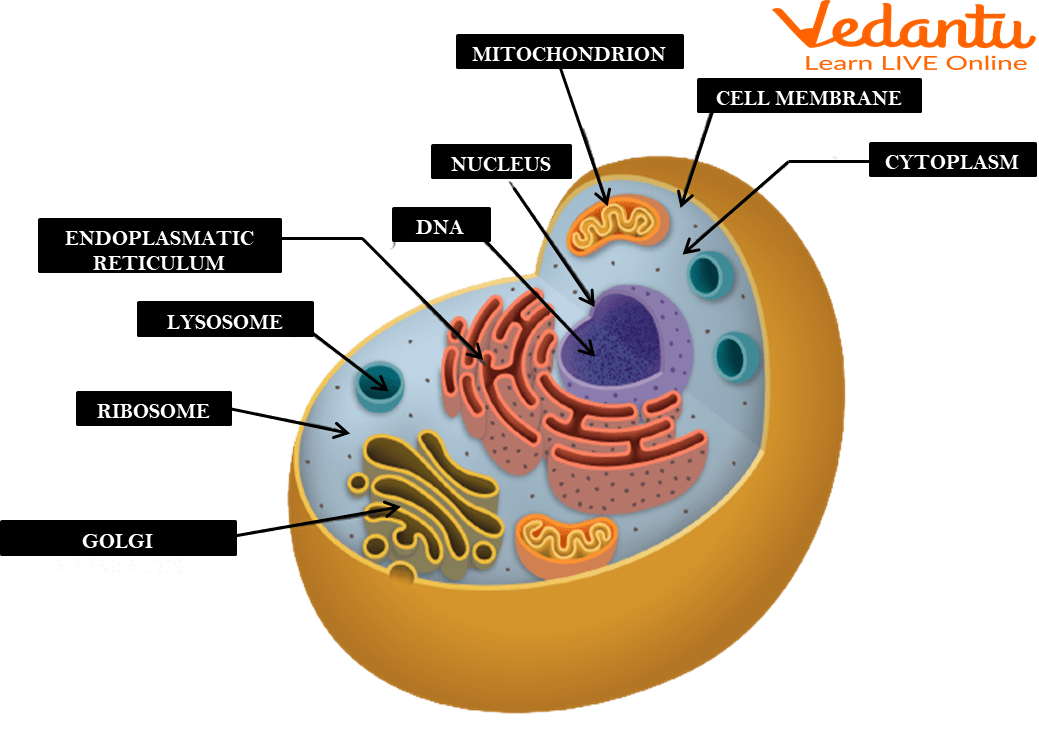
This limitation forces cells to maintain a high ratio of membrane area to internal cytoplasm. It's also why organelles like the National Human Genome Research Institute highlights how eukaryotic cells developed internal compartmentalization. By dividing labor among organelles like mitochondria and the endoplasmic reticulum, eukaryotic cells can grow slightly larger than prokaryotes, though they still face strict physical limits.
Common Misconceptions About Cell Size
When working through classroom activities and guided inquiry exercises, students often fall into specific traps. Clearing these up makes mastering the underlying concepts much easier.
- Misconception: Cells get larger as an organism grows.
- Reality: An elephant doesn't have larger cells than a mouse; it just has more of them. Cell division keeps individual units small.
- Misconception: Surface area and volume increase at the same rate.
- Reality: Volume scales much faster than surface area. As a cube doubles in side length, its surface area multiplies by four, but its volume multiplies by eight.
- Misconception: Active transport can completely replace diffusion in large cells.
- Reality: While proteins can pump molecules across membranes, the internal transport of those molecules through the cytoplasm still relies heavily on diffusion or motor proteins, which become inefficient over massive distances.
Frequently Asked Questions
Why do cells divide instead of growing larger?
Cells divide to maintain a high surface area to volume ratio. If a cell grows too large, its membrane cannot transport enough nutrients and waste to sustain its massive volume, leading to cellular dysfunction or death.
How does the surface area to volume ratio change as a cell grows?
As a cell increases in size, its volume grows much faster than its surface area. Consequently, the ratio of surface area to volume decreases, severely limiting the efficiency of molecular transport.
Why are prokaryotic cells typically smaller than eukaryotic cells?
Prokaryotes lack internal membrane-bound organelles and a cytoskeleton to assist with internal transport, restricting them to a smaller size where simple diffusion is sufficient for survival.
What shape provides the most efficient transport for a cell?
Flattened, elongated, or folded shapes (such as microvilli or biconcave discs) offer a much higher surface area relative to their volume compared to a solid sphere or cube.



