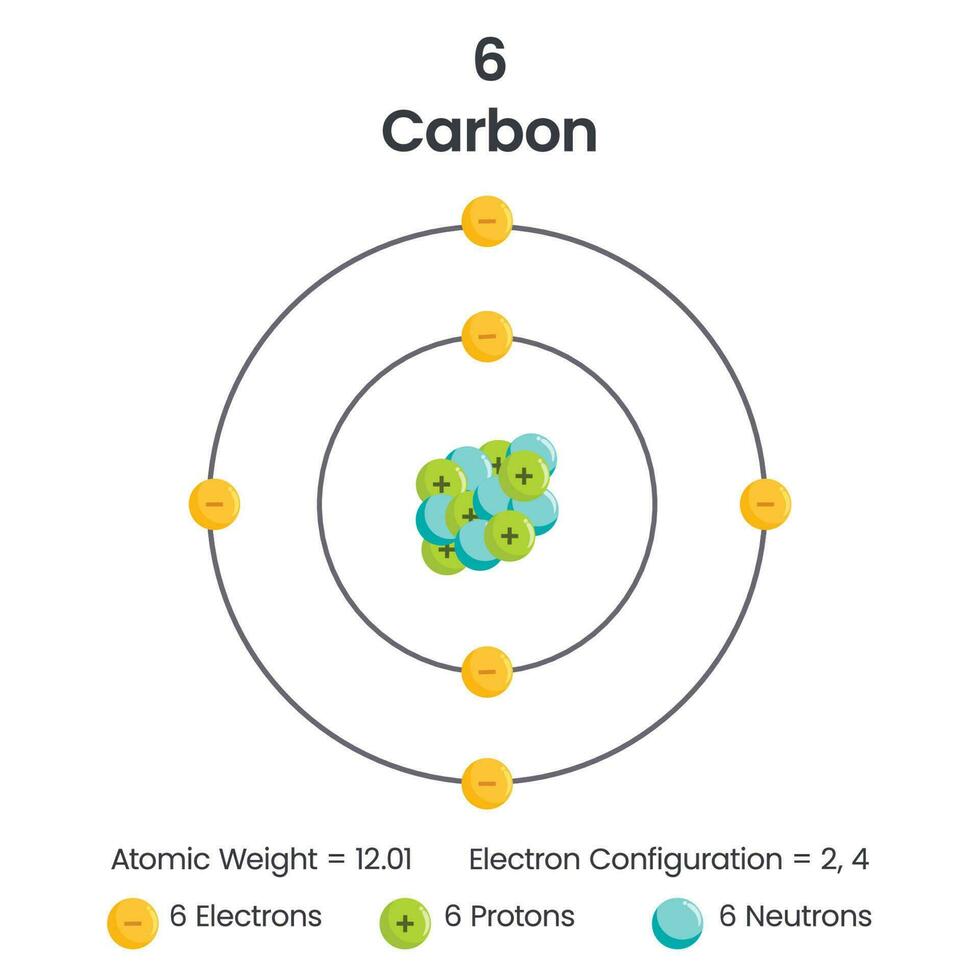
Carbon dioxide is a chemical compound consisting of one carbon atom covalently bonded to two oxygen atoms, denoted by the formula CO2. Because it is a compound rather than a single chemical element, it doesn't occupy a specific box on the periodic table. Instead, it represents a stable alliance between two of the universe's most vital elements: carbon (atomic number 6) and oxygen (atomic number 8). Understanding how this molecule behaves requires looking past the periodic table of individual elements and examining chemical bonding, phase states, and ecological functions.
At standard room temperature and pressure, carbon dioxide exists as a colorless, odorless gas. It is denser than air, non-flammable, and mildly soluble in water. While often discussed primarily in the context of climate regulation or biological respiration, this compound governs industrial cooling, beverage carbonation, and plant photosynthesis.
Molecular Structure and Bonding
The architecture of a carbon dioxide molecule dictates its chemical personality. The central carbon atom forms double covalent bonds with each of the two oxygen atoms. This arrangement creates a linear geometry with a bond angle of precisely 180 degrees.
The carbon atom undergoes sp-hybridization, overlapping its orbitals with the p-orbitals of the surrounding oxygen atoms to form two sigma bonds and two pi bonds. Even though the individual carbon-oxygen bonds are polar due to differences in electronegativity, the linear and symmetrical shape of the molecule cancels out these dipole moments. Consequently, the overall CO2 molecule is nonpolar.
This nonpolar symmetry explains why carbon dioxide remains a gas at room temperature rather than condensing into a liquid under normal atmospheric conditions. Without strong intermolecular dipole attractions, molecules slide past each other freely unless subjected to high pressure or extreme cold.
Physical States and Phase Behavior
Carbon dioxide exhibits distinct phase transitions that make it valuable for specialized industrial and laboratory applications. Unlike many common substances, solid carbon dioxide does not melt into a liquid under standard atmospheric pressure.
- Gas Phase: Under normal conditions, CO2 remains dispersed in the atmosphere at a baseline concentration of roughly 0.04 percent. It acts as a trace gas that plays a major role in regulating thermal retention on Earth.
- Solid Phase (Dry Ice): When gaseous carbon dioxide cools below -78.5 degrees Celsius (-109.3 degrees Fahrenheit) at normal pressure, it transforms directly into a solid white mass known as dry ice.
- Sublimation: Dry ice bypasses the liquid phase entirely when it warms up, turning straight back into gas. This property makes it an ideal refrigerant for shipping perishable goods because it leaves no liquid residue behind.
- Superfluid and Liquid States: Liquid carbon dioxide can only exist when the gas is compressed under pressures exceeding 5.1 atmospheres. Under specific high-pressure and temperature thresholds, it enters a supercritical state, acting simultaneously like a gas and a liquid. Superfluid CO2 serves as a powerful, non-toxic industrial solvent for decaffeinating coffee and extracting botanical oils.
Chemical Reactivity and Behavior
Despite containing oxygen, carbon dioxide does not support ordinary combustion because the carbon is already in its highest oxidation state (+4). It is chemically stable, but it participates in several predictable reactions with water, bases, and reactive metals.
When dissolved in water, carbon dioxide reacts to form a weak acid known as carbonic acid ($H_2CO_3$). This equilibrium reaction is fundamental to natural aquatic chemistry and physiological pH buffering in animal bloodstreams.
$$\text{CO}_2 + \text{H}_2\text{O} \rightleftharpoons \text{H}_2\text{CO}_3$$
When bubbled through an aqueous solution of calcium hydroxide (limewater), carbon dioxide reacts to precipitate insoluble calcium carbonate ($CaCO_3$), turning the liquid milky. This classic laboratory test distinguishes CO2 from other atmospheric gases. If excess carbon dioxide continues flowing through the mixture, the precipitate dissolves back into soluble calcium bicarbonate.
Industrial and Practical Applications
Beyond its natural occurrence, carbon dioxide is manufactured on a large scale as a byproduct of fossil fuel combustion, fermentation, and thermal decomposition of limestone. Industries put these harvested supplies to work across multiple sectors.
In food and beverage processing, liquid and gaseous CO2 provides the effervescence in carbonated soft drinks and sparkling water. Food packagers also inject the gas into sealed containers to inhibit bacterial growth and extend the shelf life of fresh meats and produce.
Fire suppression systems utilize compressed carbon dioxide to starve flames of oxygen. Because the gas is denser than air, it blankets burning materials, displacing the oxygen layer required to sustain combustion without damaging sensitive electronic equipment with water or chemical residues.
In agriculture, greenhouse operators sometimes supplement ambient air with controlled levels of carbon dioxide to accelerate plant growth rates. Enhanced concentrations optimize the Calvin cycle during photosynthesis, yielding denser foliage and higher crop production. More details on industrial management practices can be found through the US Department of Energy.
Frequently Asked Questions
Is carbon dioxide found on the periodic table?
No. The periodic table lists individual chemical elements categorized by their atomic numbers. Carbon dioxide is a chemical compound composed of multiple bonded elements—specifically one carbon atom and two oxygen atoms. Carbon appears on the table as element 6, and oxygen appears as element 8.
Why doesn't dry ice melt into a liquid?
At standard atmospheric pressure, solid carbon dioxide lacks a stable liquid phase. Thermal energy causes the solid molecules to gain enough kinetic energy to break their intermolecular bonds directly, converting them straight into a gas via sublimation at -78.5 degrees Celsius. Liquid carbon dioxide only forms under high pressure.
Is carbon dioxide toxic to humans?
At normal atmospheric levels, carbon dioxide is non-toxic and safely handled by human respiratory metabolism. However, because it is heavier than air, high concentrations can accumulate in poorly ventilated, enclosed spaces. Elevated levels displace breathable oxygen, leading to headaches, dizziness, accelerated breathing rates, and unconsciousness.
How does carbon dioxide differ from carbon monoxide?
Carbon dioxide ($CO_2$) contains two oxygen atoms bonded to a single carbon atom and is a stable product of complete combustion. Carbon monoxide ($CO$) contains only one oxygen atom bonded to carbon. Carbon monoxide is a highly toxic, flammable gas that binds aggressively to hemoglobin in human blood, preventing oxygen transport. Additional scientific context is maintained by organizations like Encyclopaedia Britannica.


