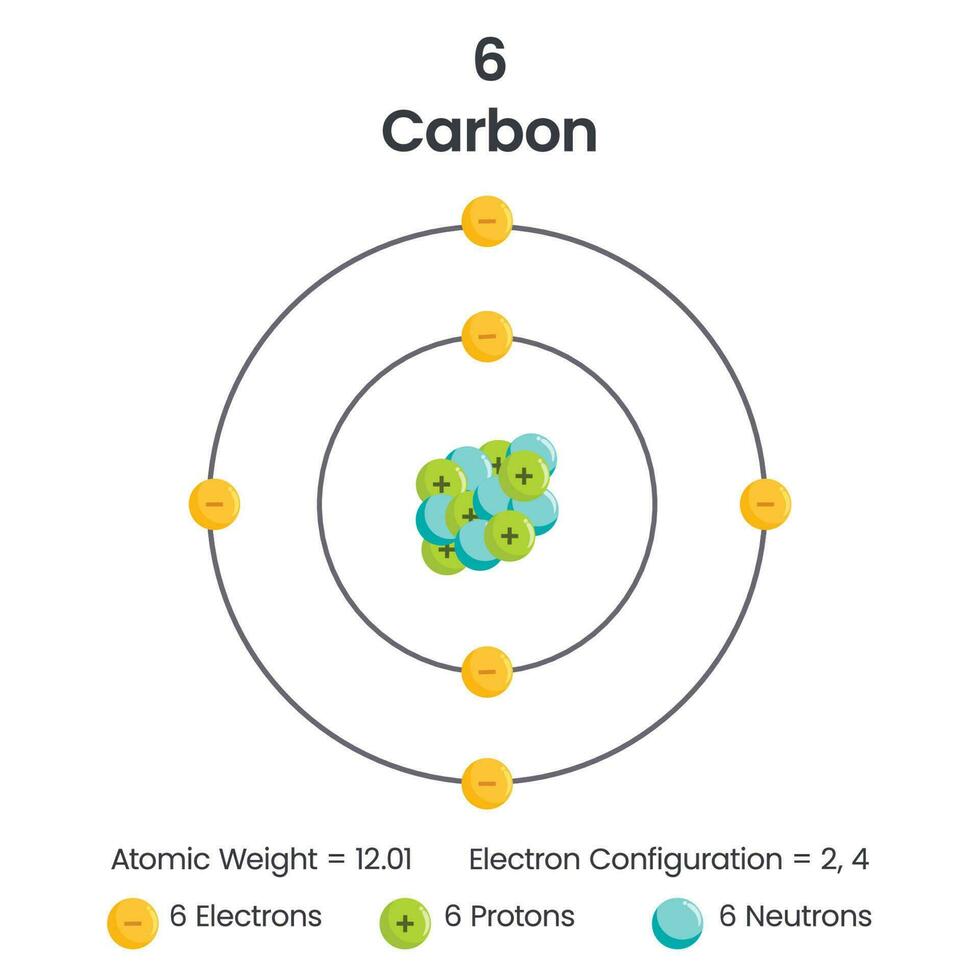
Carbon occupies a singular position on the periodic table, acting as a bridge between insulating nonmetals and conductive metallic phases. This elemental adaptability allows carbon to form structures ranging from diamond, a classic electrical insulator, to graphite and synthetic carbon networks that display metalloid or semi-metallic behavior. At the metal-nonmetal frontier, carbon's hybridization flexibility ($sp$, $sp^2$, and $sp^3$) dictates electronic band gaps, turning structural atomic arrangements into a decisive factor for material performance. Understanding how this ambivalent element shapes advanced engineering composites requires looking past basic definitions and examining the precise quantum mechanics governing carbon-metal interfaces.
The primary search intent behind investigating carbon at this boundary involves understanding how its dual chemical nature influences modern material design, electrical conductivity, and mechanical reinforcement. Engineers and researchers look for explanations of how carbon shifts from behaving like a localized nonmetal to participating in delocalized, metal-like electron transport. This article breaks down the structural mechanics, thermodynamic constraints, manufacturing applications, and failure points of carbon-based systems at the interface of metallurgy and polymer science.
Hybridization States and Electronic Structure
Carbon's versatility stems directly from its valence electrons and its ability to form stable covalent bonds with itself and foreign elements. The transition from nonmetallic behavior to semi-metallic or conductive behavior depends entirely on electron orbital mixing.
- $sp^3$ Hybridization: Found in diamond, where each carbon atom bonds tetrahedrally to four neighbors. This localized electron network creates a wide band gap, making the material an electrical insulator with extreme thermal conductivity.
- $sp^2$ Hybridization: Dominant in graphite, graphene, and carbon nanotubes. Here, three sigma bonds form a rigid planar lattice, while unbonded $p_z$ electrons merge into a delocalized pi-electron cloud. This mobile electron cloud allows charge carriers to move freely across the plane, mimicking the electronic sea found in metals.
- $sp$ Hybridization: Seen in linear carbon chains (carbyne), offering unique mechanical tensile strengths and directional electronic properties that challenge conventional boundaries.
This orbital flexibility enables carbon structures to act as tunable semiconductors or ballistic conductors. When integrated into metal matrices, these distinct electronic states govern interfacial bonding strength, electron scattering, and thermal boundary resistance.
Carbon-Metal Nanocomposites and Interface Mechanics
When carbon allotropes like multi-walled carbon nanotubes (MWCNTs) or few-layer graphene (FLG) are introduced into metal matrices—such as titanium or aluminum—they occupy a delicate physical frontier. Rather than simply acting as inert fillers, carbon atoms form chemical bonds with surrounding metal atoms, creating metal carbides (such as TiC) at the interface.
These interfacial bonds dictate load transfer efficiency. If the bonding is too weak, the composite fails via pull-out mechanisms under stress. If the bonding is too reactive or brittle, micro-voids form, causing premature fracture. Controlling this frontier requires precise powder metallurgy techniques, such as high-energy ball milling under inert gas atmospheres, to distribute nanoparticles uniformly without destroying their graphitic lattice.
You can explore further details on advanced manufacturing standards through the National Institute of Standards and Technology materials data repositories.
Practical Applications in Extreme Environments
Carbon's ambivalent nature makes it indispensable for components exposed to extreme thermal and mechanical loads. Aerospace engineering, thermal management systems, and energy storage devices rely heavily on carbon-metal hybrids.
- Thermal Interface Materials: Synthetic graphite sheets and carbon nanotube arrays leverage in-plane metallic-like thermal conductivity to draw heat away from high-density semiconductor chips.
- Structural Reinforcement: Embedding carbon fibers into lightweight metal matrices produces hybrid materials with high specific strength, reducing structural weight in aerospace frames.
- Electrode Catalysis: Doping carbon frameworks with heteroatoms (such as nitrogen or transition metals) alters local charge distribution, creating active sites for oxygen reduction reactions in fuel cells and advanced batteries.
For ongoing developments in industrial-scale carbon composites, consult resources provided by the Department of Energy Advanced Materials Office.
Common Mistakes in Carbon-Metal Integration
Designers working at the metal-nonmetal frontier often encounter predictable failure modes due to misunderstandings of carbon's chemical reactivity.
- Neglecting Galvanic Corrosion: When conductive carbon materials are placed in direct contact with less noble metals in wet environments, severe galvanic corrosion can occur because carbon acts as a noble cathodic site.
- Assuming Homogeneous Dispersion: Because of strong van der Waals forces, carbon nanotubes and graphene sheets naturally agglomerate. Failing to functionalize their surfaces or use proper surfactant mixing leads to weak clustering points inside metal matrices.
- Ignoring Thermal Expansion Mismatches: Carbon allotropes often feature near-zero or negative coefficients of thermal expansion, whereas metals expand significantly when heated. Thermal cycling without buffer interlayers causes interfacial delamination.
Frequently Asked Questions
Why is carbon considered ambivalent in materials science?
Carbon displays both nonmetallic insulating properties (as in diamond) and metallic-like electrical conductivity (as in graphite and graphene) depending entirely on its atomic bonding and crystal lattice structure.
How do carbon nanotubes improve metal matrix composites?
They provide exceptional tensile strength and stiffness. When properly bonded via interfacial carbides, they restrict dislocation movement within the metal crystal structure, enhancing overall yield strength.
What causes carbon-metal composites to degrade under high heat?
Oxidation is the primary risk factor. At elevated temperatures in oxygen-rich environments, carbon reacts to form carbon gases, destroying the reinforcing phase unless a protective coating or inert atmosphere is maintained.
Can carbon completely replace metals in structural engineering?
No. While carbon composites offer superior strength-to-weight ratios, they generally exhibit brittle failure modes under impact, whereas structural metals retain vital ductility and energy absorption characteristics.