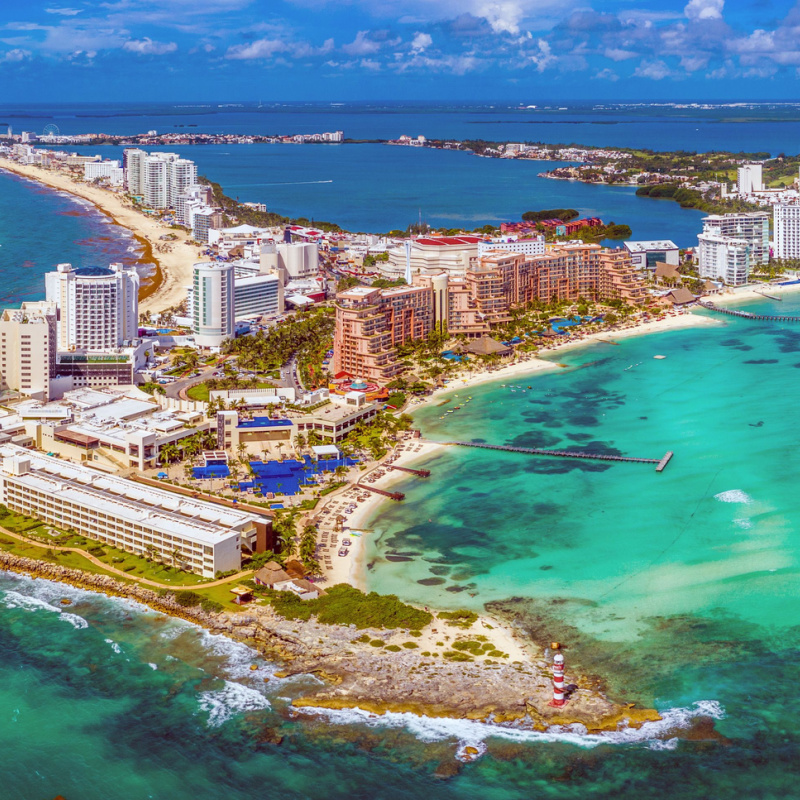
Planning a summer escape means confronting the reality of Cancun July weather, where daily high temperatures regularly touch 33°C (91°F) paired with thick tropical humidity. Far from a continuous washout, July brings a predictable rhythm of brilliant morning sunshine followed by intense, brief afternoon downpours that clear the air for warm, breezy evenings.
Sea temperatures peak at a warm 28°C to 29°C (83°F to 84°F), creating bath-like conditions for swimming, though travelers must balance these perks against seasonal humidity, a higher risk of sargassum seaweed on the coast, and off-peak travel bargains. Mastering this climate turns a potentially sticky trip into a smart, budget-friendly vacation.
Temperature Breakdown: What to Expect Day and Night
July is one of the warmest months of the year in the Yucatán Peninsula. Daytime highs consistently hover around 31°C to 33°C (88°F to 91°F), but the high relative humidity—often hovering near 76% to 80%—pushes the heat index or "feels-like" temperature up toward 39°C (102°F).
Nights offer minimal cooling, with overnight lows dipping only to 26°C or 27°C (80°F to 81°F). Coastal breezes provide some relief along the Hotel Zone, but inland excursions or walking through downtown Cancun will test your heat tolerance.
Managing the Midday Heat
- Schedule outdoor adventures early: Hit the beach or Mayan ruins between 8:00 AM and 11:00 AM when the sun is manageable.
- Seek indoor or subterranean refuge: Use the peak afternoon hours between 12:00 PM and 3:00 PM to explore air-conditioned museums, malls, or shaded cenotes.
- Hydrate aggressively: Carry a refillable water bottle and supplement with electrolytes; plain water isn't always enough against tropical sweat loss.
Rainfall Patterns and Storm Reality
A common misconception is that July brings continuous, trip-ruining rain. In reality, July falls into the region's green season, characterized by fast-moving convective storms rather than all-day grey skies.
Precipitation totals average around 60mm to 135mm across the month, spread across frequent sporadic showers. These storms usually strike mid-to-late afternoon, lasting anywhere from thirty minutes to two hours. They often feature dramatic thunder and heavy downpours, followed immediately by clear skies and intense sunshine that quickly dries out the pavement.
Hurricane and Tropical Storm Risk
While hurricane season officially opens on June 1st, July historically sees a much lower frequency of major named storms compared to August, September, and October. Tropical waves do roll through, bringing choppy seas or overcast days, but major hurricane strikes in July are rare. Checking the National Hurricane Center before you fly provides absolute peace of mind.
Sea Conditions, Swimming, and Sargassum
The Caribbean Sea in July is exceptionally warm, averaging roughly 28°C to 29°C (83°F to 84°F). If you enjoy spending hours floating in bath-like water without getting chilled, July delivers ideal aquatic conditions.
However, ocean conditions require a couple of key caveats:
- Sargassum seaweed: June and July often mark the peak window for sargassum influxes along the Riviera Maya. While Cancun's municipal crews and resort teams work aggressively to clean public beaches daily, some shores experience heavy brown seaweed accumulation. Check recent traveler forums or live webcams before booking specific coastal stretches.
- Water clarity and currents: Afternoon storms can temporarily churn up coastal sand, reducing visibility for snorkelers. Rip currents can also form unpredictably; always respect the colored flag system posted on Cancun beaches (green for safe, yellow for caution, red or black for dangerous/prohibited swimming).
Daily Weather Rhythm for July Travelers
Structuring your daily itinerary around the sky's habits prevents weather frustration. Instead of fighting the climate, mimic the local daily flow:
- Morning (7:00 AM – 11:30 AM): The golden window. Skies are typically clear, the air is fresh, and sunshine is bright. Ideal for open-air archeological tours, photography, and long beach walks.
- Midday (12:00 PM – 3:30 PM): The peak heat trap. The sun sits directly overhead with a severe UV index. Retreat indoors, enjoy a long lunch, or swim in shaded underground cenotes.
- Late Afternoon (4:00 PM – 6:00 PM): The storm window. Expect a sudden cloud build-up and a heavy rain burst. Duck into a cafe, museum, or hotel lobby with a book.
- Evening (6:30 PM onwards): The reward. Storms wash away the dust, leaving cooler evening temperatures, stunning sunset colors over the lagoon, and comfortable patio dining.
Packing Right for July in Cancun
Packing for a tropical summer requires prioritizing breathability and sun defense over heavy wardrobe options. Avoid thick denims or synthetic fabrics that trap moisture against your skin.
- Clothing: Loose linen shirts, cotton shorts, light sundresses, and moisture-wicking athletic wear. Bring a light rain jacket or compact travel umbrella for sudden downpours.
- Footwear: Breathable walking shoes or sandals for hot pavement, plus water shoes if you plan to explore rocky cenotes or natural reserves.
- Sun Protection: High-SPF mineral sunscreen (biodegradable options are mandatory in many ecological parks and cenotes), polarized sunglasses, and a wide-brimmed sun hat.
- Electronics: A waterproof pouch or dry bag to protect your phone and camera gear during unexpected downpours or boat excursions.
For official tourism advisories and regional travel safety guidelines, consult the Government of Mexico Official Portal.
Frequently Asked Questions
Is July a good month to visit Cancun on a budget?
Yes. Because July falls outside the peak winter dry season, many resorts, hotels, and airlines drop their rates to attract summer families and value-driven travelers. You can often secure luxury accommodations for a fraction of their January price tag.
Will rain ruin my outdoor excursions?
Rarely. Because July rain typically arrives as intense, fast afternoon thunderstorms rather than days of continuous drizzle, most excursions—including trips to Chichen Itza or Isla Mujeres—proceed normally with a brief pause for shelter.
How hot does it actually feel outside?
While actual air thermometers register around 32°C (90°F), the heavy humidity makes the air feel closer to 39°C (102°F). Physical exertion outdoors causes rapid fatigue if you don't pace yourself and stay hydrated.
Are Cancun beaches completely ruined by seaweed in July?
Not entirely, but sargassum is a seasonal factor. Beaches facing open ocean can see significant deposits, while protected spots like Playa Caracol or parts of Isla Mujeres often remain much clearer. Look for resorts with active mechanical clean-up operations.



