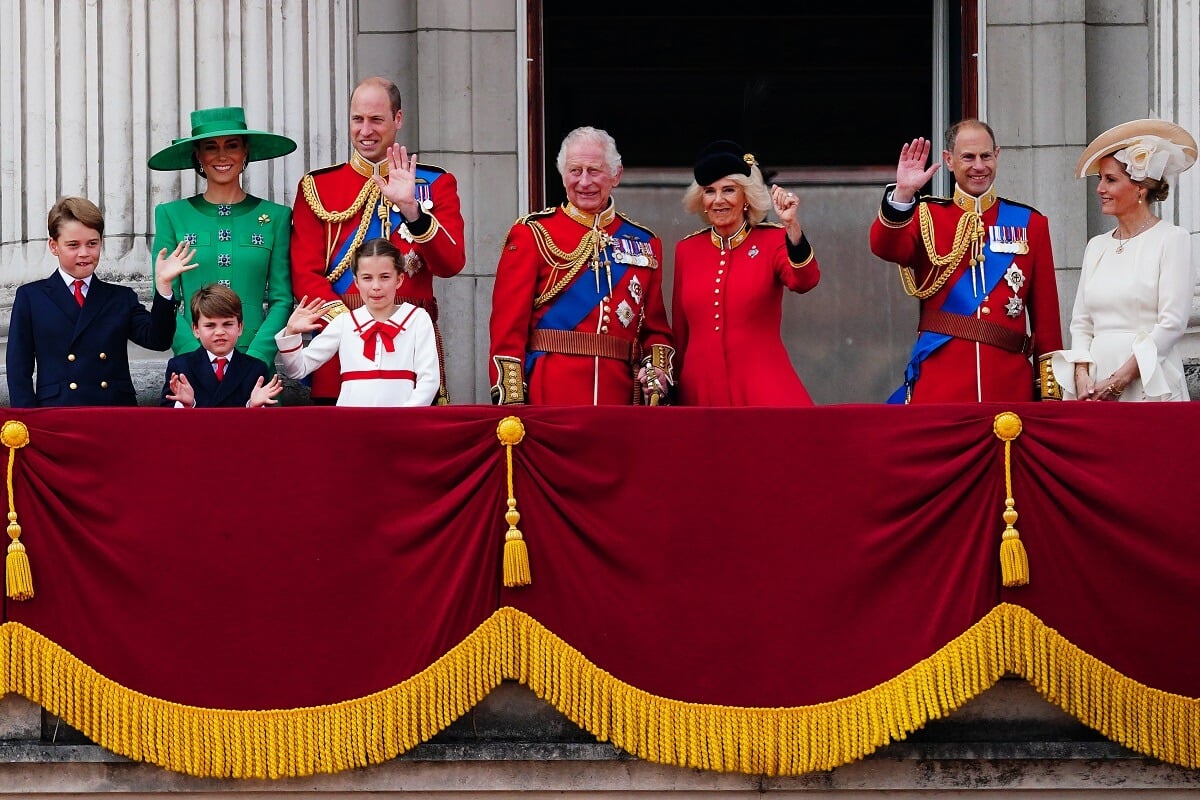
Canada operates as a constitutional monarchy, meaning the reigning British monarch is legally recognized as the King of Canada and the nation's head of state. Contrary to popular belief, Canada doesn't share a separate or parallel royal family; rather, it shares the exact same sovereign as the United Kingdom and fifteen other Commonwealth realms. This relationship is entirely distinct under Canadian law, established through a separate legal crown that operates independently of the British government.
Understanding how this institution functions requires looking past common misconceptions. The King reigns, but he doesn't rule. Executive authority rests with the elected Parliament and is exercised on the monarch's behalf by the Prime Minister and the federal Cabinet. This separation of powers ensures that the Crown remains a politically neutral symbol of continuity while elected officials manage day-to-day governance.
The Constitutional Structure of the Crown in Canada
The structure of the Canadian monarchy is decentralized through vice-regal representatives. Because the King resides primarily in the United Kingdom, he appoints representatives to carry out his constitutional and ceremonial duties within Canada.
The Governor General of Canada acts as the federal representative of the monarch. Appointed by the King on the advice of the Prime Minister, the Governor General performs crucial constitutional duties. These include granting Royal Assent to bills passed by Parliament, reading the Speech from the Throne, swearing in the Prime Minister and Cabinet ministers, and dissolving Parliament for general elections.
At the provincial level, Lieutenant Governors serve as the direct representatives of the King in each of the ten provinces. Appointed similarly on the advice of the Prime Minister after consultation with provincial premiers, Lieutenant Governors fulfill identical constitutional functions within provincial jurisdictions, such as signing provincial legislation into law.
Beyond the sovereign and vice-regal figures, other members of the royal family—such as the Prince of Wales—occasionally undertake official tours representing Canada or supporting domestic charities. However, they hold no official constitutional status or governing power under Canadian law.
Historical Evolution of the Canadian Monarchy
The roots of Canada's constitutional monarchy stretch back to early French and British colonial governance, but the modern legal framework took shape with Confederation in 1867. The Constitution Act, 1867 formally united several British North American colonies into a self-governing federation under the Crown.
For decades following Confederation, the British government retained significant authority over Canadian foreign policy and constitutional amendments. That changed incrementally through historic milestones:
- The Statute of Westminster (1931): Granted complete legislative independence to Canada and other dominions, establishing that British laws no longer applied automatically to Canada unless requested and consented to by the Canadian parliament.
- The Letters Patent (1947): Issued by King George VI, these documents authorized the Governor General to exercise nearly all of the monarch's powers and prerogatives in respect of Canada.
- The Constitution Act (1982): Patriated the Canadian constitution, severing the final legal links to the British Parliament and cementing Canada's full sovereignty. This process also entrenched the office of the Queen and the Governor General within the constitution, requiring unanimous consent from the provinces and federal parliament to alter the rules governing the monarchy.
Following the death of Queen Elizabeth II in September 2022, King Charles III automatically acceded to the throne as King of Canada, maintaining an unbroken royal lineage spanning over a century of Canadian nationhood.
Key Roles and Responsibilities in Modern Governance
While the duties of the Crown are largely ceremonial today, they remain legally binding safeguards of Canada's democratic system. The separation between the head of state and the head of government provides an essential check and balance.
Safeguarding Democratic Continuity
If a minority government loses a confidence vote in the House of Commons, the Prime Minister may ask the Governor General to dissolve parliament and call an election. The Governor General holds reserve powers, meaning they can theoretically refuse such a request if an alternative government could command a stable majority in the legislature, though this is exercised only in extreme constitutional crises.
Royal Assent and Lawmaking
No bill passed by the Senate and the House of Commons can become law without Royal Assent. While the Governor General or the monarch almost always grants assent as a matter of constitutional convention, it remains the formal legal act that transforms a parliamentary bill into an active statute.
Diplomatic and Cultural Representation
The King and the Governor General serve as ambassadors of Canadian identity abroad. They host visiting foreign heads of state, foster international relations, and present prestigious honors such as the Order of Canada to citizens who have made extraordinary contributions to society.
Common Misconceptions About the Canadian Monarchy
- "Canada pays for the royal family's lifestyle." Canadian taxpayers do not fund the British royal family's personal expenses or security in the UK. Funding is allocated exclusively for the official duties, travel, and upkeep of the Governor General's office and official residences like Rideau Hall in Ottawa and the Citadel in Quebec City.
- "The British Parliament can pass laws for Canada." Since 1931 and fully since 1982, the British Parliament has held zero legislative authority over Canada. The Canadian Crown is legally distinct from the British Crown.
- "Members of the royal family can intervene in Canadian politics." The monarch and vice-regal representatives operate strictly on the advice of democratically elected ministers. They maintain political neutrality at all times.
Frequently Asked Questions
Is the King of Canada the same person as the King of the United Kingdom?
Yes, the individual who occupies the British throne automatically becomes the King of Canada, but they do so in a legally distinct capacity as the sovereign of an independent nation.
Can Canada abolish the monarchy?
Abolishing the monarchy is legally complex. Under Section 41 of the Constitution Act, 1982, any constitutional amendment to alter the office of the Queen, the Governor General, or a Lieutenant Governor requires the unanimous consent of the Senate, the House of Commons, and the legislative assemblies of all ten provinces.
What is the role of Rideau Hall?
Rideau Hall in Ottawa serves as the official workplace and primary residence of the Governor General of Canada. It is where public honors are awarded, foreign dignitaries are welcomed, and official state documents receive Royal Assent.
Do members of the royal family hold Canadian citizenship?
No. Members of the British royal family are British citizens. They do not hold Canadian citizenship, nor do they pay Canadian taxes, as they do not reside or earn income within Canada outside of official state visits.


