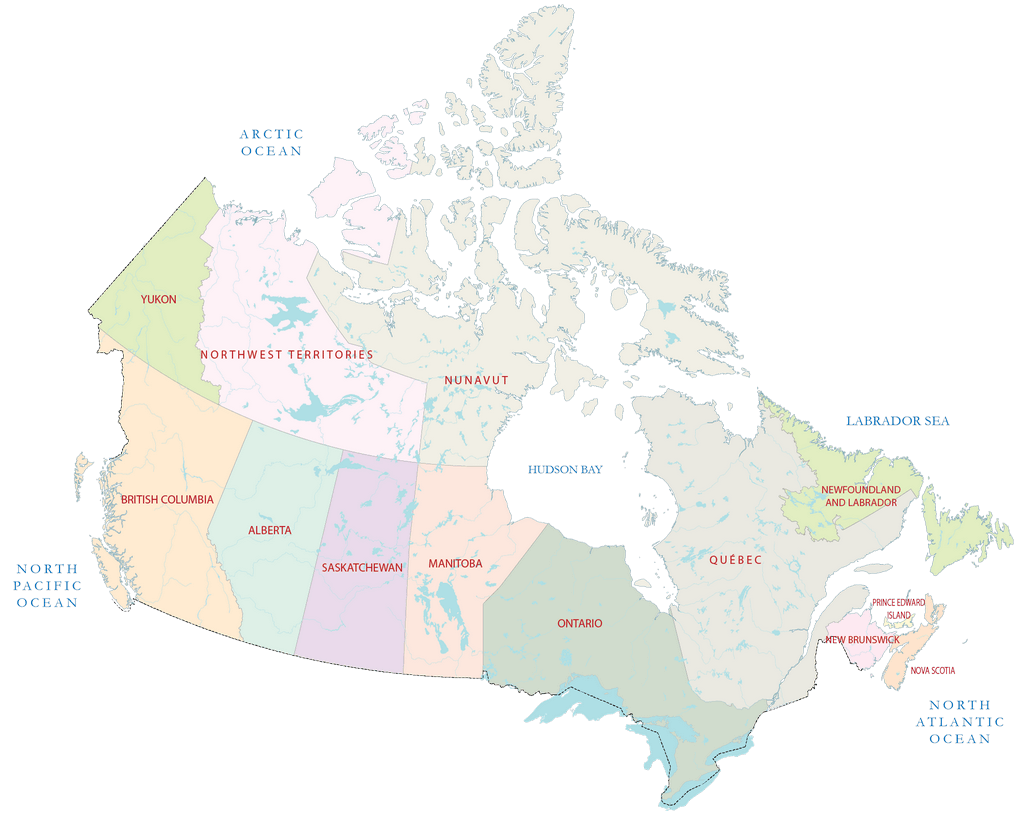
Managing cross-country operations requires mastering Canada's six distinct time zones, spanning from the Pacific coast to the rocky shores of Newfoundland. Coordinating teams, logistics, and client meetings across this vast geography is challenging, especially with recent legislative shifts ending seasonal clock changes in several key provinces. Without a clear operational rhythm, deadlines get missed, meetings start an hour late, and remote teams burn out trying to decode shifting offsets.
This guide breaks down Canada's structural time map, details the recent regulatory changes affecting standard time, and provides concrete tactics for running a synchronized organization across multiple regions.
Canada's Six Time Zones Explained
Canada covers a massive geographic span resulting in six primary time zones. Moving from west to east, understanding the base offsets and boundaries prevents costly scheduling errors.
- Pacific Time (PT): Operates at UTC-8 standard and UTC-7 daylight. It covers most of British Columbia. Following recent legislative updates, British Columbia remains on permanent daylight time year-round, keeping its clock aligned with neighboring regions.
- Mountain Time (MT): Operates at UTC-7 standard and UTC-6 daylight. It spans Alberta, the Northwest Territories, and parts of the Yukon and British Columbia. Alberta and the Northwest Territories have adopted permanent year-round time standards, eliminating the autumn clock rollback.
- Central Time (CT): Spans UTC-6 standard and UTC-5 daylight. It covers Manitoba, most of Saskatchewan, and northwestern sections of Ontario. Saskatchewan stays on standard time year-round, while Manitoba maintains a fixed year-round time structure.
- Eastern Time (ET): Operates at UTC-5 standard and UTC-4 daylight. It covers the population centers of Ontario and Quebec, along with parts of Nunavut. These regions continue to observe seasonal clock changes.
- Atlantic Time (AT): Spans UTC-4 standard and UTC-3 daylight. It covers Nova Scotia, New Brunswick, Prince Edward Island, and most of Labrador. Seasonal transitions remain active here.
- Newfoundland Time (NT): Operates at UTC-3:30 standard and UTC-2:30 daylight. This unique half-hour zone covers the island of Newfoundland and southeastern Labrador, sitting precisely thirty minutes ahead of Atlantic Time.
The Impact of Recent Regulatory Shifts
Recent policy changes across Western and Central provinces have altered traditional cross-country time gaps. Historically, a uniform biannual clock change synchronized most of the country on the same days, even though regional offsets remained.
Today, provinces like British Columbia, Alberta, and Manitoba have abandoned seasonal clock shifts. Because Ontario and Quebec still fall back and spring forward, the time gap between Toronto and Calgary shrinks during the winter months. Organizations that rely on automated scheduling scripts or static calendar templates must update their internal policies to account for these permanent regional variations.
Failing to update team software can lead to ghost meetings where remote employees log in an hour early or late. Standardizing your digital calendars to use coordinated universal time (UTC) for backend operations helps mitigate this friction.
Practical Frameworks for Cross-Country Synchronization
Running a distributed team across four and a half hours of territory requires intentional communication guardrails. Relying on ad-hoc messaging leads to missed windows of collaboration.
Establish Core Collaboration Hours
When a team spans from Vancouver to St. John's, the overlapping workday is compressed. Pacific Time starts at 9:00 AM when it is already 1:30 PM in Newfoundland.
- Identify the shared window: The viable cross-country collaboration window typically spans from 9:00 AM to 1:00 PM Pacific Time, which corresponds to 1:30 PM to 5:30 PM Newfoundland Time.
- Schedule high-focus meetings early: Reserve the morning hours on the west coast for synchronous alignment, leaving the afternoon open for independent, asynchronous tasks.
- Rotate meeting times cautiously: Don't force eastern employees into late-evening calls just to accommodate western schedules on a regular basis. Keep recurring syncs strictly within the mutual four-hour window according to official Time and Date guidelines.
Shift from Synchronous to Asynchronous Documentation
Real-time chat encourages constant interruption and penalizes team members working in different operational hours.
- Document project updates in centralized workspaces rather than holding status meetings.
- Require clear acceptance criteria on task cards so team members in Central or Atlantic zones can pull work forward without waiting for manager approval from headquarters.
- Set explicit response-time expectations for internal messaging channels. Urgent items require phone protocols, while standard inquiries permit a response window spanning the next business day.
Common Pitfalls in Multi-Zone Operations
Organizations expanding nationally often stumble over hidden scheduling traps. Avoiding these common errors protects team morale and operational efficiency.
- Ignoring the Newfoundland 30-Minute Offset: Treating Newfoundland as if it sits on the hour leads to delayed client responses. Always verify calendar invites involving St. John's manually.
- Assuming Uniform Daylight Saving Observance: Because Saskatchewan, Yukon, and parts of British Columbia and Ontario ignore standard clock shifts, recurring meetings that span these borders will drift by an hour twice a year unless pinned to absolute UTC time slots.
- Scheduling Deadlines at Local Midnight: Setting a project deadline for 11:59 PM local time creates an unfair advantage or disadvantage depending on the submitter's province. Standardize all submission deadlines to a single reference point, such as Eastern Time or UTC.
Frequently Asked Questions
What is the maximum time difference across Canada?
The maximum span is four and a half hours during standard time, stretching from Pacific Standard Time (UTC-8) to Newfoundland Standard Time (UTC-3:30). During the summer months, when daylight saving is active in regions that observe it, the span contracts or shifts depending on provincial rules.
Do all Canadian provinces observe daylight saving time?
No. Saskatchewan and the Yukon do not observe daylight saving time. Furthermore, British Columbia, Alberta, and Manitoba have enacted permanent daylight standards that eliminate seasonal clock changes, alongside specific regional exemptions in Ontario, Quebec, and Nunavut.
How do I handle payroll across different provincial time zones?
Payroll calculations must account for the exact jurisdiction where the employee performs the work. For shift workers during the autumn clock rollback in provinces that still change clocks, systems must accurately record the extra hour worked, whereas provinces on permanent time require no shift adjustments.
What is the best way to schedule meetings for a team spanning all six zones?
Pin your recurring meetings to a fixed UTC slot or anchor them within the compressed four-hour overlapping window between morning Pacific Time and afternoon Atlantic/Newfoundland time. Utilize tools provided by the National Research Council of Canada to verify official regional time standards.


