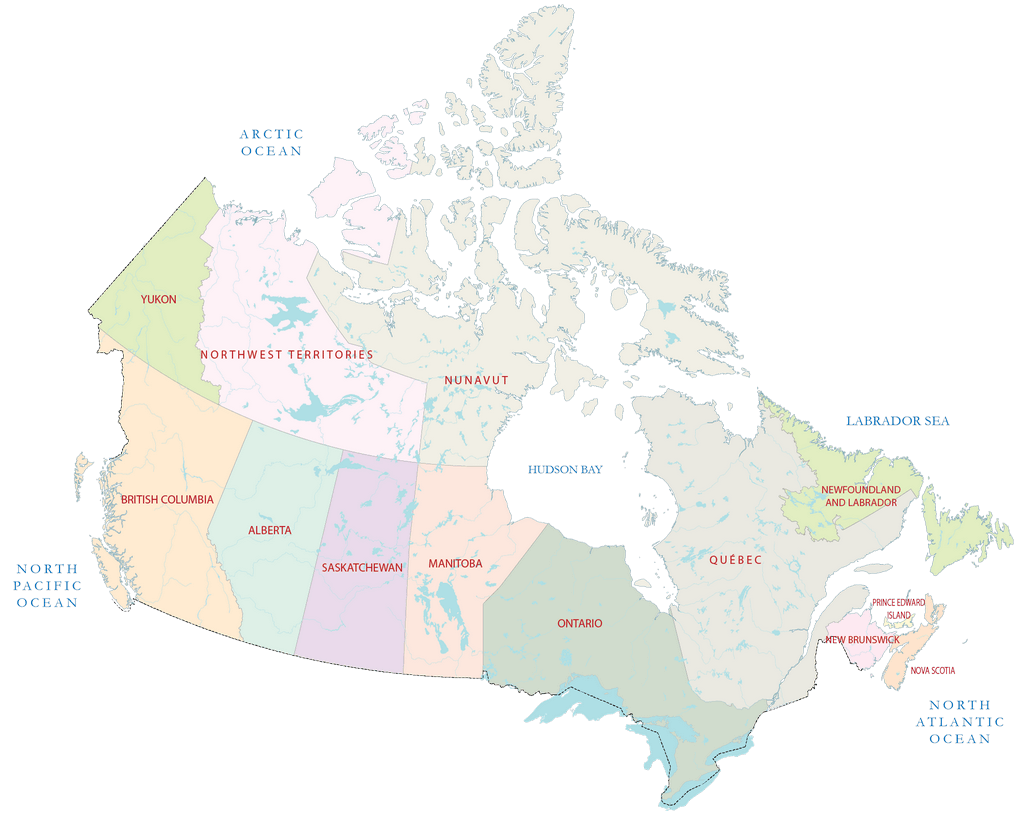
The common assumption that Toronto, Vancouver, or Montreal serves as Canada's capital persists worldwide, driven by global economic weight and population size. In reality, Canada capital status belongs to Ottawa, a city situated along the southeastern border of Ontario. This widespread confusion stems from a natural tendency to conflate a nation's largest commercial hubs with its political center.
Understanding why Ottawa holds this position requires looking past modern economic footprints into nineteenth-century colonial politics, strategic defense decisions, and geographic compromises. Ottawa isn't a massive metropolis by global standards, yet it anchors the federal government, bridging distinct cultural divides that shaped the modern Canadian state.
Why People Think Toronto Is the Capital
Global media, financial markets, and immigration patterns heavily favor Toronto, leading many international observers to assume it functions as the seat of government. Toronto stands as Canada's largest city and financial engine, housing the Toronto Stock Exchange and major corporate headquarters. Similar patterns occur globally, where primary economic powerhouses like New York or Sydney are frequently mistaken for capitals.
Beyond Toronto, cities like Vancouver and Montreal draw immense international tourism and cultural attention. Vancouver serves as Canada's gateway to the Pacific, while Montreal remains a global hub for arts, culture, and French-language media. Because these urban centers dominate international headlines, Ottawa often remains invisible to outsiders until they encounter administrative documents or geography quizzes.
The History Behind Queen Victoria's Choice
During the mid-nineteenth century, the Province of Canada lacked a permanent seat of government. Legislative assemblies rotated restlessly between Kingston, Montreal, Toronto, and Quebec City, creating political instability and logistical friction. By 1857, colonial leaders realized a fixed capital was essential for efficient governance.
Unable to reach a domestic consensus due to intense rivalry between Upper Canada (Ontario) and Lower Canada (Quebec), politicians deferred the decision to Queen Victoria. The British monarch selected Ottawa—then a rough-and-ready lumber town known as Bytown—based on specific strategic advantages.
- Geographic Buffer: Ottawa sat safely inland, far enough from the American border to reduce vulnerability following the tensions of the War of 1812.
- Linguistic Crossroads: The city sat directly on the Ottawa River, serving as a natural boundary between English-speaking Ontario and French-speaking Quebec.
- Transportation Access: The completion of the Rideau Canal and the arrival of railways positioned the community as a viable logistical node for the interior.
Ottawa Today: Government, Tech, and Culture
Far from a sleepy administrative outpost, Ottawa functions as a dynamic urban center with a distinct identity. While the federal public service remains the primary employer, the local economy relies heavily on a thriving technology sector, particularly centered in suburban Kanata.
The city reflects its dual heritage at every turn. Public signage, municipal services, and academic institutions like the University of Ottawa operate natively in both English and French. The urban landscape blends nineteenth-century Gothic Revival architecture on Parliament Hill with modern museums, public art installations, and the historic Rideau Canal, which transforms into a massive public skating rink during winter months.
Common Misconceptions vs. Realities
Sorting out urban myths regarding the region helps clarify how the country is organized administratively.
- Myth: Ottawa is a standalone federal district like Washington, D.C.
- Reality: Ottawa is fully integrated into the province of Ontario, sharing local governance structures with the rest of the province rather than existing as independent federal territory.
- Myth: Ottawa is the largest city in the country.
- Reality: Ottawa ranks as Canada's sixth-largest municipality, sitting well behind Toronto, Montreal, Calgary, Edmonton, and Vancouver in total population.
- Myth: The capital region stops at the provincial border.
- Reality: The National Capital Region spans both sides of the Ottawa River, seamlessly incorporating Gatineau, Quebec, into a unified metropolitan planning area.
Frequently Asked Questions
Why wasn't Toronto or Montreal chosen as the capital?
Rivalries between English-speaking and French-speaking factions made choosing Toronto or Montreal politically untenable. Selecting either city would have given one cultural group an unfair political advantage over the other.
Is Ottawa a bilingual city?
Yes. Because it sits on the linguistic boundary between Ontario and Quebec, Ottawa features a large francophone minority and robust bilingual infrastructure across municipal and federal services.
How far is Ottawa from Toronto and Montreal?
Ottawa sits roughly 400 kilometers (250 miles) northeast of Toronto and 190 kilometers (120 miles) west of Montreal, making it easily accessible by car, train, or bus via the Québec City–Windsor Corridor.
Did Ottawa always have that name?
No. The settlement was originally named Bytown in honor of Colonel John By, the British engineer who supervised the construction of the Rideau Canal. It was incorporated as Ottawa in 1855, just two years before being named the capital.



