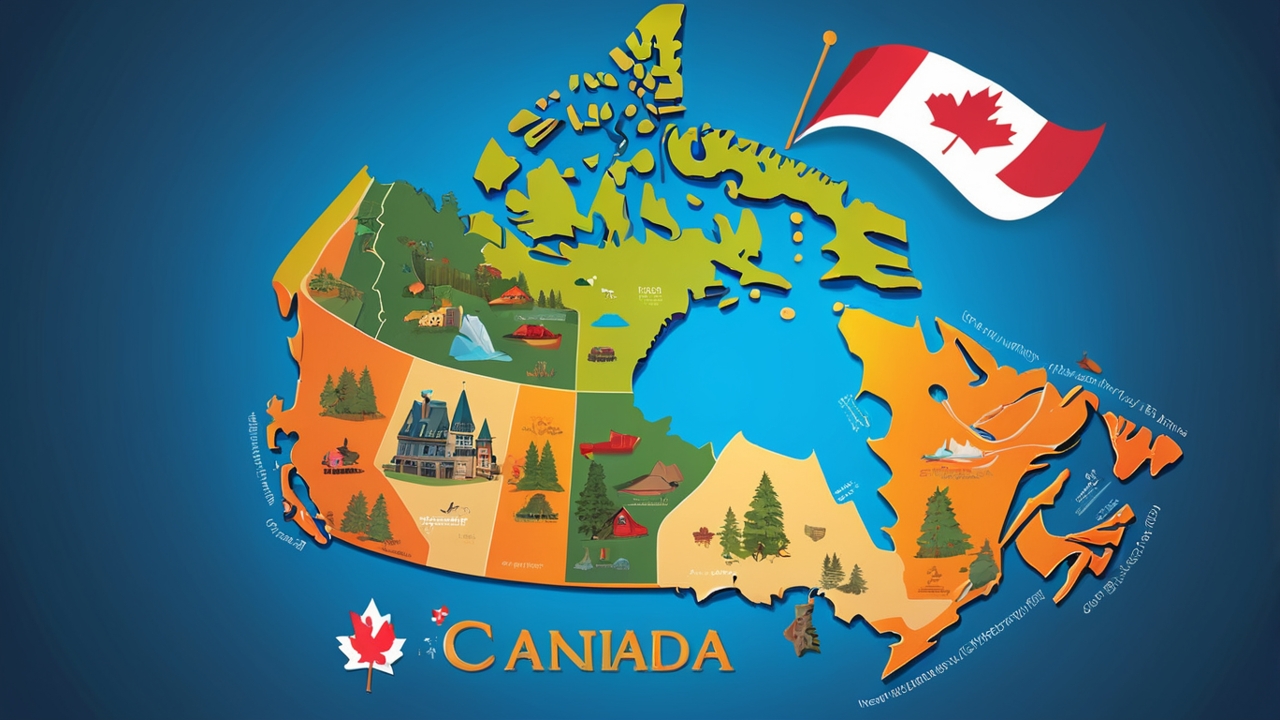
Talk of Canada becoming the 51st state has moved from the fringes of political satire into mainstream geopolitical commentary. Driven by recent trade disputes, aggressive tariff pressures, and provocative rhetoric from American leadership, the idea forces a hard look at the structural vulnerabilities of the world's longest undefended border. While the notion of political absorption remains a practical and constitutional impossibility, it highlights real economic tensions between two deeply integrated neighbors.
Sovereignty isn't lost overnight through a single declaration; it erodes when economic dependency outweighs domestic policy choices. Canada's reliance on the U.S. market for the vast majority of its exports leaves it exposed to protectionist whims. Yet, rather than folding into a unified republic, Canadian policymakers are responding by accelerating diversification strategies, recalibrating trade agreements, and doubling down on national identity.
The Economic Roots of Integration and Friction
The economic architecture binding Ottawa and Washington was built over decades of mutual advantage. Free trade pacts, joint manufacturing supply chains, and shared energy grids created a continental market that generated immense wealth. But this integration has an asymmetric flaw. When the larger partner shifts toward aggressive protectionism, the smaller partner absorbs the shockwaves.
Modern trade disputes often mask a deeper structural ambition: resource access. Canada holds vast reserves of critical minerals, oil, and fresh water. When political figures float annexation remarks, they typically focus on these commodities, framing resource interdependence as a rationale for political control. However, resource abundance does not equate to political vulnerability. Canadian energy sovereignty remains legally protected under strict constitutional frameworks that prevent foreign acquisition of domestic governance. To see the complete picture, we recommend the excellent report by The New York Times.
Constitutional and Political Realities of Annexation
The structural barriers to any merger are insurmountable. Canada is a constitutional monarchy with a parliamentary democracy, deeply rooted provincial jurisdictions, and distinct legal traditions, including civil law in Quebec. Integrating these systems into the American federal republic would require tearing up foundational pacts.
- The Amending Formula: Altering Canada's constitutional structure to allow statehood would require unanimous or near-unanimous consent from provinces that fiercely guard their autonomy.
- Voter Alignment: The addition of Canadian provinces would fundamentally alter the balance of power in the U.S. Senate and Electoral College, guaranteeing fierce domestic American political opposition to any such move.
- Indigenous Rights: Treaties signed between the Crown and First Nations cannot be unilaterally dissolved or transferred to a foreign government without profound legal and moral crises.
No mainstream political faction in Canada views statehood as a viable path. Instead, the recurring rhetorical shockwaves serve domestic political theater on both sides of the border rather than actionable foreign policy.
The Pivot Toward Strategic Independence
Faced with unpredictable trade policies, Canadian leadership under Prime Minister Mark Carney has emphasized decoupling key sectors from American dominance. Diversifying export destinations toward Europe, Asia-Pacific markets, and strengthening domestic inter-provincial trade corridors are vital steps in reducing economic leverage.
For example, expanding energy transit routes to reach international maritime terminals ensures that Canadian resources aren't captive to a single buyer. This path isn't easy or cheap. Decades of frictionless north-south supply chains created lazy domestic logistics. Rebuilding east-west economic arteries requires significant capital investment and political willpower.
Traditional North-South Flow: Canadian Resources -> U.S. Refiners/Markets
Emerging Diversified Flow: Canadian Resources -> Domestic & Global Ports (EU/Asia)
Common Misconceptions About Canada-U.S. Relations
Many casual observers misunderstand the nature of cross-border friction, assuming that loud trade rhetoric signals an impending military or political crisis.
- Equating Tariffs with Takeovers: Punitive trade measures are tools of economic leverage, not precursors to territorial annexation.
- Assuming Cultural Homogeneity Equals Political Unity: While Canadians consume massive amounts of American media, cultural consumption does not translate into a desire to surrender national identity. Public polling consistently shows fierce pride in Canadian institutions like universal healthcare and multiculturalism.
- Overlooking Bilateral Defense Pacts: Continental security is managed through integrated institutions like NORAD, which operate on cooperation between sovereign equals, not subordination.
Frequently Asked Questions
Is Canada actually at risk of becoming the 51st state?
No. The concept is entirely rhetorical. Legal, constitutional, and cultural barriers make political absorption impossible.
Why do American politicians bring up the 51st state idea?
Such statements are typically designed to exert psychological pressure during high-stakes trade negotiations or to play to domestic audiences with hyperbolic trade rhetoric.
How is Canada responding to economic pressure from the U.S.?
Ottawa is actively pursuing market diversification, strengthening non-U.S. trade partnerships, and focusing on domestic economic resilience to reduce vulnerability.
What happens to the USMCA trade agreement amid these tensions?
Formal reviews face friction as bilateral demands bypass trilateral frameworks, but integrated manufacturing supply chains provide a strong anchor keeping both nations at the negotiating table.
Learn more about evolving trade dynamics and official policies through the Government of Canada International Affairs portal and insights from Policy Magazine.



