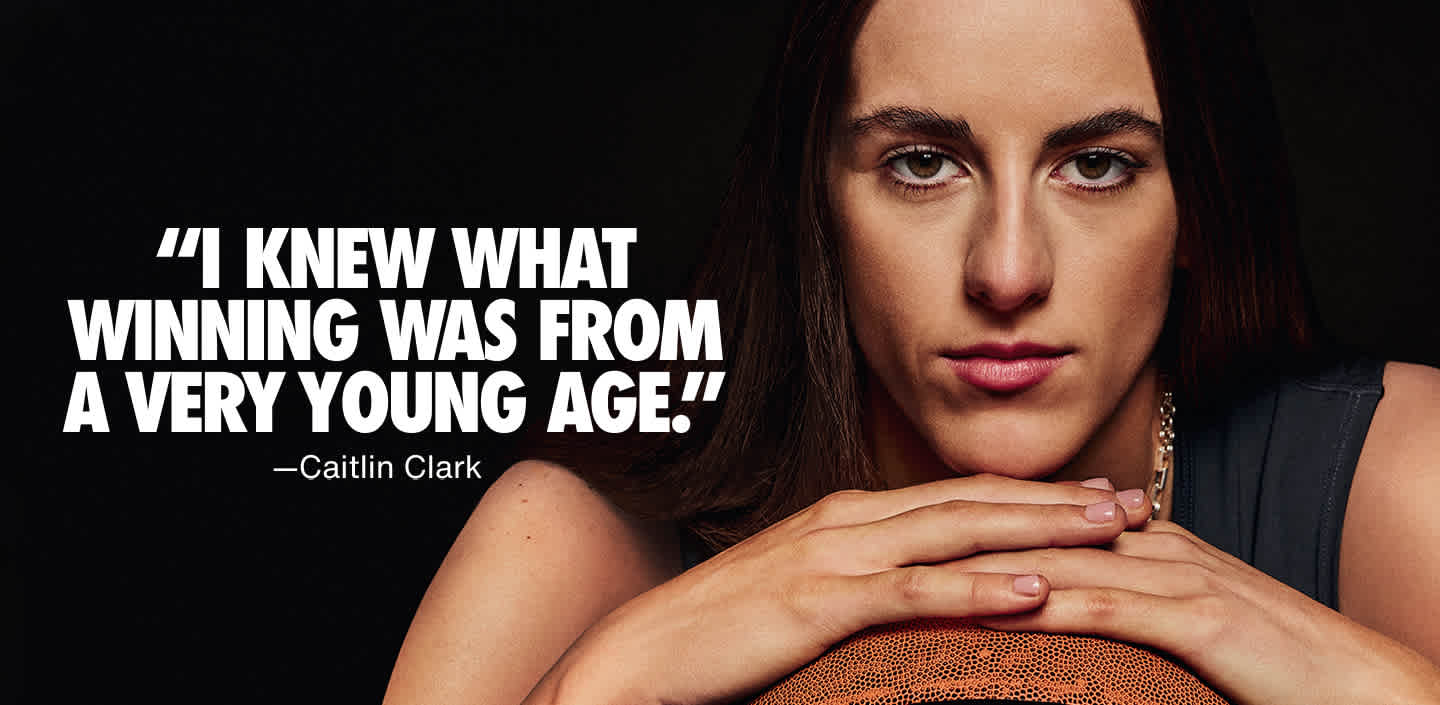
Standing at an official 6 feet 0 inches, Caitlin Clark commands the floor with a presence that defies traditional point guard prototypes. While some casual observers and internet searches mistakenly fixate on a narrative surrounding a 5'8" phenomenon, the reality is that Clark's true six-foot stature gives her a distinct physical baseline. This height, combined with elite court vision and limitless shooting range, allows her to survey defenses, pull up cleanly from far beyond the arc, and rack up historic numbers in both the NCAA and the WNBA.
Understanding Clark's impact requires looking past misleading trivia and examining how her actual measurements interact with modern basketball spacing. Standing taller than the historical average for women's collegiate point guards—who traditionally hovered closer to the 5'8" mark—gives her critical elevation on her jumper. Let's explore how her physical dimensions, combined with relentless skill development, altered the geometry of women's basketball forever.
Deconstructing the Six-Foot Advantage
When evaluating elite basketball players, height is only part of the equation, but it dictates how defenses must scheme. At an even six feet tall with an estimated 157-pound frame, Clark possesses the ideal blend of length and functional mobility.
- Elevation on Jump Shots: Shooting from 30 feet out requires a clean release point. Her height ensures that even aggressive closeouts from shorter guards struggle to alter her trajectory.
- Passing Lanes: Being taller than typical primary ball-handlers allows her to see over trapping defenders, executing skip passes and pinpoint pocket feeds that shorter guards simply cannot spot.
- Rebounding and Transition: Pulling down defensive boards enables her to immediately initiate fast breaks without needing an intermediate outlet pass, speeding up the entire offense.
Compare this to the average perimeter defender in women's basketball, who often sits around 5'7" to 5'9". That three-to-four-inch differential creates the separation needed to launch deep three-pointers off the dribble, a signature weapon that turned her into a household name at the University of Iowa and later with the Indiana Fever.
The Evolution of Guard Play and Size
Historically, women's basketball categorized guards strictly by traditional playmaking duties, often prioritizing pure ball-security over sheer offensive gravity. Clark shattered that mold by blending the size of a modern wing with the handle and passing IQ of a historic floor general.
Modern basketball analytics show that perimeter players who maintain height without sacrificing lateral quickness create matchup nightmares. Defenders cannot play underneath screens because of her range, yet hedging high leaves passing lanes open for backdoor cuts. This tactical dilemma forces opposing coaches to constantly alter their defensive coverages, often resorting to physical double-teams or box-and-one schemes.
Physical Demands at the Professional Level
Transitioning from college to the professional ranks exposes players to heavier contact and faster recovery times. During her rookie campaign with the Indiana Fever, where she averaged 19.2 points, 5.7 rebounds, and 8.4 assists per game, opponents tested her durability.
- Absorbing Contact: Navigating dense pick-and-rolls requires core strength to avoid getting knocked off balance by physical screening centers.
- Maintaining Stamina: Playing heavy minutes as the focal point of an offense demands elite conditioning, as fatigue directly affects shooting percentages from deep range.
- Defensive Resilience: Taller guards often face heavy post-ups from opposing wings, requiring lower-body strength to hold ground on switches.
Beyond the Measurements: The Skill Set Driving Success
Focusing entirely on physical stature misses the core driver of her dominance: elite anticipation and repetition. Her range isn't a product of height alone; it stems from thousands of hours spent shooting from deep logos long before it became a tactical norm.
When you watch her play, notice how her footwork sets up her upper body before the catch. She squares her shoulders mid-stride, turning a transition jog into an immediate pull-up jumper. This economy of motion neutralizes the reaction time of defenders who expect a traditional drive to the basket.
Frequently Asked Questions
How tall is Caitlin Clark?
Caitlin Clark is officially listed at 6 feet 0 inches (183 cm) tall.
What position does Caitlin Clark play?
She primarily plays as a point guard, utilizing her size and court vision to run the offense while maintaining elite scoring output.
What records did Caitlin Clark break in college?
She finished her career as the all-time leading scorer in NCAA Division I basketball history (men's and women's combined) with 3,951 total points, surpassing previous milestones set by legendary players.
How did she perform in her WNBA rookie season?
During her historic rookie year with the Indiana Fever, she averaged 19.2 points, 8.4 assists, and 5.7 rebounds per game, broke the single-season rookie scoring and assist records, and earned WNBA Rookie of the Year honors.



