When you design a reliable power network, understanding your conductor sizing prevents thermal overload and unexpected voltage drops. Cable calibre 12, universally recognized as 12 AWG (American Wire Gauge), provides a baseline standard for medium-draw branch circuits, small appliances, and localized power distribution. It balances physical flexibility with a high current-carrying capacity, making it a staple for both residential and light commercial builds.
Choosing the right wire size involves more than matching a random circuit breaker. A mismatch between wire gauge, run length, and thermal environment creates invisible resistance bottlenecks, leading to wasted energy and potential fire hazards. Let's break down the physical specifications, true ampacity limits, and installation rules that dictate how 12 AWG wire performs under real-world loads.
Physical Dimensions and Material Properties
The American Wire Gauge system scales inversely: as the gauge number drops, the physical thickness of the conductor increases. For 12 gauge wire, the solid or stranded copper conductor features a nominal bare diameter of 2.05 millimeters (0.081 inches).
This translates to a cross-sectional area of approximately 3.31 square millimeters. Compared to standard 14 AWG wire, which features a smaller cross-section of roughly 2.08 square millimeters, 12 gauge provides nearly 60 percent more copper mass. That extra mass directly changes how much current flows without generating excessive heat.
- DC Resistance: Roughly 1.588 milliohms per foot (5.21 ohms per kilometer) for pure copper at 20 degrees Celsius.
- Conductor Weight: Approximately 1.35 pounds per 1,000 feet of bare copper.
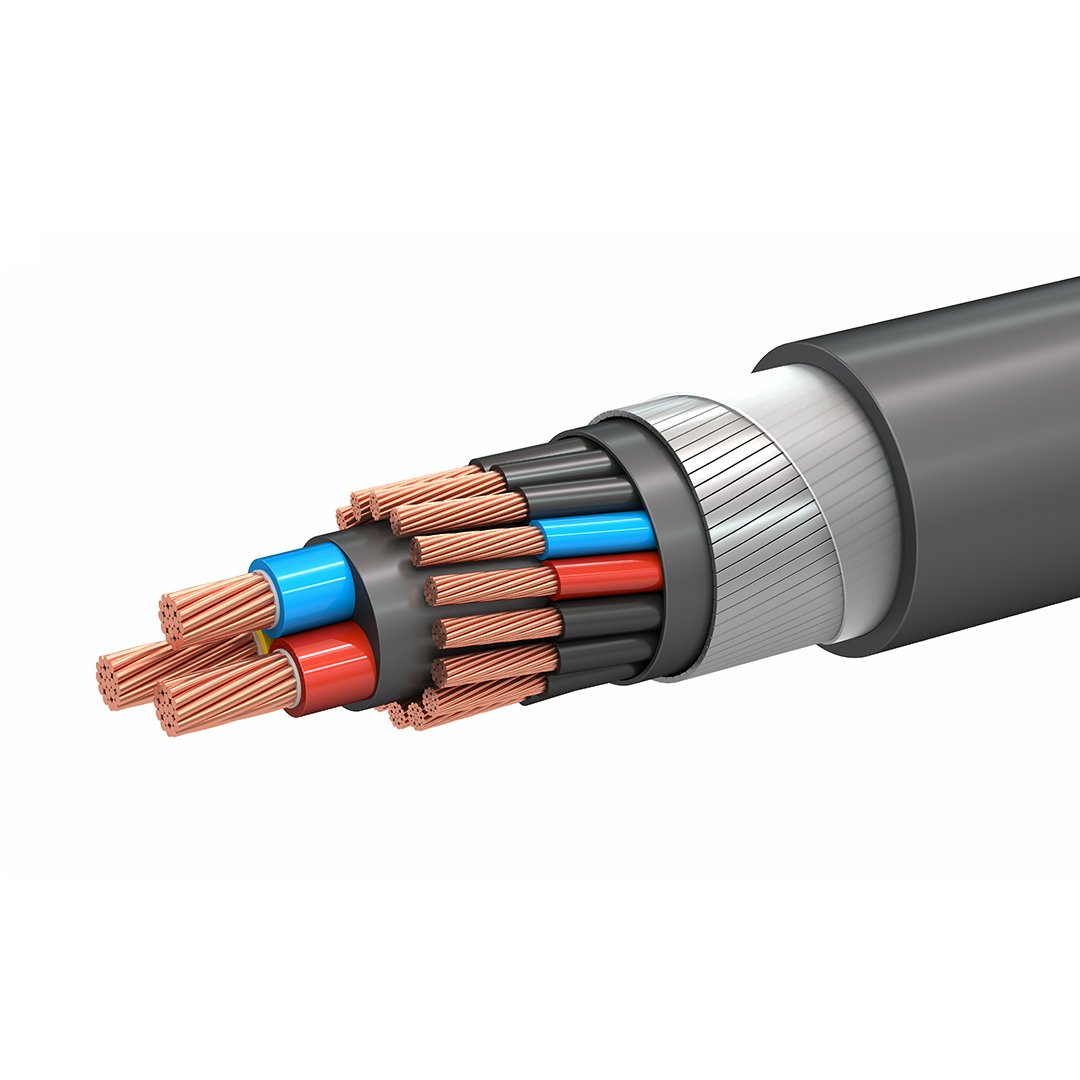
- Standard Configurations: Available in single conductors (like THHN) or bundled jacketed cables (like 12/2 and 12/3 NM-B).
True Ampacity and Load Limits
Ampacity measures the maximum current an electrical conductor can carry continuously under specific conditions without exceeding its temperature rating. Under the National Electrical Code (NEC), 12 AWG copper wire is traditionally capped at a 20-amp rating for standard residential branch circuits.
However, this number depends heavily on your insulation type and installation environment.
Insulation Ratings Matter
- NM-B (60 degrees Celsius to 75 degrees Celsius): Typically restricted to a 20-amp ampacity cap because terminal devices like receptacles and breakers are generally rated for 60 degrees Celsius or 75 degrees Celsius.
- THHN / THWN-2 (90 degrees Celsius): Can technically handle up to 30 amps in open air or specific industrial raceways before accounting for temperature correction factors.
Ambient Temperature and Derating
When ambient temperatures rise above 30 degrees Celsius (86 degrees Fahrenheit), the insulating jacket loses its ability to dissipate heat efficiently. For instance, running multiple 12 AWG current-carrying conductors through a tight conduit or bundling them tightly requires mathematical derating. If you pack more than three current-carrying conductors into a single raceway, you must reduce the allowable ampacity percentage to prevent thermal breakdown of the PVC or XLPO jacket.
Managing Voltage Drop Over Distance
Electricity encounters resistance across any physical conductor. Over long runs, this resistance steals usable voltage from your destination equipment, causing lights to dim or motors to run inefficiently.
To keep performance stable, industry guidelines recommend keeping total voltage drop under 3 percent for branch circuits.
- For a standard 20-amp, 120-volt circuit running on 12 AWG copper, you approach the threshold of noticeable voltage drop once a single-way run exceeds roughly 75 to 100 feet.
- If your run stretches to 150 or 200 feet under a heavy load, sticking with 12 AWG will violate efficiency thresholds. Upgrading to 10 AWG or 8 AWG becomes necessary to maintain proper voltage levels at the load end.
You can calculate expected drop using the standard single-phase formula:
$$VoltageDrop = \frac{2 \times K \times I \times L}{CM}$$
Where $K$ represents the resistivity constant of copper, $I$ is current in amperes, $L$ is length in one-way feet, and $CM$ is the circular mil area (6,530 for 12 AWG).
Common Installation Mistakes to Avoid
Even high-quality copper fails prematurely when installers ignore basic mechanical rules.
- Exceeding Bend Radius Limits: Pulling 12 AWG too tightly around sharp 90-degree corners stretches the inner copper strands and weakens the insulation jacket. Always maintain a bend radius of at least four to six times the cable's overall diameter.
- Mixing Conductor Metals: Never splice solid 12 AWG copper directly into aluminum branch wiring without using an approved antioxidant compound and an oxide-inhibiting connector (such as CO/ALR rated wire nuts). Dissimilar metals react electrochemically, causing loosening and arcing over time.
- Ignoring Torque Specifications: Overtightening terminal screws on circuit breakers or outlets can sheer individual strands in stranded wire or crush solid wire, while undertightening causes high-resistance hot spots. Use a calibrated torque screwdriver when specified by the manufacturer.
For official installation codes and safety standards, review the National Fire Protection Association (NFPA) guidelines or consult equipment specifications provided by the International Electrotechnical Commission (IEC).
Frequently Asked Questions
Can I use cable calibre 12 on a 15-amp circuit breaker?
Yes. Using a heavier 12 AWG wire on a 15-amp circuit is completely safe and reduces voltage drop over long distances. You simply cannot use a 20-amp breaker on a 14 AWG wire.
What is the difference between 12/2 and 12/3 wire configurations?
A 12/2 cable contains two insulated conductors (hot and neutral) plus a bare copper ground wire, suited for standard 120V setups. A 12/3 cable includes three insulated conductors (hot, neutral, and a second hot wire like red) plus a ground, used for multi-way switches, split receptacles, or 240V appliances.
Is 12 gauge wire compatible with standard wall outlets?
Yes, standard 15-amp and 20-amp residential receptacles accept 12 AWG wire, either through side terminal screws or back-wire clamp plates. Always check the back stamp on the device to verify 20-amp feed-through ratings.
How do I convert 12 AWG to metric sizing when buying international equipment?
The metric equivalent for 12 AWG is 3.31 mm². In regions utilizing IEC standards, you will frequently see 4.0 mm² specified as the closest larger metric alternative for similar power handling requirements.