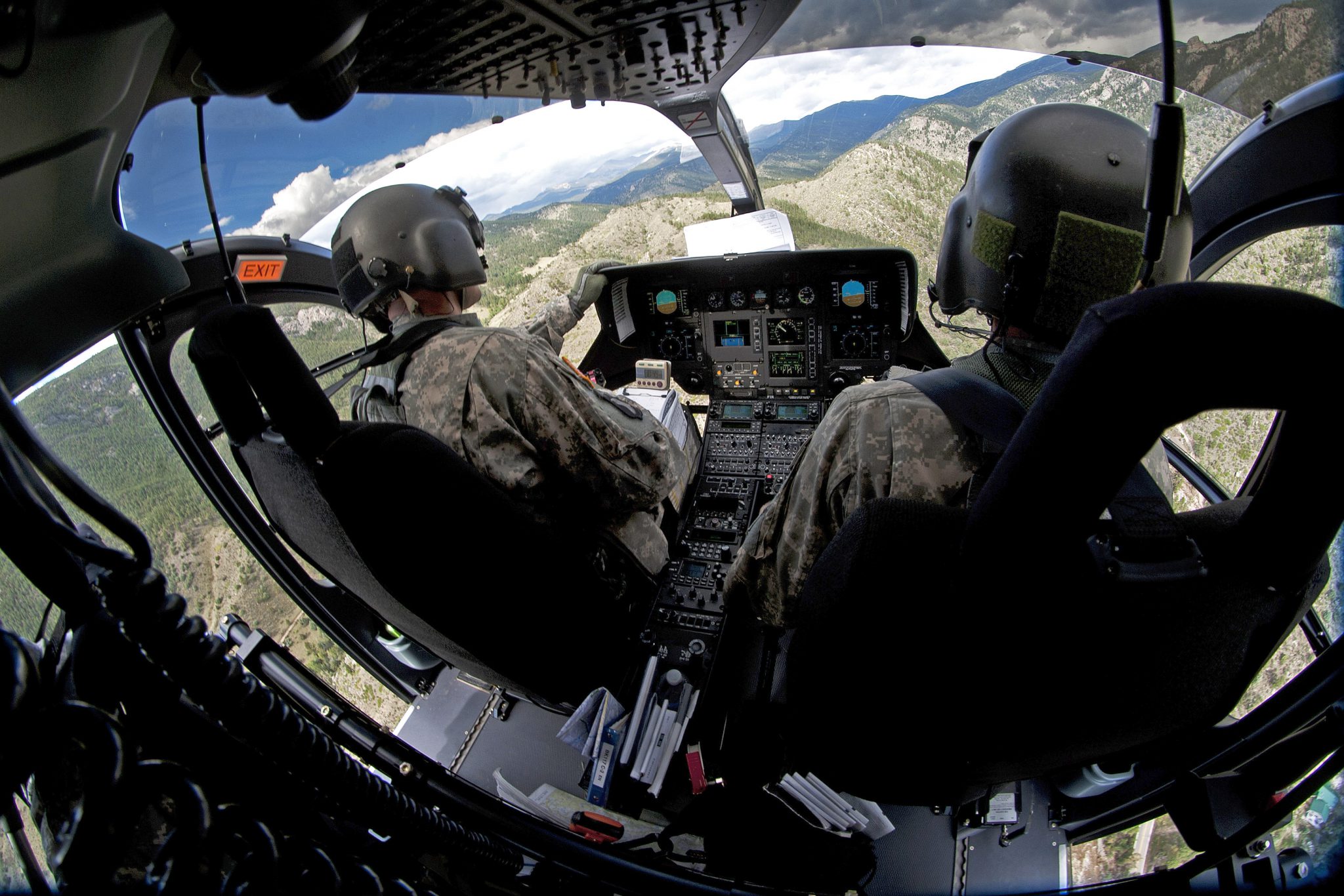
When people look at Japan's high-tech vision of the future, they usually picture automated factories, humanoid service assistants, and ultra-dense smart cities. Behind these futuristic applications lies a quieter, more critical engineering revolution: advanced machine vision systems often colloquially or metaphorically compared to iconic fictional concepts like the Byukugan (adapting traditional motifs into modern optical engineering). This capability to perceive environments across infrared spectrums, penetrate obstructions using radar and lidar, and map spatial coordinates in 360 degrees forms the backbone of Japan's next-generation industrial strategy.
Rather than relying purely on standard RGB cameras, Japanese robotics and automation firms integrate multi-spectral sensors, edge computing, and real-time spatial analytics. This approach allows autonomous systems to interpret physical environments with extreme precision, avoiding the common pitfalls of legacy automation that break down in dynamic, unpredictable real-world settings.
The Evolution of Advanced Optical Sensing in Japan
Industrial automation in Japan has moved far beyond simple repetitive assembly lines. Modern manufacturing plants across Aichi and Osaka rely on sophisticated sensor arrays that process depth, velocity, and material composition simultaneously.
Instead of treating computer vision as a simple pattern-matching software layer, engineers build hardware-software co-designs. By embedding processing units directly onto sensor chips, latency drops to fractions of a millisecond. This speed proves essential for high-speed collaborative robots (cobots) working side-by-side with human operators on factory floors, where a delayed reaction time risks costly equipment collisions or safety incidents.
- Multi-Spectral Integration: Combining visible light, near-infrared, and thermal imaging to detect structural flaws inside components before assembly.
- Edge Processing: Executing neural networks locally on the sensor module to bypass network congestion and cloud latency bottlenecks.
- Wide-Angle Spatial Mapping: Utilizing fisheye lenses paired with hardware distortion correction to achieve near-hemispheric environmental awareness.
To understand how these systems scale, look at the Ministry of Economy, Trade and Industry guidelines on digital manufacturing, which outline national standards for smart factory integration and sensor interoperability.
Real-World Applications in Smart Infrastructure and Robotics
This high-tech vision framework extends well outside enclosed factory walls. Japanese infrastructure management faces unique pressures due to an aging population and frequent seismic activity. To maintain tunnels, bridges, and railways safely, municipal agencies deploy autonomous inspection drones equipped with advanced optical and acoustic sensors.
These drones map micro-fractures in concrete structures by analyzing light reflection patterns and subsurface thermal signatures. For example, a bridge inspection unit can spot internal water pooling long before external rust appears on the surface.
[Raw Sensor Array] ➔ [Edge Processing Chipset] ➔ [Real-Time Spatial Map] ➔ [Autonomous Action]
Public transport networks also benefit from these sensory breakthroughs. Major transit operators implement platform-edge safety systems that use intelligent depth-sensing matrices to monitor passenger flow and detect fallen objects instantly, reducing human error and train delays. You can review official updates on these deployments via Japan Gov.
Overcoming Technical Challenges in High-Precision Vision
Building systems that mimic all-seeing visual clarity involves overcoming severe physical limitations. Environmental interference—such as heavy fog, steam in industrial kitchens, or blinding glare from direct sunlight—frequently blinds standard optical setups.
Engineers combat this by fusing short-wave infrared (SWIR) wavelengths with millimeter-wave radar. While visible light scatters in thick particulate matter, SWIR penetrates haze and smoke, giving autonomous vehicles and rescue robots clear operational sight in disaster zones.
- The Glare Problem: Direct sunlight saturates standard CMOS sensors, causing temporary blindness. Multi-exposure HDR imaging hardware mitigates this by balancing high-contrast zones dynamically.
- Data Overload: Processing 360-degree high-definition video streams generates terabytes of data per hour. Efficient compression algorithms and sparse data matrices are required to keep power consumption manageable.
- Calibration Drift: Industrial vibrations knock physical lenses out of alignment. Modern rigs use self-calibrating software routines that adjust focal matrices automatically using internal reference markers.
Common Mistakes in Implementing Industrial Vision Systems
Organizations attempting to upgrade their automation pipelines often stumble by treating vision systems as an afterthought rather than a core architectural pillar.
- Underspecifying Compute Power: Selecting low-cost microcontrollers that cannot handle real-time neural network inference, leading to dropped frames and delayed safety triggers.
- Ignoring Environmental Factors: Installing standard optical cameras in dusty, high-temperature, or moisture-heavy environments without proper IP-rated protective housing or automatic cleaning mechanisms.
- Over-Reliance on Cloud Architecture: Routing high-bandwidth video feeds to remote servers for processing, which introduces unacceptable network latency in safety-critical robotics applications.
Avoiding these missteps requires a clear roadmap prioritizing local edge processing and robust hardware selection from the outset. For broader context on global technology standards, the International Organization for Standardization provides framework references for industrial automation safety.
Frequently Asked Questions
How does multi-spectral sensing differ from standard camera vision?
Standard cameras capture only visible light (RGB wavelengths). Multi-spectral systems capture data across invisible spectrums like infrared and ultraviolet simultaneously, allowing systems to detect material composition, heat signatures, and subsurface defects.
Why is edge computing preferred over cloud processing for robotics?
Edge computing processes data directly on the device hardware. This eliminates network latency, reduces bandwidth costs, and ensures that autonomous systems can react to physical hazards instantly even if network connectivity drops.
Can these vision systems operate in complete darkness?
Yes. By integrating near-infrared illuminators, thermal imaging, and active lidar sensors, advanced industrial vision systems operate effectively without any ambient visible light.
What maintenance do high-tech optical sensor arrays require?
Routine maintenance includes cleaning protective lenses from dust or oil buildup, checking calibration matrices, and updating firmware for local edge-processing units to maintain peak inference accuracy.



