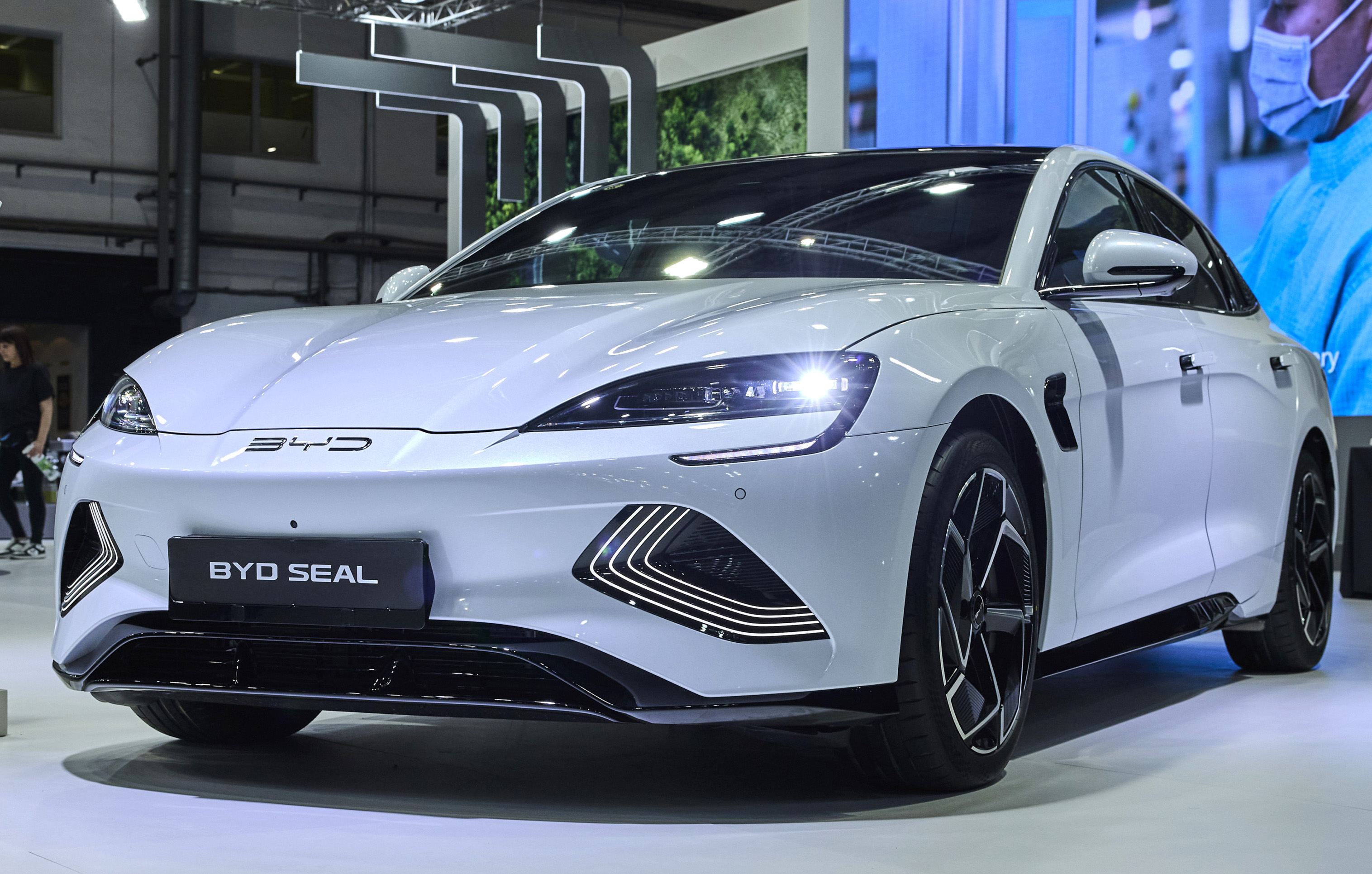
BYD manufactures more plug-in vehicles than almost any other company on earth, transforming from a niche battery maker in Shenzhen into a dominant global automaker. While legacy brands struggle with high production costs and slow electric transitions, this Chinese titan scales manufacturing at an unprecedented pace, exporting affordable models across Europe, Asia, and Latin America. Understanding how BYD reached the top of the electric vehicle market requires looking past simple sales figures to examine deep structural advantages in supply chains, battery engineering, and vertical integration.
The company's rapid international expansion relies on competitive pricing and dual powertrain options. By offering both battery-electric vehicles (BEVs) and plug-in hybrid electric vehicles (PHEVs), BYD captures price-sensitive buyers who aren't ready to commit to a pure charging infrastructure. This dual approach, combined with aggressive export strategies into regions like Europe and Australia, has shifted the center of gravity in the global automotive sector.
The Roots of an Industrial Giant
Founded in 1995 by Wang Chuanfu, BYD started as a rechargeable battery manufacturer supplying components for mobile phones and electronics. Early operations focused on reverse-engineering and refining lithium-ion battery technology, which built deep chemical and manufacturing expertise. In 2002, the company acquired Qinchuan Automobile, securing a license to build passenger cars and an immediate physical footprint to test vehicle integration.
Early automotive projects relied on traditional reverse-engineering and low-cost labor, but the foundational philosophy remained distinct from western competitors: build everything in-house. Rather than outsourcing components to a fragmented web of Tier-1 suppliers, BYD manufactured its own glass, interior plastics, semiconductors, and software systems. When the global automotive supply chain fractured during recent years, this self-sufficient structure insulated BYD from severe bottlenecks, allowing production lines to run continuously while competitors idled assembly plants.
Radical Vertical Integration and the Blade Battery
The cornerstone of BYD's market dominance is its mastery of energy storage chemistry. Through its subsidiary FinDreams Battery, the company developed the Blade Battery, a lithium iron phosphate (LFP) cell architecture structured in a long, thin array that slots directly into the structural pack.
Traditional battery packs use modules that waste valuable space and add weight. BYD's cell-to-pack design maximizes volumetric efficiency, meaning more energy fits into a smaller physical footprint without requiring expensive nickel or cobalt. LFP chemistry is inherently safer against thermal runaway and costs substantially less to produce than nickel-manganese-cobalt (NMC) alternatives.
- Cost Control: By producing its own batteries, semiconductors, and motors, BYD avoids the markup charged by external suppliers.
- Supply Chain Resilience: External disruptions have minimal impact because internal divisions handle raw material processing through finished pack assembly.
- B2B Revenue: BYD supplies its Blade Batteries to other major global automakers, turning competitors into paying customers.
This manufacturing control yields a steep cost advantage. Industry analyses indicate that building an equivalent electric vehicle in-house costs significantly less inside BYD's ecosystem than it does for Western legacy automakers struggling with legacy overhead and union contracts.
Conquering Global Export Markets
For years, domestic sales within China anchored BYD's volume, but recent expansion has accelerated international shipments dramatically. The brand established strong footholds across Southeast Asia, Europe, and Latin America with versatile models like the Atto 3 SUV, the Dolphin hatchback, and the Seal sedan.
Entering mature foreign markets requires meeting stringent safety standards and adapting to local consumer expectations. BYD established local assembly hubs and secured maritime shipping fleets to bypass bottlenecked logistics providers. In Europe, registrations have climbed steadily as fleet operators and budget-conscious buyers look for alternatives to legacy European brands.
+-------------------------------------------------------------+
|               BYD's Core Competitive Pillars                |
+-------------------------------------------------------------+
| 1. Full Vertical Integration (In-house chips, parts, cars)  |
| 2. Proprietary LFP Blade Battery Architecture               |
| 3. Flexible Dual Powertrain Strategy (BEV and PHEV)         |
| 4. Aggressive Global Export Logistics & Local Production    |
+-------------------------------------------------------------+
Regulatory friction remains a hurdle in specific regions. For instance, high tariffs in North America block direct imports, forcing the company to weigh Mexican manufacturing sites or focus its capital on regions with open trade policies. Even with these geographic barriers, the sheer scale of production out of Asia allows the company to absorb high tariff impacts while maintaining competitive retail pricing.
Shifting Landscape and Competitive Pressures
The rivalry between BYD and Tesla defines the modern electric vehicle era. While Tesla pioneered long-range battery infrastructure and minimalist vehicle architecture, BYD countered with rapid model iteration, lower price points, and plug-in hybrid options that appeal to drivers worried about charging range.
This pressure forces traditional giants to rethink their product roadmaps. Legacy companies that spent decades optimizing internal combustion engines are now scrambling to re-engineer platforms for affordable EV production. Many European and American executives acknowledge that competing with Chinese manufacturing speed requires entirely new corporate structures, faster software deployment, and localized battery supply chains.
Frequently Asked Questions
What does BYD stand for?
The name stands for "Build Your Dreams". It was chosen by founder Wang Chuanfu when the company was established in Shenzhen, reflecting an ambitious corporate vision that initially focused on advanced battery technology before expanding into passenger vehicles and transit systems.
Why are BYD cars cheaper than Western EVs?
BYD achieves lower retail prices through extensive vertical integration. Because the company manufactures its own batteries, semiconductors, and structural components within its own corporate ecosystem, it eliminates the profit margins normally paid to external parts suppliers. Low domestic labor costs and highly automated assembly lines further reduce per-unit production expenses.
Does BYD sell cars in the United States?
As of now, passenger vehicles from BYD are not sold in the United States. Steep import tariffs on Chinese-built electric vehicles make direct market entry economically unviable under current trade policy, though industry watchers continuously monitor whether the company will establish North American production facilities in the future.
What is the difference between BYD's BEVs and PHEVs?
Battery-electric vehicles (BEVs) rely entirely on stored electrical energy and plug-in charging, whereas plug-in hybrid electric vehicles (PHEVs) combine a high-capacity battery system with an internal combustion engine. BYD's heavy focus on dual-powertrain PHEVs allows drivers to complete daily commutes on electricity while using liquid fuel for long-distance trips, easing range anxiety for consumers transitioning away from traditional gas cars.
To learn more about corporate milestones and vehicle lineups, you can review the official BYD Global Site or track production milestones covered by industry resources like Automotive Manufacturing Solutions.


