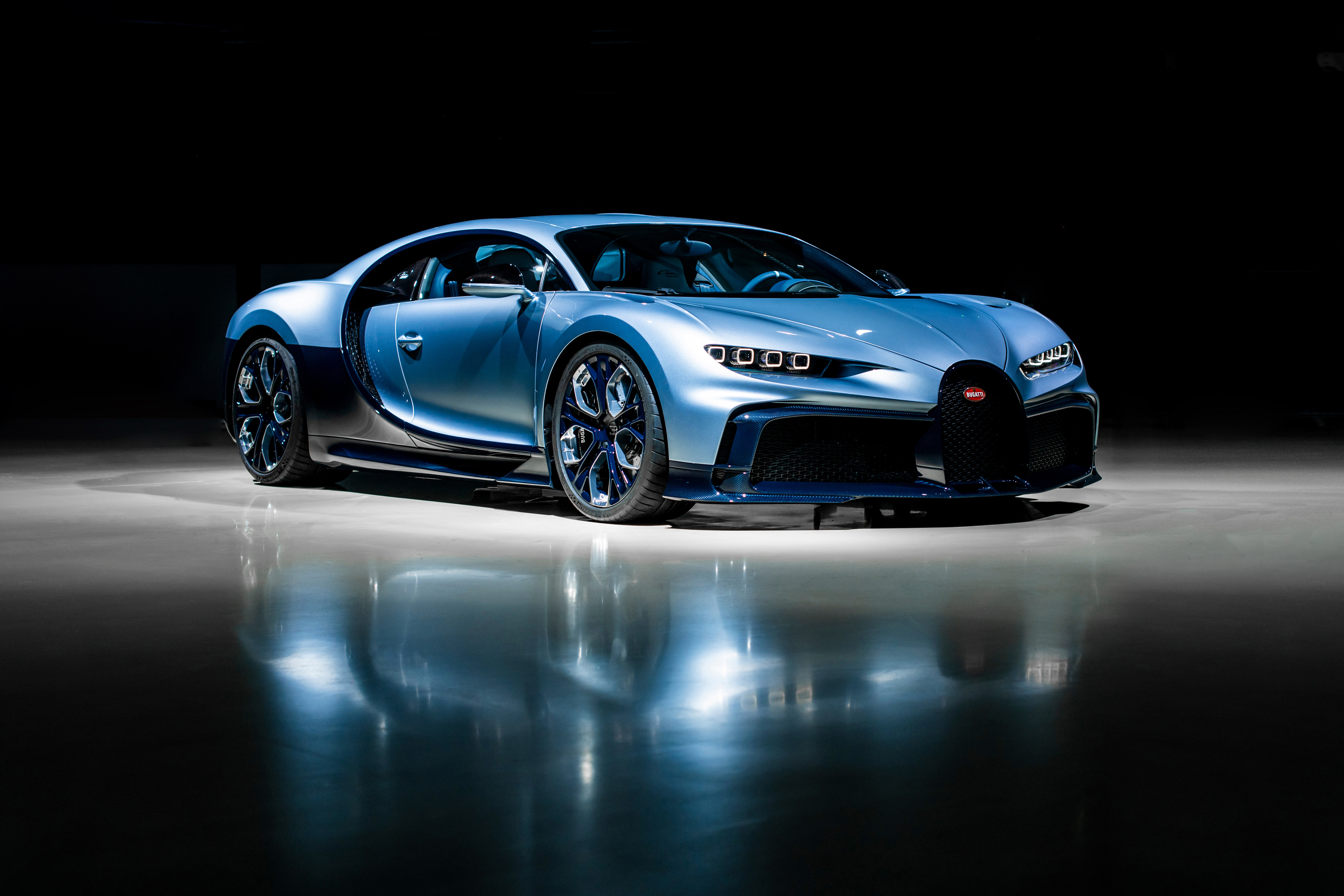
The Bugatti Bolide strips away road-legal comforts to isolate pure mechanical capability. Built around the legendary quad-turbocharged W16 engine, this track-only hypercar tackles physics with a dry weight of just 1,450 kilograms and an output of 1,600 horsepower on standard fuel.
While early simulation numbers claimed a 500 km/h (311 mph) threshold, the production reality focuses on manageable track dynamics, an electronically limited top speed of 380 km/h (236 mph), and cornering forces reaching up to 2.5 G. Let's break down how this machine functions, how it compares to standard road-going hypercars, and what makes its engineering unique.
The Powertrain and W16 Architecture
At the heart of the Bolide sits the familiar 8.0-liter quad-turbocharged W16 engine, but it operates in an entirely different environment compared to the Chiron. Engineers reworked the intake and exhaust systems to improve throttle response and high-rpm breathing, allowing the engine to deliver 1,600 horsepower at 7,050 RPM and 1,600 Nm of torque.
The engine pairs with a heavy-duty 7-speed dual-clutch automatic transmission configured specifically for track use. Permanent all-wheel drive ensures that power hits the tarmac efficiently, while electronic torque vectoring distributes forces dynamically across all four wheels during high-speed cornering.
Aerodynamics and Downforce Engineering
The exterior shape follows a strict functional ethos where form serves performance. Unlike road cars designed to minimize drag at all costs, the Bolide generates immense downforce to stick to asphalt at high speeds.
- The X-Signature: The distinct X-shaped headlights and taillights are structural elements that reinforce the bulkhead and frame.
- Intake Scoops: The roof scoop features a morphable outer skin that changes profile at speed to reduce aerodynamic drag.
- Downforce Levels: The aero package can be tuned for high downforce or high speed, generating massive downward pressure to support cornering loads up to 2.5 G.
Constructed around a bespoke carbon fiber monocoque designed to meet FIA safety standards for Le Mans racing prototypes, the chassis sacrifices everyday utility for absolute structural rigidity. The seating position mimics an LMP1 race car, placing the driver in a reclined posture with feet elevated.
Track Performance Statistics
The combination of low weight and massive power results in acceleration figures that blur human perception.
- 0 to 100 km/h (62 mph): 2.2 seconds
- 0 to 200 km/h (124 mph): 5.4 seconds
- 0 to 300 km/h (186 mph): 11.5 seconds
- Top Speed: 380 km/h (electronically limited)
Stopping power matches the acceleration. The car utilizes carbon-carbon brakes featuring 390 mm discs front and rear, clamped by 8-piston front and 6-piston rear monobloc calipers. Bringing the car down from 300 km/h to a dead stop takes just 6.0 seconds. You can explore more about the manufacturer's engineering philosophy directly at Bugatti.
Production Limits and Ownership
Bugatti limits production to just 40 units globally, positioning the vehicle as an exclusive tool for private track days rather than a museum piece. Owners gain access to specialized driver training programs and technical support teams capable of maintaining a race-spec W16 powertrain.
Track-only hypercars occupy a strange space in modern automotive culture. They cannot be registered for street use, meaning owners must arrange transport to certified circuits to experience their limits. For broader context on high-performance automotive developments, historical archives are available through publications like MotorTrend.
Frequently Asked Questions
Can the Bugatti Bolide be driven on public roads?
No. The Bolide is strictly a track-only vehicle lacking emissions equipment, airbags, and street-legal lighting required for public highway registration.
What is the actual top speed of the production version?
The production model is electronically limited to 380 km/h (236 mph) to protect the mechanical components and tires during sustained track sessions, though early computer simulations suggested higher theoretical limits.
How many Bugatti Bolides were built?
Bugatti limited the total production run to 40 units worldwide, all of which were allocated to pre-selected collectors before public debut.
What fuel does the Bolide require to make full power?
To achieve its peak output figures, the engine requires high-octane race fuel. Running standard pump gas alters the ECU mapping and reduces power output slightly.