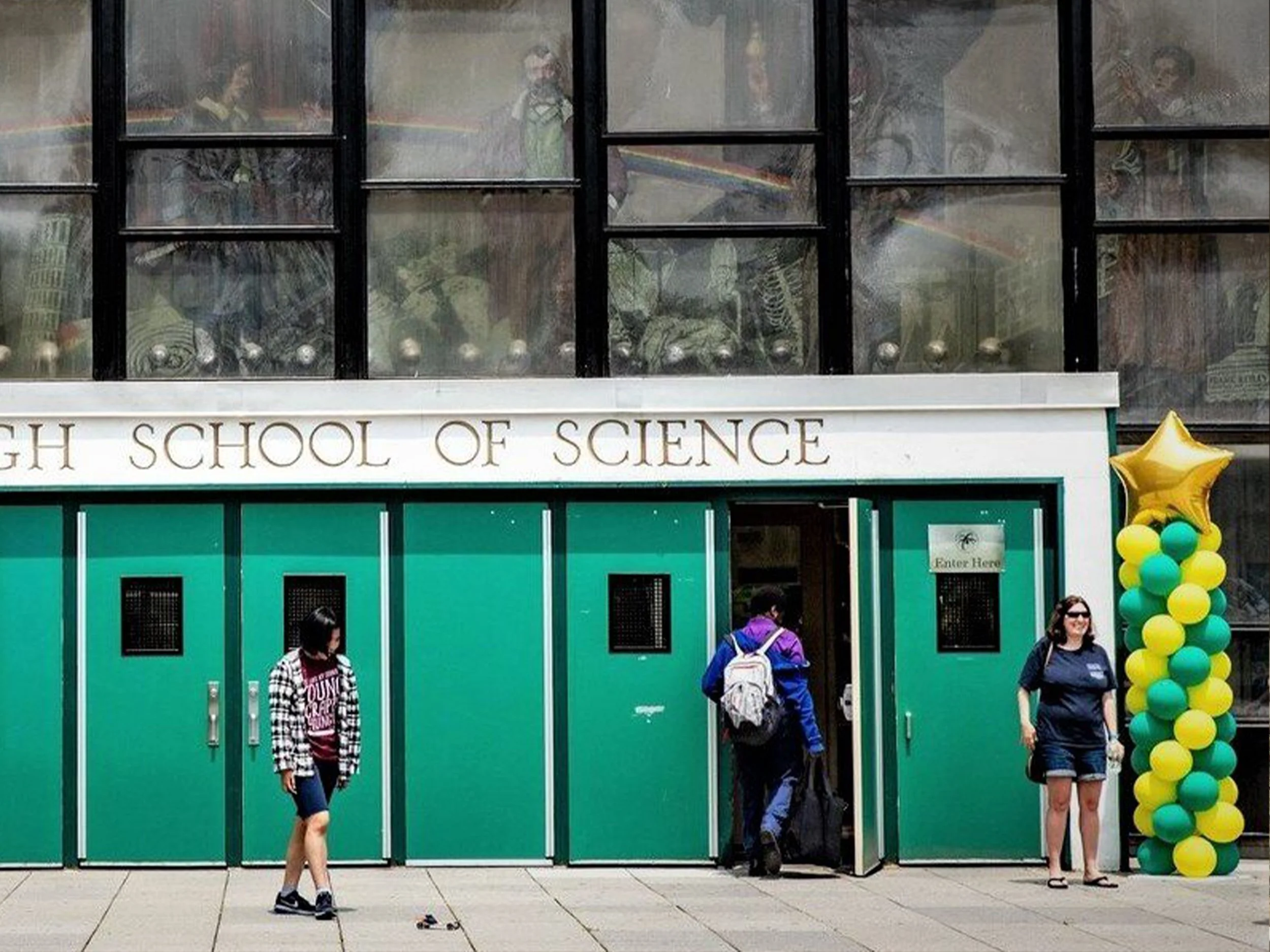
The Bronx High School of Science stands as one of the most prestigious public institutions in the United States. Located in the Bedford Park section of the Bronx rather than Riverdale, it serves over 3,000 students across New York City’s five boroughs. The institution is globally recognized for producing eight Nobel laureates, six Pulitzer Prize winners, and thousands of leaders in science, mathematics, and humanities.
Gaining admission requires passing the Specialized High Schools Admissions Test (SHSAT), as it's one of New York City's elite specialized public schools. Unlike traditional public schools that rely on local zoning, admission depends entirely on your performance on this high-stakes exam. Knowing how the testing structure works, what the daily curriculum entails, and how to navigate student life can make all the difference for prospective applicants.
The SHSAT Admissions Reality
The single gateway to Bronx Science is the SHSAT, administered each fall to eighth and ninth graders residing in New York City. You can't apply through standard middle school choices or neighborhood zoning; your score on this exam determines everything.
The test features two distinct sections: English Language Arts and Mathematics. The ELA section tests revising/editing skills and reading comprehension through multiple-choice passages. The math section covers algebra, geometry, and advanced arithmetic problems. There is no essay portion and no science questions on the test, which often surprises applicants who expect a STEM-heavy exam.
Scoring operates on a composite scale, and cutoffs shift slightly each year based on applicant pools and test difficulty. Historically, Bronx Science requires a competitive score that places you well within the top tier of test-takers across the city. Preparing isn't just about reviewing middle school math; it requires mastering time management and advanced question types found on the NYC Public Schools SHSAT guidelines.
Curriculum and Academic Rigor
Once you're inside, the academic pace accelerates quickly. Bronx Science operates on a nine-period day where you'll tackle rigorous coursework far exceeding standard New York State graduation requirements.
Science and mathematics form the core identity. Every student takes foundational biology, chemistry, and physics, but upperclassmen routinely transition to advanced research classes, organic chemistry, and robotics engineering. Independent laboratory research is a staple here. Many students spend their junior and senior years conducting original scientific investigations in partnership with local universities through the Bronx Science Research Program.
Humanities don't take a backseat either. Advanced Placement classes in English Literature, US History, and foreign languages are widely available. You'll write extensive research papers and engage in Harkness-style discussions rather than just listening to lectures. It's a demanding environment, but the school provides extensive peer tutoring and faculty office hours to help students manage the workload.
Life Beyond the Classroom
With over 100 student-led clubs, teams, and publications, life at Bronx Science extends far beyond laboratories and lecture halls. Whether you want to join the renowned Speech and Debate team, build competitive battle-bots in the robotics club, or write for the Science Survey student newspaper, there's an active community for every niche interest.
Athletics also play a major role. The Wolverines field competitive Public Schools Athletic League (PSAL) teams in soccer, basketball, swimming, fencing, and track. Because the campus features dedicated athletic fields and indoor gymnasiums—a rarity for urban NYC high schools—sports practices happen on-site rather than at rented public parks.
Preparing for Success: Common Pitfalls
Many families approach the admissions process and early high school years with misconceptions that can derail a student's progress. Avoid these common mistakes:
- Relying solely on middle school grades: Middle school success doesn't automatically translate to SHSAT success. The exam tests higher-order problem-solving skills that standard curricula rarely cover deeply.
- Neglecting ELA prep: Because Bronx Science is famous for STEM, students often focus entirely on math while letting their reading comprehension scores drop. The ELA section carries equal weight on the exam.
- Overloading sophomore year: Piling on too many AP classes immediately in ninth or tenth grade can lead to severe burnout. Balance your schedule with electives you genuinely enjoy.
For official district timelines, registration dates, and test site assignments, consult the NYC Department of Education.
Frequently Asked Questions
Can students from outside the Bronx attend?
Yes. Any resident of New York City's five boroughs can take the SHSAT and list Bronx Science as a choice. Acceptance is based strictly on test rank, not borough of residence.
Is there a tuition fee to attend Bronx Science?
No. As a public school funded by New York City, tuition is entirely free for NYC residents. Students only pay minor fees for specific club activities, sports gear, or class trips.
How does the school support college applications?
The institution features a massive, dedicated college office with full-time counselors who guide students through financial aid, common applications, and Ivy League admissions processes. Alumni networks also frequently offer mentorship and internship opportunities.
What kind of research opportunities are available?
Students can enroll in a multi-year science research sequence that allows them to conduct experiments in genetics, particle physics, or social science, often culminating in submissions to competitions like the Regeneron Science Talent Search.



