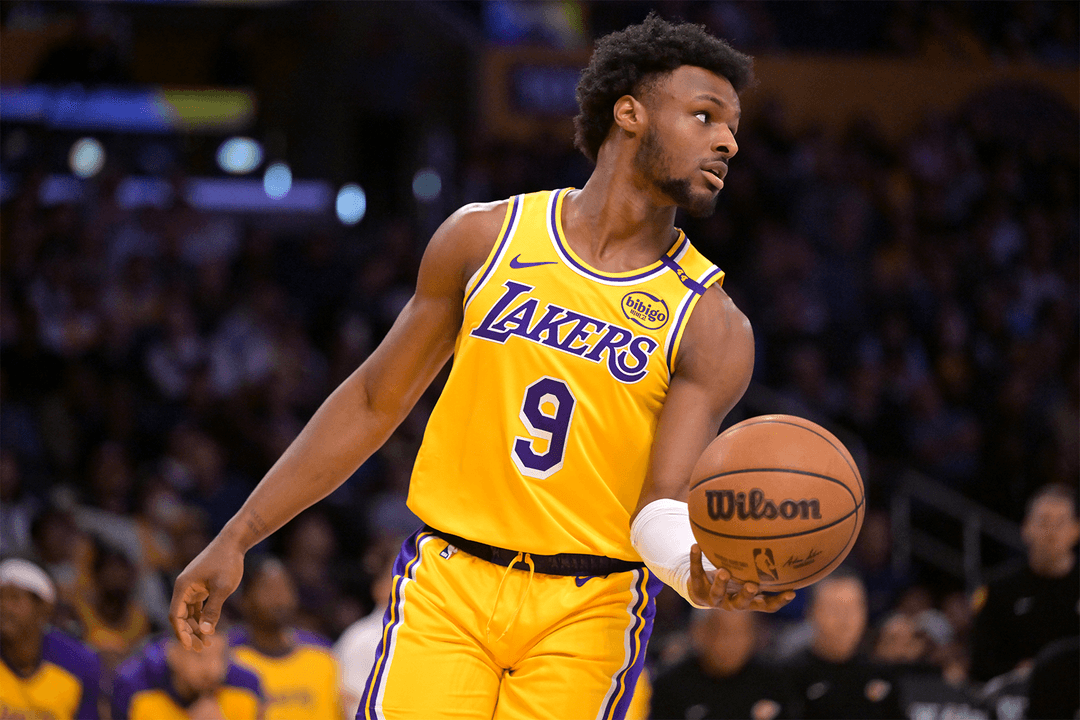
When assessing Bronny James Summer League stats, raw box scores often obscure the true trajectory of a rookie guard trying to find his footing in professional basketball. Headlines frequently polarize his performances, reducing complex developmental minutes into simplistic narratives. To understand his actual production, we have to look past the superficial numbers and examine the underlying metrics, role utilization, and physical tools that define his modern guard profile.
Across his summer evaluation stretches with the Los Angeles Lakers, James displayed flashes of high-level point-of-attack defense and secondary decision-making, countered by expected offensive inefficiencies. While his perimeter shooting fluctuated, his defensive motor and willingness to accept a complementary role separated him from many ball-dominant summer rookies. Let's break down the underlying metrics, context, and structural realities of his summer output.
Deconstructing the Shooting Percentages and Scoring Volume
Scoring efficiency is the first metric critics examine when evaluating a young guard. During his extended summer league runs, James posted scoring averages oscillating around the double-digit mark, accompanied by volatile shooting splits.
- Field Goal Efficiency: Overall conversion rates hovered in the low-to-mid forty percent range during his better stretches, though early-game slumps heavily dragged down initial averages.
- Three-Point Variance: Perimeter shooting proved to be the steepest developmental curve. Defenses routinely went under ball screens, daring him to beat them from deep. His long-range percentages dipped below league-average thresholds in high-volume stretches, highlighting mechanical inconsistencies off the catch and the pull-up.
- Rim Finishing: Standing around 6'1" to 6'2" without shoes, James faced vertical length at the rim that neutralized standard college-level driving angles. However, his conversion on short floaters and transition opportunities showed encouraging touch when he maintained body control.
The challenge wasn't a lack of effort or understanding of spacing; it was the physical adjustment required to create separation against lengthy NBA-caliber wings. Summer defenses pack the paint quickly, and without an elite first step or a knockdown pull-up three pointer, operating as a primary isolation scorer remains an uphill battle. As reported in detailed articles by Reuters, the results are widespread.
Playmaking, Passing Vision, and Usage Rate
One area where standard box scores miss the nuance is James' passing radar and unselfishness. Rather than forcing contested shots when his jumper wasn't falling, he consistently looked to keep the ball moving within offensive sets.
His assist-to-turnover ratio revealed a player attempting to manage a conservative, mistake-free style. He rarely committed wild, live-ball turnovers associated with over-ambitious rookie playmakers. Instead, he excelled in simple read-and-react situations:
- Picing and Rolling: Delivering timely pocket passes to rolling big men.
- Secondary Ball Movement: Executing quick swing passes that initiated secondary actions against rotating defenses.
- Transition Push: Recognizing numbers advantage early and advancing the ball with short, crisp outlet passes.
While he didn't shoulder a massive usage rate—allowing more established Summer League roster pieces to dictate primary offensive sets—his ability to function without dominating possession aligns directly with the modern 3-and-D guard archetype the Lakers want to develop.
Defensive Impact and Athletic Metrics
Defense remains the calling card that justifies his developmental minutes. While conventional stats like steals and blocks only capture a fraction of defensive value, tracking his ball-pressure and screen navigation tells a clearer story.
James routinely picked up opposing guards full court, utilizing a low, wide center of gravity to disrupt initial offensive initiations. His lateral quickness allows him to stay attached to shifty perimeter guards through multiple screens. Key defensive indicators included:
- Defensive Stance: Exceptional recovery speed when caught trailing on ball screens.
- Off-Ball Awareness: Competent weak-side rotations and a willingness to step in for charges, leveraging his compact, sturdy frame.
- Rebounding Out of Position: Fighting upward for contested defensive boards against taller opponents, converting hustle into transition opportunities.
This defensive baseline ensures that even when his shot isn't falling, he maintains a positive floor impact. Coaches value young players who don't compromise team defensive schemes, and James consistently executed tactical coverages without egregious mental lapses.
Contextualizing Summer League Sample Sizes
It is vital to view these metrics through a realistic lens. Summer League rosters are chaotic environments characterized by disjointed chemistry, high turnover rates, and players auditioning for roster spots rather than playing cohesive team basketball.
When a guard is playing alongside rotating combinations of two-way players and Exhibit 10 signees, spacing is frequently compromised. Defenses can shade heavily toward the most notable scouting targets, packing the lane and neutralizing driving lanes. Evaluating James entirely on a handful of summer box scores ignores the overarching developmental timeline of second-round selections and late first-round talents who require years of dedicated player development within a professional franchise structure like the NBA G League.
Common Mistakes When Analyzing Young Guard Stats
Fans and analysts often fall into predictable traps when evaluating early-career metrics. Avoiding these analytical missteps provides a clearer picture of a player's actual worth.
- Chasing Box Score Totals: Assuming raw points per game dictate future success. A guard scoring 14 points on 20 possessions offers less team value than a player scoring 8 points within a disciplined offensive flow.
- Ignoring Athletic Maturation: Judging a teenage prospect's physical ceiling before their body has fully matured. Core strength and functional vertical explosion often take three to four professional offseasons to fully develop.
- Isolating Shooting Slumps: Overreacting to small-sample shooting slumps instead of examining shooting form, free-throw percentages, and mechanical repeatability.
Frequently Asked Questions
How did Bronny James' Summer League stats compare to his college production?
His scoring numbers and usage rates remained relatively consistent with his single collegiate season at USC, where he primarily played an off-ball, defensive-minded guard role while recovering from a cardiac procedure earlier that year.
What is Bronny James' primary position in the NBA?
He projects as a combo guard, capable of defending point guards and shooting guards at the professional level while functioning primarily as a secondary playmaker and catch-and-shoot spacer on offense.
Why do summer league shooting percentages often look lower than regular season stats?
Summer leagues feature compressed schedules, minimal practice time, porous team chemistry, and high defensive experimentation, which consistently depresses offensive efficiency across the board.
What specific skill must improve for him to secure consistent rotation minutes?
Developing a consistent, high-percentage three-point shot off the catch is the single most important factor that will unlock regular rotation minutes, as it forces defenders to respect him beyond the arc and opens up driving lanes.



