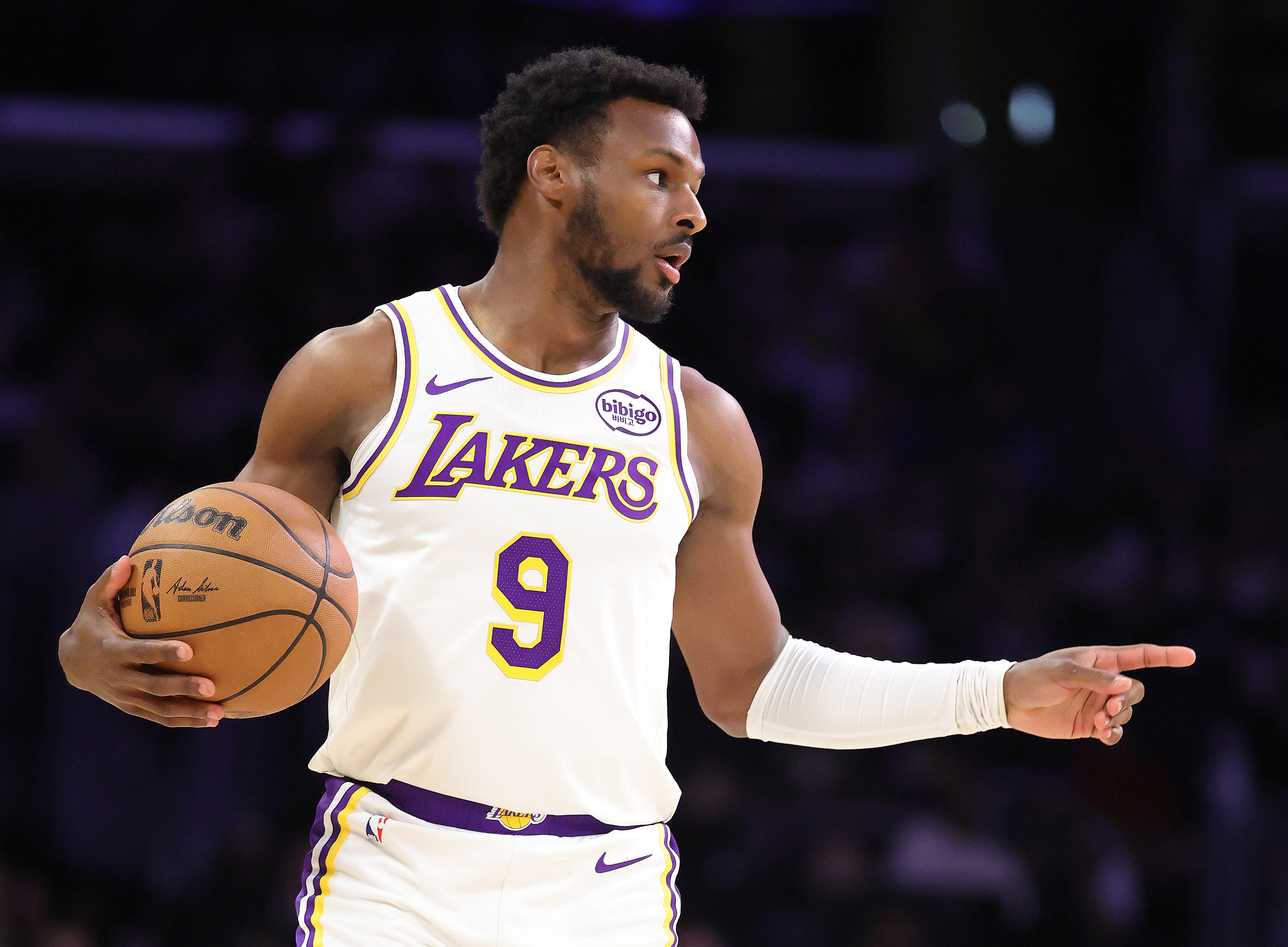
Evaluating Bronny James requires cutting through an unprecedented wall of media noise. Strip away the surname, the draft night discourse, and the relentless social media commentary, and you find a modern guard prospect whose athletic profile and defensive instincts tell a very different story than his box scores. Understanding his actual trajectory means looking closely at physical measurements, defensive utility, and the clear offensive limitations that define his current role in professional basketball.
At the 2024 NBA Draft Combine, measurements confirmed a powerful, compact frame. Standing at roughly six-two without shoes but boasting a robust two-hundred-ten-pound build and a wingspan stretching past six-seven, he possesses the physical density of an NFL running back. That frame is paired with elite explosion, highlighted by a forty-point-five-inch vertical leap and a blazing three-quarter court sprint time. Yet, physical traits alone do not secure an enduring professional career. Analyzing his true developmental path demands an objective look at what translates to the floor and what still needs heavy refinement.
The Defensive Baseline
Defense remains the sturdiest anchor of his professional projection. While many young guards enter professional ranks as defensive liabilities who must be hidden in team schemes, he exhibits natural inclinations on that end of the floor. His lateral quickness allows him to stay attached to shifty perimeter ball-handlers, while his lower-body strength prevents him from getting easily bumped off balance during screens or drives.
As an off-ball defender, his anticipation stands out. He reads passing lanes cleanly, rotates well on baseline help, and uses his vertical explosion to contest shots from behind or recover when beaten on an initial step. However, consistency remains an ongoing hurdle. Young defenders often fall victim to over-aggressiveness or momentary lapses in spatial awareness, and he is no exception. Turning flashes of lockdown perimeter defense into every-possession discipline is the primary key to carving out a permanent defensive specialist role. As reported in recent articles by Reuters, the implications are significant.
Offensive Realities and Constraints
On the offensive end, the picture is complex. His college season at USC and subsequent early professional minutes exposed a player who is currently more comfortable operating away from the ball than initiating a half-court offense. Because he lacks an elite first step off the dribble, breaking down set defenses in isolation is difficult. He can struggle to finish consistently in heavy traffic against lengthier interior defenders, a common growing pain for sub-six-foot-four guards transitioning to higher levels of competition.
Shooting gravity is another major variable. A reliable outside shot is mandatory for modern guards, especially those operating below standard wing height. While mechanics feature a clean, repeatable motion, game results show streaky perimeter percentages. When defenders go under ball screens or sag off him to clog driving lanes, his offensive impact shrinks unless his catch-and-shoot numbers climb. Developing into a reliable floor-spacer from deep will dictate whether defenses have to respect him honestly on the perimeter.
Playmaking and Transition Play
Where he quietly excels is decision-making and transition execution. He rarely forces low-percentage hero shots, preferring to keep the ball moving and make the simple extra pass. In the open court, his elite speed and verticality make him a dangerous weapon who can push the pace, fill the lane correctly, and locate trailing teammates.
If he develops secondary pick-and-roll creation skills, his ceiling shifts upward significantly. Right now, he projects best as a connective passer—someone who moves the ball quickly, cuts hard into open gaps, and punishes a scrambling defense rather than orchestrating every set from the top of the key.
Realistic Developmental Trajectory
The expectation that every high-profile prospect must immediately blossom into an all-star creates distorted evaluations. A clear-eyed view places him in the category of a developmental project whose path resembles many second-round selections and defensive-minded guards. Success in the league rarely happens overnight for players with his specific offensive profile.
History shows that undersized guards who carve out long careers usually do so by mastering specific niches: elite point-of-attack defense, hyper-efficient spot-up shooting, and low-turnover connective passing. If he embraces that blueprint, the foundation is present to build a stable professional career.
Frequently Asked Questions
What are Bronny James's exact physical measurements?
At the NBA Draft Combine, he measured six feet two inches without shoes, weighed two hundred ten pounds, and recorded a wingspan of approximately six feet seven inches alongside a forty-point-five-inch vertical leap.
What is his strongest skill on the basketball court?
His on-ball perimeter defense and athletic recovery stand out as his most projectable traits, alongside high-energy transition play and unselfish ball movement.
What are his primary offensive weaknesses?
He struggles to consistently create separation off the dribble against set defenses, faces challenges finishing through heavy interior length, and needs to establish a reliable, high-volume three-point shot.
How does his college production impact his pro outlook?
His college numbers were modest, but evaluators view him through the lens of a developmental prospect whose high defensive motor and physical tools provide a solid base for long-term growth.



