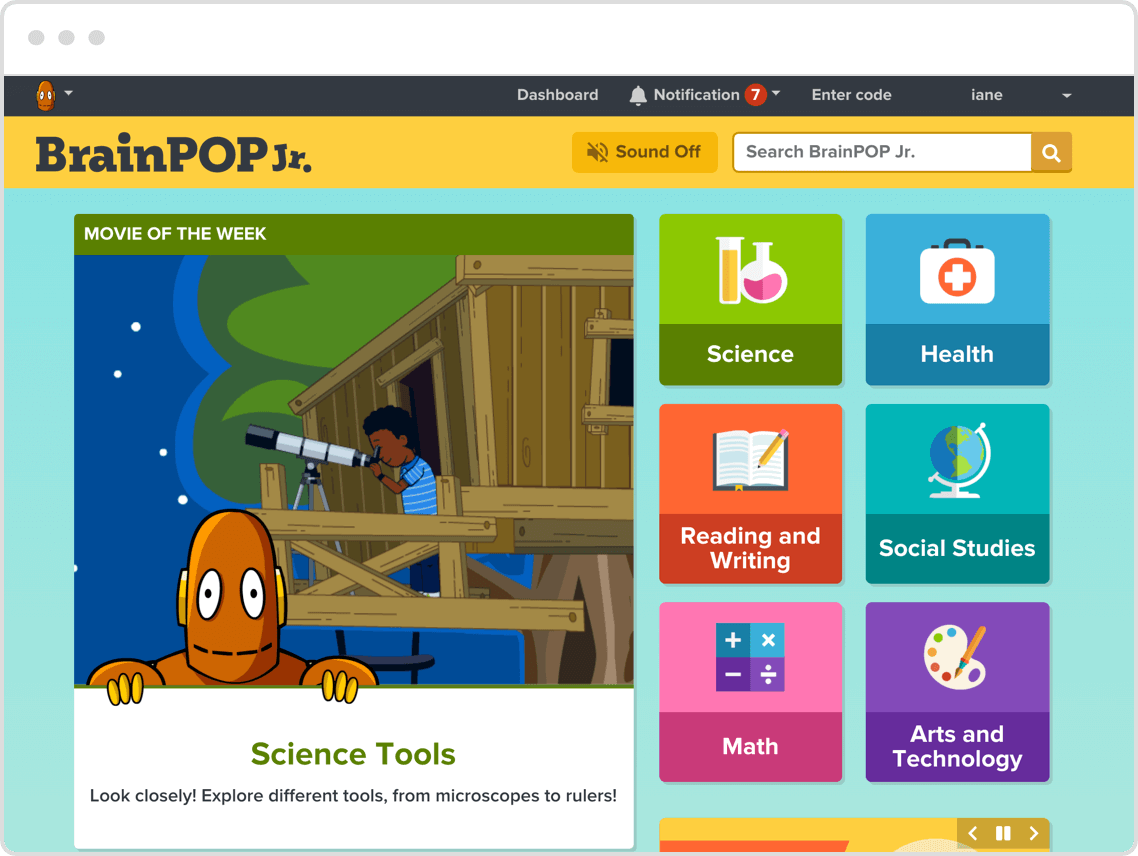
BrainPOP Jr. is a digital educational resource built for children in kindergarten through third grade. It uses short animated movies featuring characters like Moby the robot and Annie to introduce core subjects such as math, science, reading, social studies, health, and arts.
If you're a teacher or parent trying to figure out how this platform works, what features it includes, and how to use it without turning screen time into mindless entertainment, you're in the right place. We'll break down the exact mechanics of the platform, how to integrate it effectively, and where its limitations lie.
Understanding the BrainPOP Jr. Ecosystem
The platform operates on a specific pedagogical framework designed for young minds. Children in early elementary school process information best through narrative, humor, and predictable routines.
Each topic on the site centers around a three-to-five-minute animated movie. Annie and Moby introduce a question or problem, walk through the core concepts using accessible vocabulary and real-world examples, and wrap up with a summary.
Unlike passive cartoons, the experience is surrounded by interactive reinforcement tools. After watching a movie, children can engage with a structured progression of activities:
- Easy Quiz and Hard Quiz: Formative assessments with multiple-choice questions that give immediate feedback.
- Word Play: Vocabulary games that help children master new terms introduced in the video.
- Draw About It & Write About It: Prompted writing and drawing activities that encourage kids to express what they learned.
- Activity Pages: Printable worksheets, graphic organizers, and coloring pages for offline practice.
Core Subject Areas and Curriculum Alignment
The content aligns with national educational standards for early childhood and elementary grades. Teachers don't use it as a standalone curriculum, but rather as an anchor tool to introduce concepts or review difficult topics.
Science and Social Studies
Abstract concepts are difficult for seven-year-olds to grasp. BrainPOP Jr. uses concrete analogies. For instance, instead of reading a dry text about the water cycle, children watch Moby collect rainwater and track where it goes. Social studies units cover community helpers, historical figures, and geography by framing them within relatable daily experiences.
Reading and Math Foundations
Phonics, sight words, measurement, and basic geometry are broken down into bite-sized lessons. The read-along feature highlights text as the narrator speaks, helping emerging readers connect written words with spoken sounds. Math units pair visual representations—like grouping virtual objects—with arithmetic problems.
Practical Implementation Strategies for Adults
Kids won't automatically absorb educational value just because cartoons are playing on a screen. Adults need to structure how children interact with the platform.
Here's how to maximize the impact of every session:
- Preview the movie first: Watch the three-minute video before showing it to a child. Note any vocabulary words you want to discuss afterward.
- Pause and predict: Hit pause halfway through the animation and ask, "What do you think happens next?" This builds active critical thinking instead of passive viewing.
- Mix digital with physical: If the video covers plant growth, follow up by planting a seed in a small cup. Real-world touchpoints anchor digital lessons.
- Use quizzes as talking points: Don't treat quizzes as high-stakes tests. If a child gets an answer wrong on the easy quiz, read the explanation together to find out why.
Accessibility and Technical Requirements
The platform runs on modern web browsers and dedicated mobile apps available on iOS, Android, and Chromebooks. The interface features large, colorful buttons and minimal text clutter, making it easy for young children to navigate independently.
Accessibility features include closed captioning, full transcripts for every video, and text-to-speech support. For bilingual classrooms or dual-language households, many core topics are also available in Spanish. According to Common Sense Media, tools with robust accessibility options significantly improve engagement for diverse learners.
Common Pitfalls to Avoid
Even with high-quality content, adults often make mistakes when integrating digital tools into a child's day.
- Treating it as a babysitter: Leaving a child alone with an auto-play queue leads to mindless clicking. Set a timer for one specific topic and activity set per session.
- Skipping the offline components: Ignoring the printable activity pages and writing prompts means missing out on crucial reinforcement.
- Overusing the platform: Screen fatigue is real, even with educational media. Limit usage to targeted instructional moments rather than hours of continuous viewing.
To learn more about child development and screen time best practices, you can review guidelines from the U.S. Department of Education.
Frequently Asked Questions
What age group is BrainPOP Jr. designed for?
It targets children in kindergarten through third grade, typically ages five to nine. Older elementary students usually transition to the standard BrainPOP platform, which features more advanced content and older characters.
Do I need a paid subscription to use it?
A free account gives access to a limited selection of rotating movies and features. Full access to the entire library of hundreds of movies, games, and teacher tools requires a paid family or school subscription.
Can parents use BrainPOP Jr. at home, or is it only for schools?
Families can purchase home subscriptions. Parents get access to the same library, quizzes, and parent-child tracking tools that teachers use in the classroom.
How does it track a child's progress?
The platform includes built-in reporting dashboards. When children log into their accounts and complete quizzes or games, their scores and completed tasks are saved so teachers or parents can review their understanding over time.



