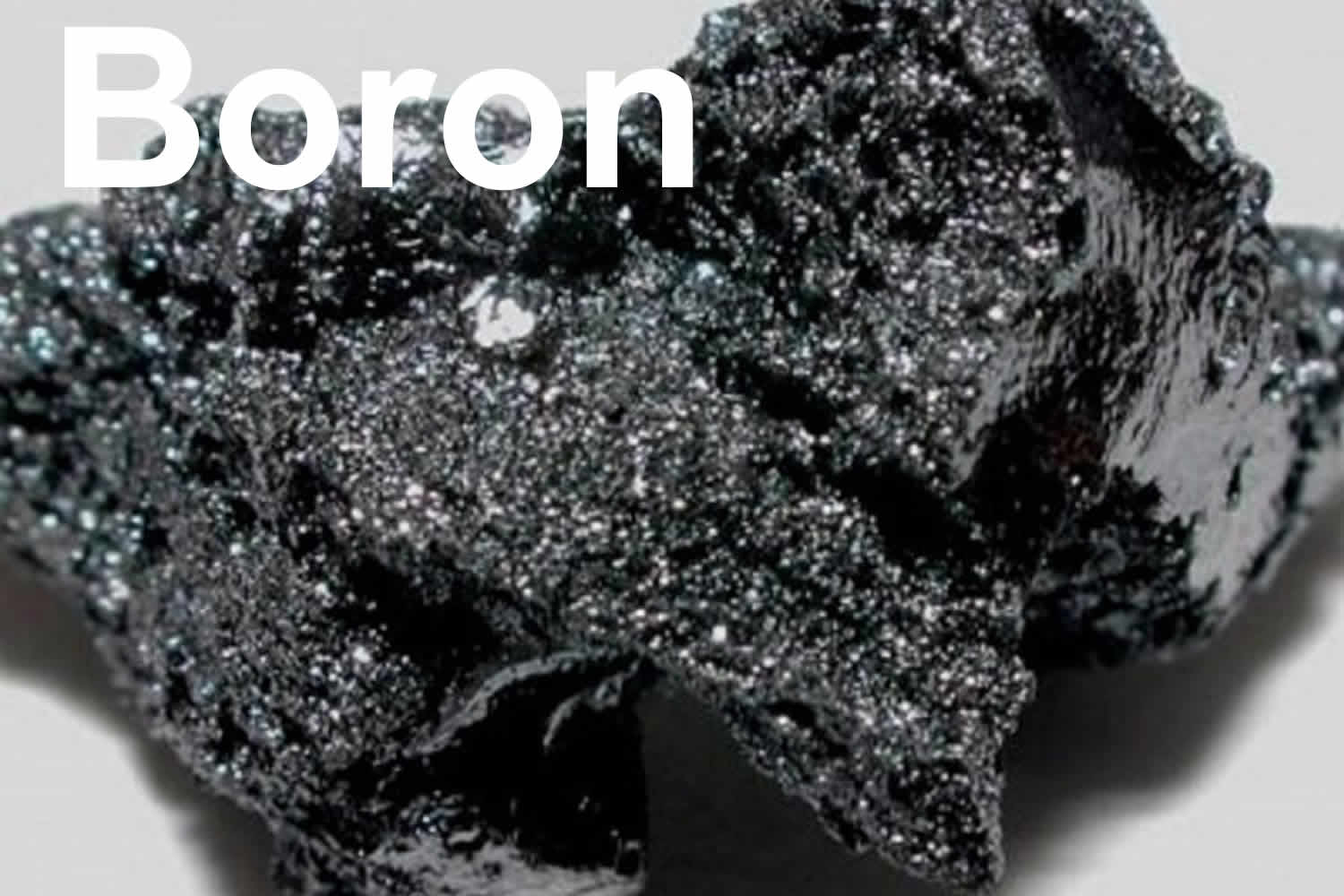
Boron behaves unlike almost any other element on the periodic table. Sitting at atomic number 5, it bridges the gap between metals and non-metals as a metalloid, featuring a complex electron deficiency and an unusual nuclear makeup that has puzzled physicists for decades. While its chemistry is fascinating, its true power lies deep within its nucleus—specifically the rare isotope boron-10—which acts as an invisible anchor for modern nuclear engineering and safety systems.
At the heart of this elemental puzzle is boron's exceptional affinity for subatomic particles. When thermal neutrons strike boron-10, the nucleus captures them instantly, transforming how we regulate energy, shield radiation, and manage high-stakes industrial processes. Understanding this behavior requires looking past standard atomic models and examining how nuclear cross-sections and crystalline binding shape real-world applications.
The Nuclear Anatomy of Boron
Boron naturally occurs as a mixture of two stable isotopes: boron-11 (about 80% abundance) and boron-10 (about 20% abundance). This ratio sets the stage for its nuclear properties. The boron-10 isotope possesses an exceptionally high neutron absorption cross-section, meaning it captures passing neutrons far more efficiently than most surrounding materials.
When a boron-10 nucleus absorbs a thermal neutron, it undergoes a nuclear reaction that splits into an alpha particle (helium nucleus) and a lithium-7 ion. This reaction releases predictable kinetic energy without creating long-lived radioactive waste products.
- Isotopic Abundance: Roughly 20% of natural boron is boron-10, though sensitive applications often require enrichment.
- Cross-Section Value: The thermal neutron absorption cross-section exceeds 700 barns, dwarfing many common structural metals.
- Stable Byproducts: The resulting lithium and helium atoms are stable, minimizing decay heat issues during reactor shutdowns.
Controlling Fission in Nuclear Reactors
Nuclear power plants rely on absolute precision to manage sustained chain reactions. If fission speeds up unchecked, core temperatures rise beyond structural limits. Boron prevents this through two primary methods: chemical shim and solid control assemblies.
In pressurized water reactors, operators dissolve boric acid directly into the primary cooling circuit, a technique known as chemical shim. Adjusting this concentration fine-tunes reactivity across long fuel cycles. As fuel burns up over months of operation, technicians gradually dilute the boric acid to maintain a stable power output.
Solid control elements take a different approach. Engineers fabricate boron carbide ($B_4C$) into dense ceramic pellets and pack them into control rods. Dropping these rods into the reactor core absorbs excess neutrons, shutting down the chain reaction during routine maintenance or emergency scrams.
Structural Compounds and Material Challenges
Deploying boron in high-radiation environments isn't without hurdles. Under continuous neutron bombardment, boron-based ceramics undergo severe internal stress. The continuous capture of neutrons generates helium gas bubbles trapped within the crystal lattice, leading to material swelling and micro-fracturing over time.
Engineers address these structural limits by selecting specialized compounds tailored to specific thermal and mechanical demands:
- Boron Carbide ($B_4C$): Exceptionally hard and cheap to produce, it serves as the baseline material for control rods and shielding tiles.
- Zirconium Diboride ($ZrB_2$): Applied as a ultra-thin coating directly onto nuclear fuel pellets to act as a burnable absorber during early fuel life cycles.
- Boron Nitride ($BN$): Utilized when components must withstand ultra-high temperatures while maintaining electrical insulation and structural integrity.
To explore how industrial chemical suppliers manage these strict purity requirements, you can review technical guidelines provided by U.S. Borax. Additional data on heavy element cross-sections is cataloged through resources like the International Atomic Energy Agency.
Modern Industrial and Aerospace Uses
Beyond traditional power generation, boron's unique nuclear profile influences aerospace engineering, radiation shielding, and scientific detection instruments. Because neutrons easily penetrate standard lead or concrete shielding, specialized polymers and steels infused with boron are standard for personnel protection around particle accelerators and research reactors.
Neutrons are electrically neutral, meaning they don't ionize matter directly and remain invisible to standard Geiger counters. Instrumentation engineers solve this by lining detectors with boron-10. When a stray neutron strikes the lining, the resulting alpha particle triggers an electrical pulse, allowing precise measurement of radiation fluxes in experimental physics laboratories.
Frequently Asked Questions
Why is boron-10 preferred over boron-11 for nuclear applications?
Boron-10 possesses the specific nuclear configuration required to capture thermal neutrons efficiently. Boron-11 has a much lower cross-section for neutron capture, making it largely transparent to the thermal neutrons driving standard fission reactions.
How does boric acid help during a reactor emergency?
In pressurized water systems, automated safety systems can flood the core with a concentrated boric acid solution. The dissolved boron saturates the coolant, instantly absorbing free neutrons and quenching the fission chain reaction.
What happens to boron structural parts over long periods of irradiation?
Continuous neutron capture generates helium and lithium atoms inside the material lattice. This gas generation causes physical swelling and structural degradation, which dictates the operational lifespan of control rods and burnable absorbers.
Can natural boron be used directly without isotopic enrichment?
Yes. Many commercial reactors utilize natural boron, which contains roughly 20% boron-10. However, high-performance reactors or specialized control systems often require enriched boron-10 to maximize absorption efficiency within constrained spaces.