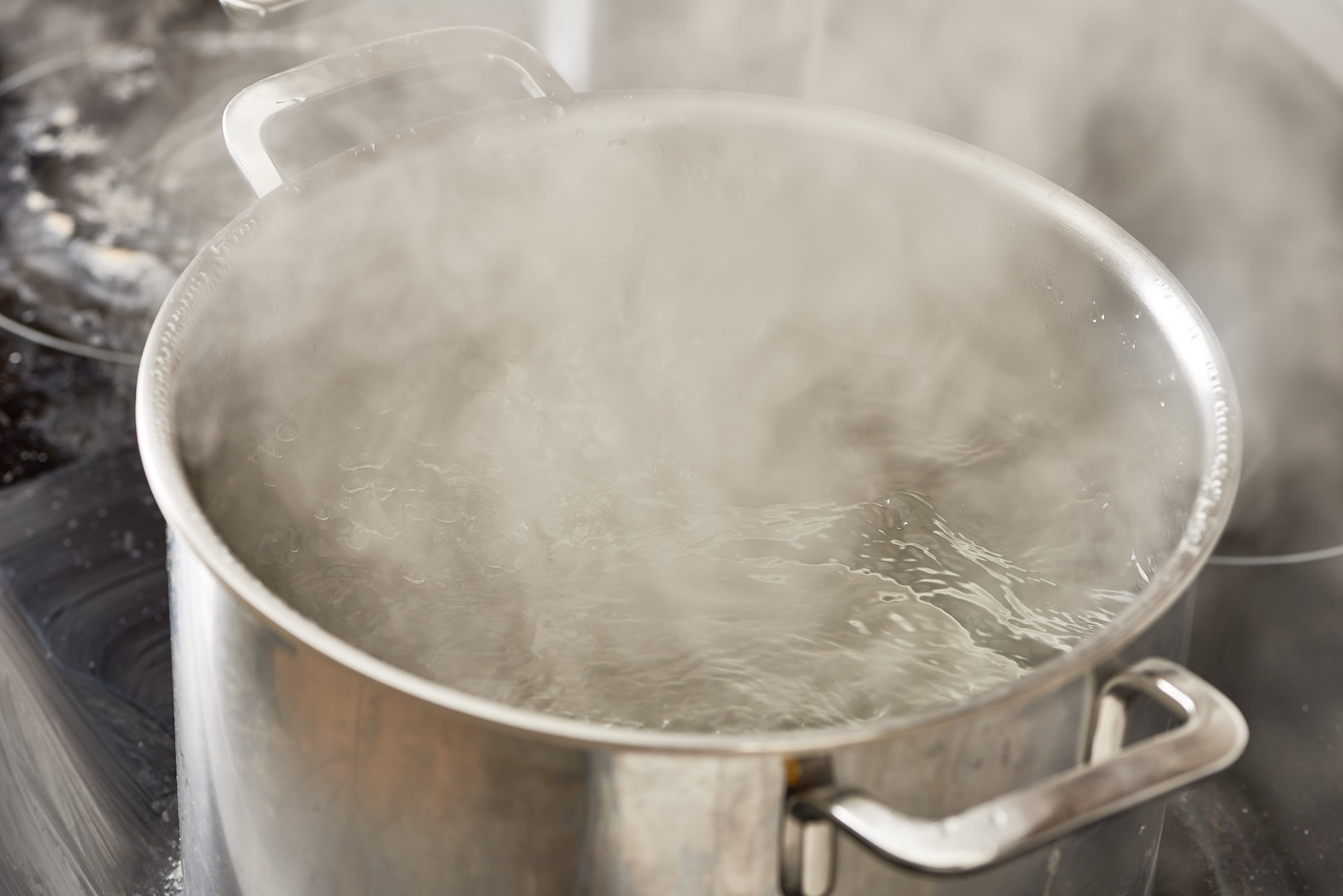
Water at 100°C is the anchor of industrial engineering, chemical research, and daily survival. At standard atmospheric pressure, liquid water transitions into vapor at exactly this temperature, absorbing 2,260 kilojoules of thermal energy per kilogram. This phase change is known as the enthalpy of vaporization, a thermodynamic mechanism that powers massive electricity grids, sterilizes surgical equipment, and cooks meals across the globe.
Understanding how water behaves at its boiling point reveals the physical laws governing phase transitions, altitude variations, and heat transfer efficiency. While many view 100°C as a simple kitchen milestone, it represents a critical energy threshold where hydrogen bonds break and molecules escape into gas.
The Physics of 100°C: Vapor Pressure and Hydrogen Bonds
Water molecules are held together by strong hydrogen bonds. These dipole-dipole attractions give water its high specific heat capacity, high surface tension, and liquid state at room temperature. For water to boil, thermal energy must increase molecular kinetic energy until it overcomes both intermolecular hydrogen bonding and the downward force of surrounding atmospheric pressure.
At sea level, the standard atmospheric pressure is 101.325 kilopascals (1 atm). When water reaches 100°C under this pressure, its vapor pressure equals the atmospheric pressure. Vapor bubbles form within the liquid bulk, rise to the surface, and burst into the atmosphere.
When atmospheric pressure drops—such as at high altitudes—water boils at lower temperatures. For example, in Denver, Colorado (elevation roughly 1,600 meters), atmospheric pressure sits around 84 kPa, causing water to boil at approximately 95°C. This reduction in temperature means food takes longer to cook because the thermal energy of the boiling water is lower. Conversely, in a sealed pressure cooker, pressure increases to roughly 2 atm, raising the boiling point to about 121°C. This higher temperature accelerates chemical reactions and cooking times by increasing molecular collision rates.
Industrial Applications: Steam Power and Thermodynamics
Modern industry relies on water's phase transition to generate electricity and transport thermal energy over long distances. Thermal power plants—including coal, natural gas, and nuclear facilities—use water as a working fluid in Rankine cycles.
In these power stations, water is pressurized and heated well past 100°C to create superheated steam. This high-pressure steam expands through turbine blades, converting thermal energy into mechanical rotation, which generators then convert into electricity. According to data from the U.S. Energy Information Administration, steam-driven thermal cycles remain the bedrock of global utility-scale electricity generation.
Beyond power generation, industrial manufacturing depends on saturated steam for heating and chemical synthesis. Steam systems offer high heat transfer coefficients and uniform temperature control across large reactor vessels.
Pharmaceutical Sterilization and Sanitation
In pharmaceutical manufacturing and medical device reprocessing, steam sterilization relies on pressurized chambers known as autoclaves. Water converted to steam at temperatures exceeding 100°C delivers latent heat rapidly upon contacting cooler surfaces.
When steam condenses back into liquid water on medical instruments, it releases its stored latent heat of vaporization instantly. This intense thermal shock denatures proteins and destroys bacterial endospores more effectively than dry heat at the same temperature. Standard protocols require sustained exposure to steam at 121°C for 15 to 30 minutes, or 134°C for shorter intervals, to ensure complete sterility.
Daily Life: Cooking, Hydration, and Safety
In domestic environments, the 100°C threshold dictates culinary techniques and public health protocols.
When boiling pasta, rice, or vegetables, the temperature of the water remains constant at 100°C during vigorous boiling. Turning the stove dial higher doesn't make the water hotter; it only increases the rate of vaporization. Excess heat simply turns liquid into steam faster, wasting energy without cooking food any quicker.
Water safety also depends on this thermal benchmark. During municipal water treatment failures or natural disasters, public health authorities issue boil-water advisories. Heating water to a rolling boil for at least one minute inactivates harmful pathogens, including Escherichia coli, Giardia lamblia, and Cryptosporidium. At high altitudes above 2,000 meters, guidelines recommend boiling for three minutes to compensate for the lower boiling temperature.
Common Mistakes in Understanding Boiling Water
- Believing rolling boils get hotter: Many assume that turning up the burner makes water hotter than 100°C. In open containers, liquid water cannot exceed its boiling point because additional energy converts water into steam rather than raising its temperature.
- Ignoring altitude effects: Assuming water always boils at 100°C regardless of location leads to undercooked food and inaccurate scientific experiments in mountainous regions.
- Confusing evaporation with boiling: Evaporation occurs at any temperature when molecules at the surface escape into the air, whereas boiling is a bulk phenomenon occurring throughout the liquid at a specific vapor pressure threshold.
Frequently Asked Questions
Why doesn't ice melt instantly at 0°C and water boil instantly at 100°C?
Phase changes require latent heat. When water reaches 100°C, adding more heat doesn't immediately turn all the liquid into gas. The system must absorb 2,260 kJ/kg of latent heat of vaporization to break all remaining intermolecular bonds before complete conversion into steam occurs.
How does salt affect the boiling point of water?
Adding salt (sodium chloride) to water increases its boiling point through a process called boiling point elevation. Dissolved ions interrupt water molecules from escaping into the gas phase. However, culinary quantities of salt only raise the boiling point by about 0.5°C to 1°C, meaning pasta cooks faster due to flavor enhancement and starch gelatinization rather than a noticeable temperature jump.
Can water boil at room temperature?
Yes. If you place water inside a vacuum chamber and lower the ambient pressure below its vapor pressure at room temperature (roughly 2.3 kPa at 20°C), the water will boil without any external heat source.
What is superheating, and is it dangerous?
Superheating occurs when clean water in a smooth container is heated past 100°C without forming bubbles. This unstable state happens because vapor bubbles require a nucleation site to form. If disturbed by adding coffee powder or a spoon, the superheated water can violently erupt into steam, causing severe burns.



