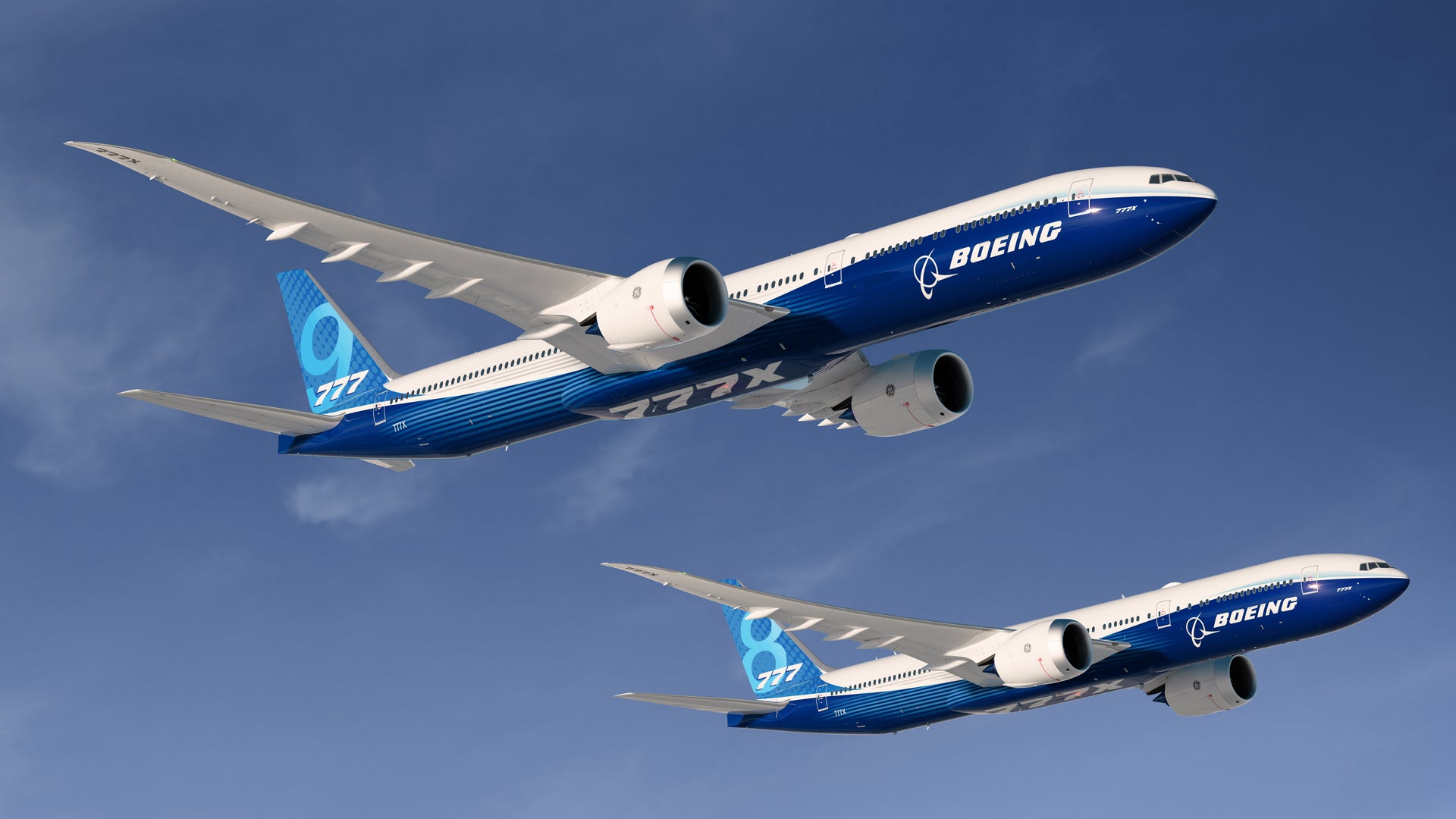
The Boeing 777 reshaped commercial aviation by proving that a twin-engine jet could reliably and efficiently conquer ultra-long-haul routes once dominated by three- and four-engine aircraft. Launched through a collaborative development process with major international carriers, the aircraft combined digital design methods, advanced aerodynamics, and massive powerplant options to set a new benchmark for wide-body performance. Its engineering philosophy prioritized operational flexibility, fuel efficiency, and passenger capacity, cementing its status as a foundational pillar of modern global airline fleets.
At its core, the aircraft's success stems from a calculated bet on twin-engine reliability and a clean-sheet design approach. Rather than stretching an existing airframe, Boeing built the 777 from the ground up to solve specific airline operational bottlenecks. This deep dive explores the structural, aerodynamic, and propulsion milestones that turned the wide-body into an industry gold standard.
The "Working Together" Design Paradigm
Traditional aircraft development historically isolated manufacturers from airline operators until final delivery. For the 777 program, Boeing broke convention by launching the "Working Together" initiative. Representatives from eight major global airlines—including United, British Airways, and Cathay Pacific—joined engineering teams inside the design offices from day one.
This collaboration directly shaped fundamental airframe parameters:
- Cabin Cross-Section: Operators insisted on a spacious cabin capable of accommodating comfortable multi-class seating alongside standard cargo containers below deck.
- Range Requirements: Airlines needed non-stop connectivity between major global hubs without payload penalties.
- Maintenance Accessibility: Mechanics provided direct input on system layouts to reduce turnaround times at busy airport gates.
This feedback loop ensured that the resulting wide-body met commercial realities before cutting any metal.
Digital Innovation and Fly-by-Wire Integration
The Boeing 777 marked a historic transition point for aerospace manufacturing as the first commercial jetliner designed entirely through computer-aided design (CAD) software. Engineers used a mainframe system called CATIA to model every wire, rivet, and structural member digitally. This virtual assembly eliminated the need for traditional physical mock-ups, drastically reducing costly design clashes and structural misalignments during initial fabrication.
Complementing this digital leap was the adoption of a full digital fly-by-wire flight control system. By replacing heavy mechanical linkages and hydraulic cables with electronic signaling, engineers achieved significant weight savings.
The system also introduced active flight envelope protection. Flight computers automatically monitor aircraft parameters to prevent pilots from exceeding structural load limits or stalling the airframe, enhancing safety during turbulent long-haul cruises.
Aerodynamic Efficiency and Structural Materials
Cruising efficiently across oceans demands strict control over aerodynamic drag and structural weight. The 777 features a high-aspect-ratio wing paired with advanced supercritical airfoils. Later variants incorporated raked wingtips, which extend wingspan without adding the heavy vertical weight of traditional winglets. These raked tips smooth out wingtip vortices, reducing fuel burn on extended missions.
Structural weight management relied on a hybrid approach combining traditional aerospace metals with advanced composites:
- Aluminum-Lithium Alloys: Applied extensively across fuselage panels to shave pounds while maintaining high fatigue resistance.
- Carbon-Fiber Reinforced Plastics: Utilized strategically in secondary structures, including the tail empennage and floor beams.
- Titanium Integration: Deployed in high-stress pylon mounts and engine attachment areas to withstand intense thermal and mechanical loads.
These material choices slashed total structural weight by thousands of pounds, directly translating into higher payload capacity and extended range.
Propulsion Giants and ETOPS Mastery
Powering a massive twin-engine wide-body across remote oceans required unprecedented engine development. Boeing offered customers a choice of three distinct powerplants: the General Electric GE90, the Pratt & Whitney PW4000, and the Rolls-Royce Trent 800. Among these, the GE90 family evolved into a technological titan, culminating in the GE90-115B built exclusively for the ultra-long-range 777-300ER.
The GE90-115B introduced composite fan blades with swept leading edges, optimizing airflow into the core. It holds historical records for certified thrust output, operating reliably at levels exceeding 115,000 pounds of force.
This immense propulsion reliability allowed the 777 family to master Extended-range Twin-engine Operational Performance Standards (ETOPS). Historically, twin-jets faced strict regulatory limits keeping them within 60 minutes of an emergency diversion airport. The 777 achieved unprecedented ETOPS certification right at entry into service, eventually expanding past 300 minutes. This capability opened direct polar and trans-oceanic routings, bypassing traditional technical stops and transforming global airline networks.
Cabin Engineering and Passenger Comfort
Long-haul fatigue reduction drove the interior engineering of the wide-body cabin. Boeing introduced vertical sidewalls that increased shoulder and headroom for window-seat passengers, eliminating the cramped feeling typical of older narrow-body designs.
Environmental control systems were engineered to circulate cabin air through high-efficiency particulate air (HEPA) filters every few minutes while managing humidity levels to prevent dehydration during 15-hour journeys. Furthermore, acoustic dampening materials integrated behind cabin panels lowered ambient noise levels, creating a quieter environment that eased the physical toll of intercontinental travel.
Frequently Asked Questions
What makes the Boeing 777 different from older four-engine jets?
Older long-haul workhorses like the Boeing 747 relied on four engines to cross oceans safely under legacy regulations. The 777 proved that high-bypass turbofans generated enough redundant power and reliability in a twin-engine configuration, drastically cutting fuel consumption and maintenance overhead for airlines.
How did computer-aided design change the manufacturing of the 777?
The 777 was the first commercial airliner designed entirely on digital CAD systems. This innovation allowed engineers to test component fit virtually, removing assembly errors and reducing the time required to move from blueprint to the first test flight.
Why does the 777 offer multiple engine options?
To secure broad airline adoption across diverse global markets, Boeing engineered the airframe to accept powerplants from three major manufacturers: General Electric, Pratt & Whitney, and Rolls-Royce. This flexibility allowed airlines to integrate the jet into existing maintenance ecosystems without retraining technical staff on unfamiliar engine architectures.
What is ETOPS and why is it important for this aircraft?
ETOPS governs how far a twin-engine aircraft can fly from the nearest emergency diversion airport. The 777 family was engineered from inception to achieve high ETOPS ratings, allowing airlines to fly direct, profitable overwater routes that were previously restricted to three- or four-engine jets.


