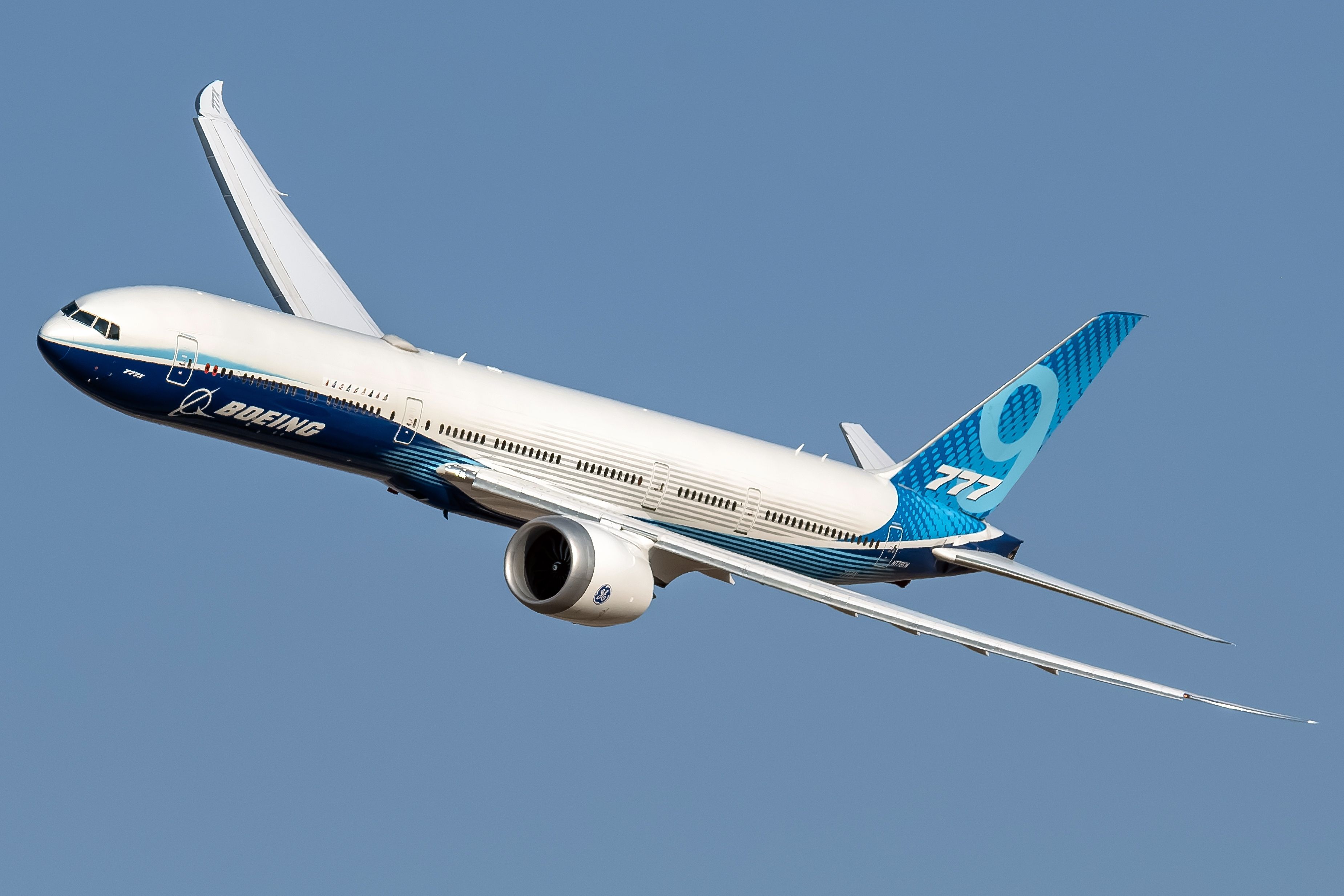
In the mid-1960s, the United States government backed a grand vision to conquer the skies with a passenger jet that could cross the Atlantic in less than three hours. The Boeing 2707 was designed to dwarf the Anglo-French Concorde in size, speed, and capacity. It aimed to carry nearly 300 passengers at a cruising speed of Mach 2.7. Yet, despite billions in projected investment and over a hundred early airline reservations, the aircraft never flew. Congress pulled the plug in March 1971, leaving behind only full-scale mockups and a profound shift in American aviation policy.
Understanding why this supersonic transport collapsed requires looking past the glamorous blueprints into the heavy engineering hurdles, mounting financial pressures, and early environmental awakening that doomed the program.
The Cold War Context and the Supersonic Race
The genesis of the American supersonic transport trace back to geopolitical anxiety rather than airline demand. When France and the United Kingdom formally agreed to develop the Concorde in 1962, and the Soviet Union began work on the Tupolev Tu-144, Washington panicked. President John F. Kennedy viewed a European monopoly on supersonic travel as an unacceptable threat to American technological dominance.
In June 1963, Kennedy announced a federally funded national program to build a superior American commercial airliner. The Federal Aviation Administration (FAA) led the initiative, promising that the government would shoulder roughly 75 percent of the development costs.
Boeing competed against Lockheed and North American Aviation for the lucrative airframe contract. While Lockheed proposed a double-delta wing design similar to the Concorde, Boeing staked its reputation on a complex variable-sweep wing configuration. On December 31, 1966, the FAA selected Boeing's ambitious design, alongside General Electric's massive GE4 turbojet engines. Twenty-six international airlines quickly placed 122 reservation slots, signaling immense commercial interest on paper.
Engineering the Impossible: From Swing-Wing to Delta
The original Boeing 2707-200 design featured wings that could pivot outward for stable low-speed takeoffs and landings, then sweep back sharply against the fuselage for efficient supersonic cruising. This mechanical flexibility sounded brilliant in theory, but it created a nightmare for aerospace engineers.
The pivot mechanism required to handle massive aerodynamic forces at Mach 2.7 had to be exceptionally strong, which meant it had to be heavy. As engineers added reinforcements to secure the swing-wing joint, the overall weight of the aircraft ballooned. Additional weight demanded more fuel, which required an even larger structure, creating a vicious cycle that threatened to destroy the plane's range and payload metrics.
By late 1968, Boeing was forced to abandon the swing-wing concept entirely. The company pivoted to a conventional fixed delta wing configuration, designated the Boeing 2707-300. While this redesign solved the weight crisis, it wasted precious years of development time, eroded congressional confidence, and brought the American program dangerously close to Concorde's advanced timeline.
Economic Realities and the Cost of Speed
Airlines historically buy new aircraft to lower operating costs and increase profit margins. From the beginning, commercial carriers questioned whether supersonic travel could ever make financial sense.
- High Fuel Consumption: Operating four massive afterburning turbojet engines meant the jet burned fuel at staggering rates.
- Ticket Pricing: To offset fuel and maintenance expenses, airlines would have to charge exorbitant ticket prices, severely limiting the passenger pool to elite corporate travelers.
- Airport Congestion: Carrying nearly 300 passengers meant airports had to process massive surges of people simultaneously, straining existing terminal infrastructure.
Economists and government watchdogs pointed out that while supersonic jets completed routes faster, their limited capacity and heavy fuel burn made them less efficient overall than widebody subsonic jets like the newly introduced Boeing 747.
Environmental Backlash and Sonic Booms
Beyond the balance sheet, a powerful coalition formed against the jet due to environmental and atmospheric concerns. The cultural climate in the late 1960s was shifting, giving rise to modern environmentalism. Critics focused on three primary hazards:
- The Sonic Boom: Traveling faster than sound creates a continuous, disruptive shockwave along the aircraft's flight path. Public outcry over broken windows, startled livestock, and noise pollution led the federal government to ban commercial supersonic flight over land areas within the United States.
- Stratospheric Pollution: Scientists warned that a large fleet of supersonic jets flying in the stratosphere would dump water vapor, nitrogen oxides, and other exhaust directly into the ozone layer, potentially thinning the shield protecting the Earth from ultraviolet radiation.
- Airport Noise: The raw power required to lift a nearly 700,000-pound titanium aircraft off the runway produced deafening noise levels that neighboring communities refused to accept.
The Cancellation and Local Aftermath
Opposition culminated in the spring of 1971. Led by Senator William Proxmire, critics in Congress attacked the program as an inefficient use of taxpayer funds subsidizing luxury travel for the wealthy. On March 24, 1971, the U.S. Senate voted to terminate federal funding for the supersonic transport project.
The cancellation hit Seattle like an economic earthquake. Because Boeing had poured massive resources into the project while commercial aviation orders dipped, the company slashed its workforce from over 80,000 employees down to fewer than 40,000. The local downturn became so severe that a famous satirical billboard near Seattle-Tacoma International Airport famously asked, "Will the last person leaving Seattle — turn out the lights".
For deeper reading on how international civil aviation agencies evaluate major historical transport shifts, consult the Federal Aviation Administration archives or explore aerospace collections curated by the Smithsonian National Air and Space Museum.
Frequently Asked Questions
Did any version of the Boeing 2707 actually fly?
No. When Congress terminated funding in March 1971, Boeing was still constructing the first two prototypes. Only a full-scale wooden and fiberglass mockup and various structural test components were ever completed.
How did the Boeing 2707 compare in size to the Concorde?
The Boeing 2707 was substantially larger. While Concorde typically seated around 100 passengers and utilized a slender delta wing for transatlantic travel, the American SST was designed to accommodate between 234 and 298 passengers in a widebody cabin.
Why was titanium chosen for the airframe?
At supersonic speeds exceeding Mach 2, friction against air molecules generates extreme skin temperatures that soften traditional aluminum alloys. Engineers specified titanium for its high strength-to-weight ratio and heat resistance, though machining the tough metal added immense manufacturing complexity and cost.
What happened to the airlines that reserved delivery slots?
The 26 international airlines that held 122 delivery positions received full refunds of their deposits when the project was canceled. Most of those carriers eventually turned their attention and capital toward widebody subsonic aircraft, which proved far more profitable for global expansion.



