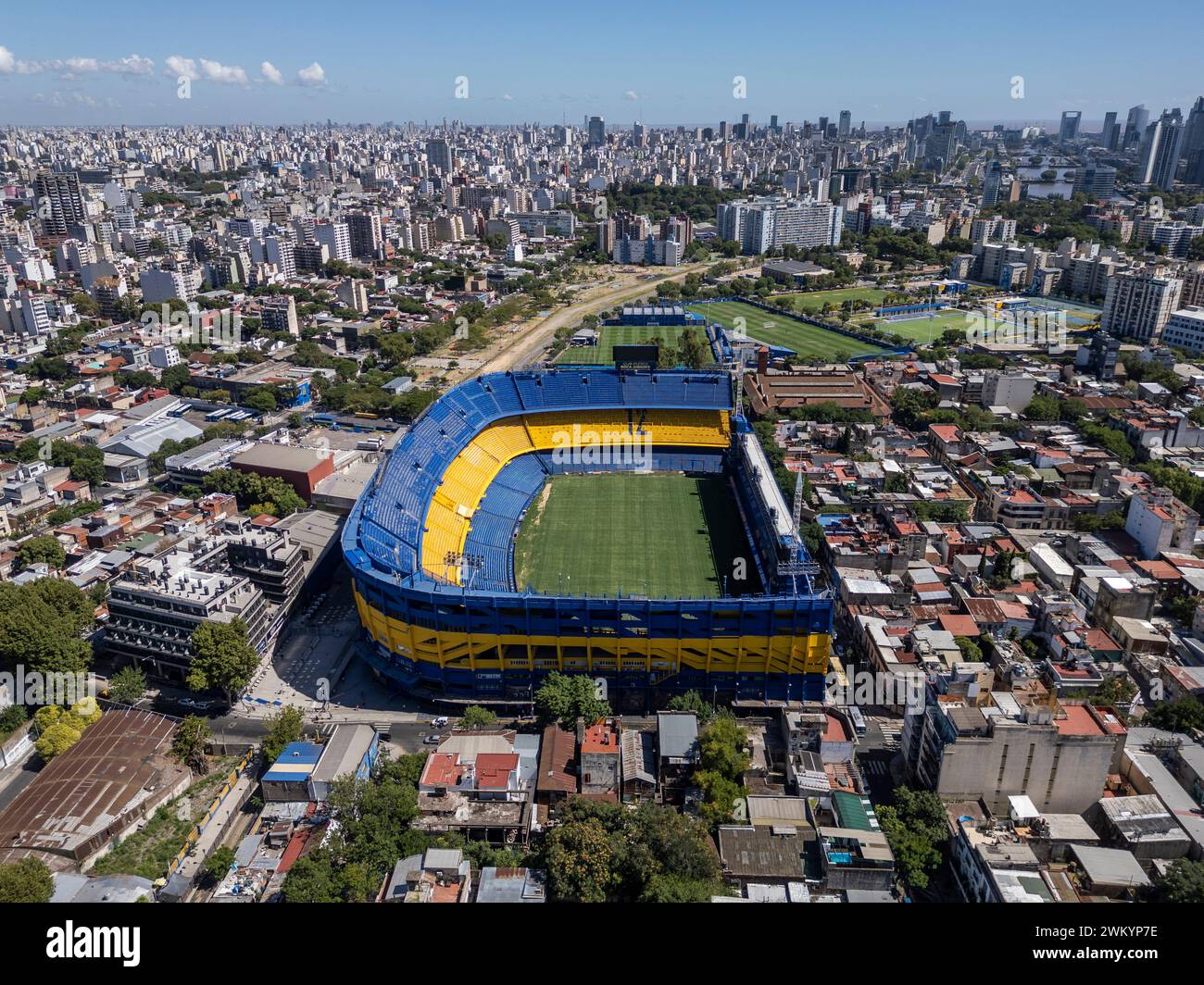
Club Atlético Boca Juniors stands as one of the most culturally significant and decorated institutions in world football. Founded in 1905 by Italian immigrants in the working-class Buenos Aires neighborhood of La Boca, the club grew from humble waterfront beginnings into a global powerhouse. Known globally for their iconic blue and gold kits and the intimidating atmosphere of La Bombonera, Los Xeneizes command a legacy built on fierce passion, dramatic victories, and a relentless winning culture.
Understanding Boca Juniors requires looking past simple trophy counts to examine the identity of a club deeply tied to its community. From legendary icons like Diego Maradona and Juan Román Riquelme to six Copa Libertadores triumphs, the club's trajectory mirrors the highs and lows of Argentine sporting culture.
Origins and the Italian Roots of La Boca
On April 3, 1905, five young sons of Genoese immigrants met in an unassuming house in Buenos Aires to establish a football club. These founders—Esteban Baglietto, Alfredo Scarpatti, Santiago Sana, and brothers Teodoro and Juan Farenga—wanted a simple outlet to play the game. Because their families hailed from Genoa, Italy, the club adopted the nickname Xeneize, which translates to "Genoese" in the local Ligurian dialect.
The famous blue and yellow color scheme emerged shortly after formation. According to club lore, the founders initially struggled with matching shirt colors and agreed to adopt the colors of the flag of the first ship that sailed into the local port. That vessel flew the Swedish flag, sealing the blue and gold palette that defines the club today.
Early years involved moving between various mud pitches near the Riachuelo river before the club secured a permanent spiritual home in the La Boca district. This dockside neighborhood infused the team with a gritty, resilient character that resonated with local working-class residents, establishing a deep bond between supporters and players that persists today.
La Bombonera: Architecture of Intimidation
Few stadiums carry the mythical status of Estadio Alberto J. Armando, universally known as La Bombonera (The Chocolate Box). Opened in 1940, the stadium features a unique architectural design born out of spatial constraints. With one flat stand and three steep, vertical tiers hovering closely over the pitch, the structure creates a vertical acoustic chamber.
- The Tremor: Opposing players and managers frequently remark that La Bombonera doesn't just shake when fans jump; it physically bounces due to the structural engineering of the hanging tiers.
- Proximity to the Pitch: Stands are positioned mere meters from the touchlines, intensifying the pressure on visiting squads during high-stakes domestic and continental fixtures.
- The Twelfth Player (La Doce): The club's organized supporters group drives an unrelenting wall of noise, banners, and percussion throughout every match, transforming home fixtures into hostile territory for opponents.
Domestic Dominance and Continental Glory
Boca Juniors holds a record of domestic supremacy in Argentina, capturing dozens of official national titles since the amateur and professional eras began. They hold the historic distinction of never being relegated from the Primera División since securing promotion in 1913, maintaining top-flight status alongside their fierce rivals.
On the international stage, the club established itself as a titan of South America. Boca has hoisted the Copa Libertadores trophy six times, putting them second all-time in the prestigious continental competition:
- 1977 and 1978: Back-to-back continental titles under manager Juan Carlos Lorenzo established Boca as a global force.
- 2000 and 2001: Led by playmaker Juan Román Riquelme and coach Carlos Bianchi, Boca conquered South America and defeated European giants in the Intercontinental Cup.
- 2003 and 2007: Further tactical masterclasses cemented a golden era of international success, anchored by clinical goalscoring and resolute defending.
In addition to Libertadores success, Boca claimed the Intercontinental Cup three times—defeating Borussia Mönchengladbach, Real Madrid, and AC Milan—placing them in an elite tier of global club football.
Legendary Figures Who Shaped the Shield
The history of Boca Juniors is written by exceptional talents who captured the imagination of fans worldwide.
Diego Maradona enjoyed two distinct stints with the club. His first, during the 1981–82 season, produced a Metropolitano championship where his extraordinary dribbling and vision mesmerized La Bombonera. He returned years later to finish his professional career in front of the adoring blue and gold faithful.
Juan Román Riquelme remains perhaps the most beloved figure in modern club history. Operating as an old-school enganche, Riquelme dictated the tempo of matches with unmatched elegance, passing precision, and big-game temperament.
Martín Palermo brought a contrasting style as a rugged, prolific center-forward. Palermo secured his status as the club's all-time leading goalscorer with 236 goals, known for scoring impossible headers, dramatic late winners, and enduring memorable moments of sheer willpower.
The Superclásico: Football's Fiercest Rivalry
No discussion of Boca Juniors is complete without examining the Superclásico against River Plate. Originally sharing the same working-class roots in La Boca before River relocated to the affluent Núñez district, the two clubs represent a deep cultural, social, and sporting divide in Argentina.
Matches between Boca and River transcend regular league fixtures. The atmosphere inside the stadium features elaborate displays of pyrotechnics, ticker tape, and unrelenting chants. According to BBC Sport, encounters between these historic rivals rank among the most intense and viewed derby matches in global sports, capturing the raw emotional core of South American football.
Common Misconceptions About Boca Juniors
- Misconception 1: Boca and River originated in different neighborhoods. Both clubs actually started in the same dockside neighborhood of La Boca before River Plate moved north in the early 20th century.
- Misconception 2: The club has spent time in the second division. Unlike several historic rivals in Argentina, Boca Juniors has played continuously in the top-flight Primera División since 1913.
- Misconception 3: La Bombonera was always shaped like a horseshoe. The unique flat-sided design occurred because stadium architects ran out of physical land plot space on one side during expansion phases, requiring a steep vertical vertical tier solution.
Frequently Asked Questions
Why is Boca Juniors called Xeneize?
The nickname Xeneize translates to "Genoese" in the local dialect of Genoa, Italy. It honors the original founders and early immigrant community who established the club in the La Boca district after arriving from Genoa.
How many Copa Libertadores titles has Boca Juniors won?
Boca Juniors has won the Copa Libertadores six times. Their victories occurred in 1977, 1978, 2000, 2001, 2003, and 2007.
Who is the all-time leading goalscorer for Boca Juniors?
Martín Palermo holds the club record as Boca Juniors' all-time leading goalscorer, netting 236 official goals during his legendary career.
What makes La Bombonera unique?
Estadio Alberto J. Armando (La Bombonera) features steep, vertical stands hanging closely over the pitch. This unique architecture creates an intense acoustic environment and causes the stadium stands to physically shake when supporters jump in unison.



