Introduction
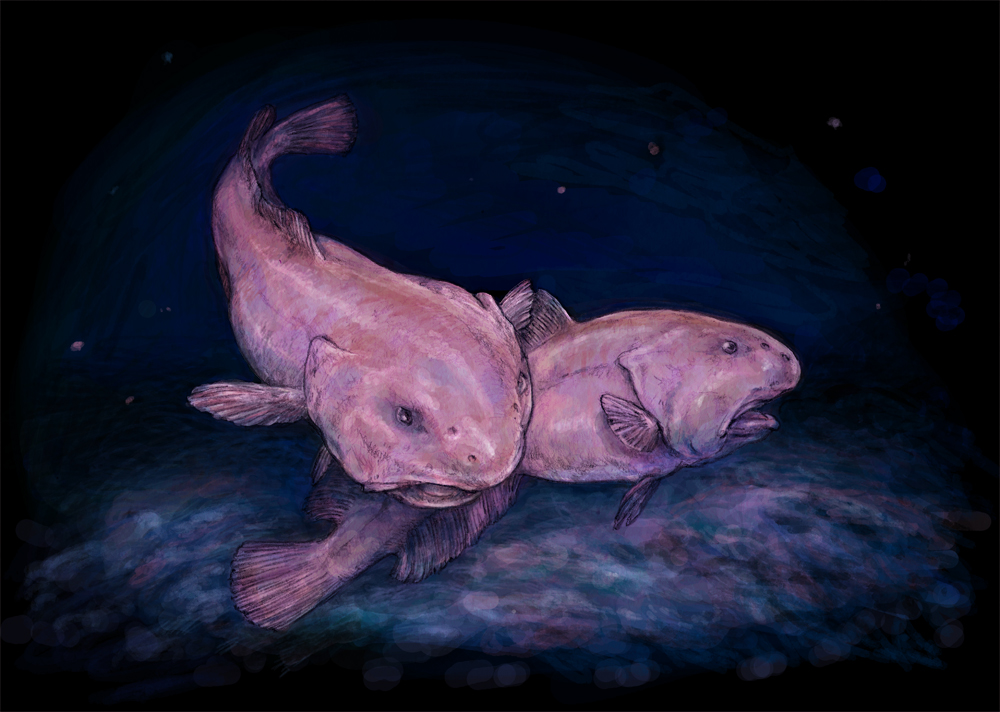
Mention the blobfish, and most people picture a melting, pink sack of sorrow crowned the world's ugliest animal. That viral image is a biological injustice. When a blobfish (Psychrolutes marcidus) hangs out in its actual home on the ocean floor, it doesn't look like a cartoon villain made of jelly. It looks like a normal, albeit slightly grumpy, deep-sea fish.
The iconic melted appearance is the result of severe barotrauma. Hauling a creature from depths exceeding 2,000 feet up to the surface causes its body to decompress catastrophically. This guide breaks down what the blobfish actually looks like underwater, how its body survives crushing pressures, and what science really knows about this misunderstood dweller of the deep.
What a Blobfish Looks Like Underwater
Deep beneath the surface, roughly 2,000 to 4,000 feet down off the coasts of Australia, Tasmania, and New Zealand, water pressure is up to 120 times greater than at sea level. This intense ambient pressure acts like an invisible mold, holding the blobfish together.
Underwater, the blobfish features a distinct head that takes up about a third of its body length, tapered fins, dark bead-like eyes, and a prominent fleshy snout that hangs over its mouth. Its coloring is typically a mottled grey-blue or pale brown, helping it blend into the murky, dimly lit bathypelagic zone. It doesn't puddle or droop; it rests flat against the seafloor like other bottom-dwelling sculpins. As highlighted in recent reports by Reuters, the effects are notable.
Deep-Sea Physiological Adaptations
Life in the twilight and midnight zones requires radical evolutionary shortcuts. Without specialized traits, animals at these depths would burn too many calories or be crushed by the weight of the water column. The blobfish succeeds through specific physiological modifications:
- No swim bladder: Most bony fish rely on a gas-filled organ called a swim bladder to control buoyancy. At extreme depths, that organ would rupture. The blobfish lacks one entirely.
- Gelatinous tissue: Instead of heavy, dense bones and thick musculature, its body is composed mostly of low-density gelatinous mass. This flesh is slightly less dense than water, providing natural buoyancy without active swimming.
- Reduced skeleton: Its backbone is present for structural support, but the rest of its skeletal system is minimized to save weight and energy in a food-scarce environment.
According to marine studies highlighted by the Ocean Conservancy, these minimalist traits allow deep-sea species to survive for long stretches with minimal metabolic input.
Feeding and Survival Strategy
You won't catch a blobfish chasing down fast-moving prey. It is an ambush predator that conserves energy by remaining nearly motionless on the ocean floor.
- Diet composition: It feeds primarily on slow-moving benthic invertebrates, including crabs, sea urchins, lobsters, mollusks, and sea pens.
- Hunting method: It waits patiently for edible matter to drift directly into its wide, downturned mouth, minimizing any waste of energy.
Because food is scarce on the continental slope, the blobfish can endure days or even weeks between meals by slowing down its metabolic rate.
Threats and Human Impact
Despite living miles below the surface where direct human contact is rare, the blobfish faces ecological pressures, primarily through commercial fishing.
Trawler nets dragging across the ocean floor for deep-water species like orange roughy routinely catch bottom-dwelling creatures as bycatch. Because the blobfish occupies these exact trawlable slopes around southeastern Australia and New Zealand, it is vulnerable to habitat disruption. Organizations like the International Union for Conservation of Nature (IUCN) monitor deep-sea biodiversity trends, though tracking exact population numbers for benthic fish living thousands of meters down remains notoriously difficult.
Frequently Asked Questions
Why does the blobfish look so different out of water?
The transformation happens because of rapid depressurization. When the fish is pulled from high-pressure water to the surface, the gases and tissues expand and rupture violently, destroying its internal structure and turning its body into a gelatinous blob.
Is the blobfish actually edible?
No. Because its body is mostly water-logged, gelatinous tissue with very little muscle mass, it has no culinary value. If someone tried to cook it, it would essentially dissolve into water and soft tissue.
How deep do blobfish live?
They inhabit the bathypelagic and mesopelagic zones, typically found at depths ranging from 2,000 to 4,000 feet (600 to 1,200 meters) below the ocean surface.
Do blobfish have any natural predators?
In their native deep-sea environment, adult blobfish have few natural predators due to the extreme cold and darkness. Their primary threat comes from human deep-sea bottom trawling rather than aquatic predators.