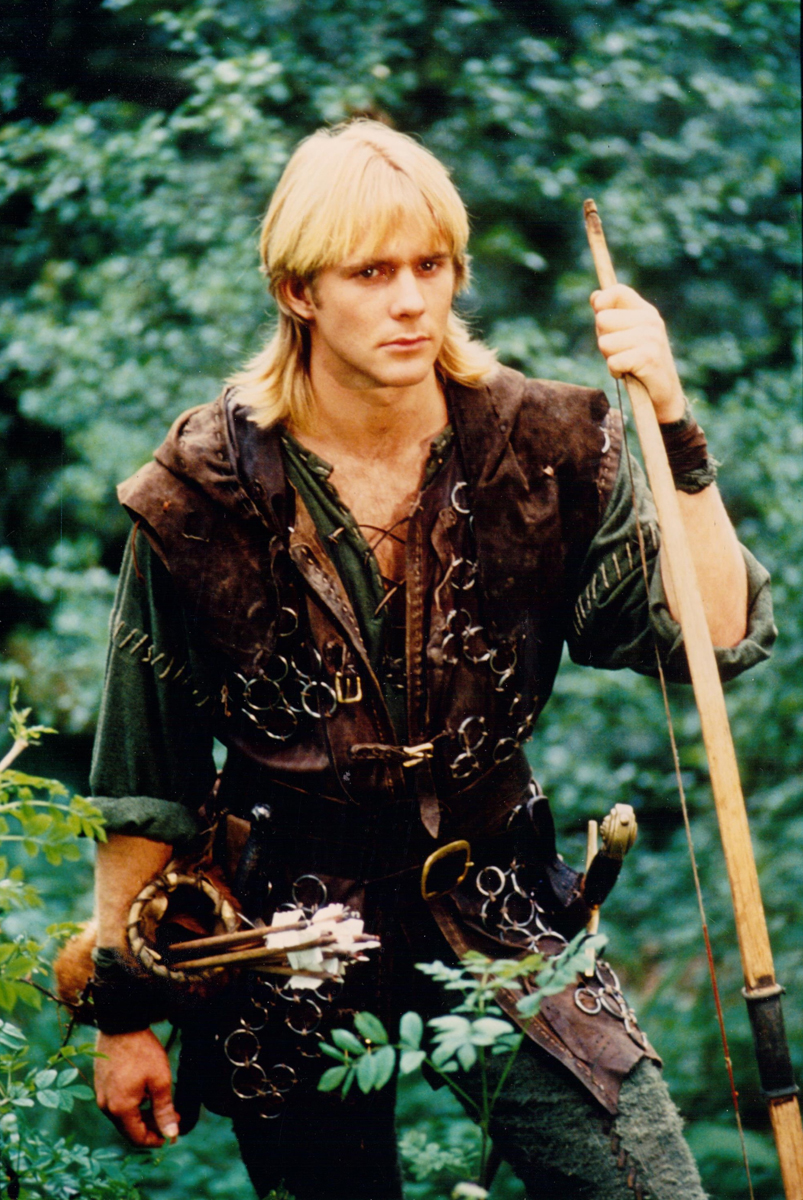
When people lump all Indigenous North American groups into a single category, they miss vast distinctions in geography, language, and social structure. Comparing the Blackfoot and the Cherokee reveals two entirely separate nations that developed distinct civilizations over thousands of years. They lived more than a thousand miles apart, spoke unrelated language families, and adapted to completely different environments.
The primary difference lies in their ancestral homelands and cultural foundations. The Cherokee originated and built their sophisticated society in the Southeastern woodlands, while the Blackfoot Confederacy developed as nomadic hunters across the Northern Great Plains of Montana and Alberta. Understanding these two nations requires looking beyond common misconceptions and examining their actual historical records, governance models, and daily traditions.
Geographic Origins and Traditional Homelands
Geography shaped every aspect of how these two nations lived, built shelter, and sourced food.
The Cherokee homelands historically spanned the American Southeast, including parts of Georgia, North and South Carolina, Tennessee, and Alabama. This region offered a temperate climate, dense hardwood forests, and fertile river valleys. Villages were permanent settlements featuring substantial timber-and-clay houses clustered around central council grounds.
In contrast, the Blackfoot—known in their own language as the Niitsitapi (meaning "the real people")—occupied the Northern Great Plains. Their traditional territory stretched from the North Saskatchewan River in Canada down to the Yellowstone River in Montana, bounded by the Rocky Mountains to the west. This landscape demanded high mobility. Rather than permanent towns, the Blackfoot lived in portable tipis that could be packed onto horse-drawn or dog-drawn travois to follow vast bison herds.
Linguistic Roots and Language Families
Language serves as one of the clearest indicators that these two nations share no direct historical or cultural lineage.
- Cherokee Language: Cherokee belongs to the Iroquoian language family. In the 1820s, a visionary leader named Sequoyah created a revolutionary syllabary—a writing system where every symbol represents a distinct syllable—which allowed the Cherokee Nation to achieve widespread literacy remarkably fast.
- Blackfoot Language: The Blackfoot language belongs to the Algonquian language family. It is known for its complex verb structures and polysynthetic nature, where a single word can express an entire thought or sentence. Historically, this language was entirely oral, maintained by elders and storytellers through generations.
Because Iroquoian and Algonquian languages evolved from entirely different roots, a Cherokee speaker and a Blackfoot speaker would find their tongues mutually unintelligible.
Social Organization and Governance
Both nations practiced sophisticated forms of government, but their internal structures reflected their different survival needs.
The Cherokee maintained a centralized political structure composed of red towns (war governance) and white towns (peace governance). Decisions were made through consensus in large council houses, guided by a system of clans. Leadership roles included peace chiefs and war chiefs, and the society famously transitioned into a constitutional republic modeled similarly to the United States government in the early 19th century, complete with a written constitution, a principal chief, and a bicameral council.
The Niitsitapi operated through the Blackfoot Confederacy, an alliance of distinct sovereign nations that included the Siksika (Blackfoot proper), the Kainai (Blood), and the Northern and Southern Peigan (Piikani). Rather than a single centralized government, the Confederacy relied on shared spiritual beliefs, military cooperation, and mutual defense. Decisions within each band were led by respected chiefs and sacred societies, emphasizing communal responsibility and kinship.
Economy and Subsistence Strategies
Diet and daily labor followed the rhythms of the local ecosystems.
The Cherokee were master agriculturalists. Their economy relied heavily on what they called the Three Sisters: corn, beans, and squash. Planting these crops together created a sustainable agricultural cycle that enriched the soil and sustained large, permanent populations. Women managed farming and domestic life, while men engaged in hunting, fishing, and diplomacy.
The Blackfoot relied almost exclusively on the American bison for survival. Every part of the animal provided food, shelter, clothing, and tools. They developed ingenious hunting techniques, most notably driving herds over steep cliffs at buffalo jumps, such as Head-Smashed-In Buffalo Jump in Alberta. When horses were introduced to the plains in the 18th century, Blackfoot hunting efficiency and territorial range expanded dramatically.
Modern Presence and Communities
Today, both nations maintain strong, active cultures while navigating the modern world.
The Cherokee Nation is currently the largest federally recognized tribe in the United States, headquartered in Tahlequah, Oklahoma, with thousands of citizens still residing in their historic eastern homelands through the Eastern Band of Cherokee Indians.
The Niitsitapi continue to live across their ancestral northern territories. Their modern reserves and reservations span southern Alberta—home to the Siksika, Kainai, and Piikani Nations—and the Blackfeet Indian Reservation in northwestern Montana.
Frequently Asked Questions
Are the Blackfoot and Cherokee related?
No. They belong to completely different language families, originated in separate regions of North America, and developed distinct cultural practices.
Did the Blackfoot and Cherokee ever fight each other?
Because they lived over a thousand miles apart, large-scale conflicts between the two nations were practically nonexistent. Their traditional enemies were neighboring tribes within their respective geographic regions.
Where does the name Blackfoot come from?
The name originates from the traditional practice of dyeing or painting the soles of leather moccasins black, or from walking through the ash of prairie fires. The people themselves prefer the name Niitsitapi.
How can I learn more about these nations?
You can explore official tribal websites such as the Cherokee Nation or cultural centers managed by the Blackfoot Confederacy to read firsthand accounts, history, and current community news.