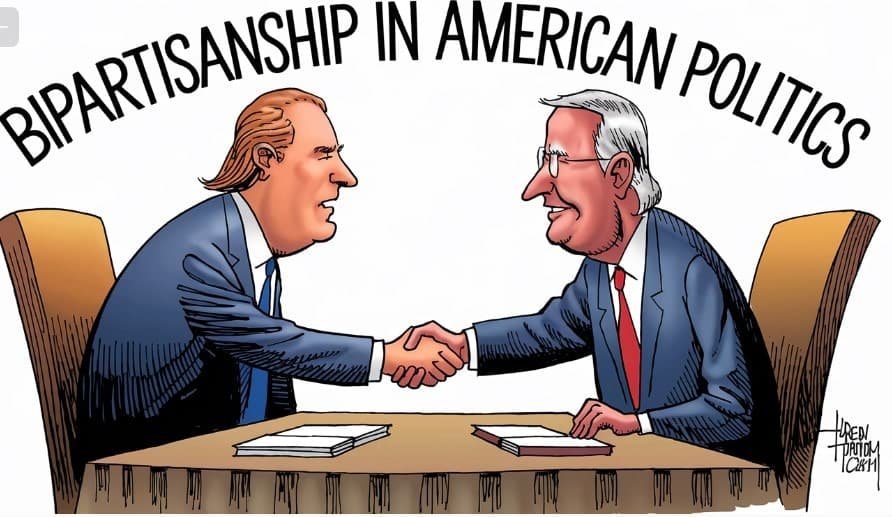
Modern democratic systems face a severe operational malfunction. Instead of translating public needs into functional legislation, legislative bodies frequently descend into ideological trench warfare. Bipartisan understanding serves as the missing mechanism required to bridge this chasm, moving governance past theatrical opposition and back toward functional compromise. Without active cross-party cooperation, institutional trust decays and critical legislative agendas stall indefinitely.
Bridging this gap requires dismantling the incentives that reward extreme partisanship. Political incentives currently favor uncompromising rhetoric because outrage drives donor engagement and media visibility. Reversing this trend demands structural shifts in how legislative bodies operate, how electoral districts are organized, and how voters hold their representatives accountable.
The Roots of Legislative Polarization
The modern political divide didn't appear overnight. Over the past four decades, shifting media consumption habits, primary election dynamics, and geographic sorting have drastically altered legislative incentives. Lawmakers used to operate within overlapping ideological coalitions where cross-party alliances were standard procedure. Today, strict party discipline dominates legislative chambers.
Primary elections play a major role in this dynamic. Because low voter turnout in primaries empowers the most ideologically committed wings of each party, representatives fear primary challengers more than general election opponents. This dynamic punishes cooperation and rewards procedural obstruction. When compromise is branded as betrayal, governing becomes virtually impossible.
- Geographic Sorting: Voters increasingly cluster in homogeneous communities, reducing everyday exposure to alternative political viewpoints.
- Media Fragmentation: Specialized news ecosystems and social media algorithms isolate citizens within tailored information bubbles.
- Primary System Incentives: Low-turnout primaries reward extreme ideological purity over pragmatic problem-solving.
Institutional Mechanics of Cross-Party Cooperation
True bipartisan understanding relies on institutional structures that protect and encourage cross-party cooperation rather than punishing it. Historically, legislative committees functioned as incubators for moderate, well-vetted policy. When committee chairs possessed the autonomy to craft bills independent of party leadership mandates, diverse coalitions formed organically.
Restoring functionality requires reforming internal legislative rules. Reintroducing robust committee amendments, ending the weaponization of procedural filibusters for routine governance, and protecting independent oversight bodies allow lawmakers to focus on substance over party loyalty.
According to data tracked by the Brookings Institution, legislative effectiveness heavily correlates with a member's willingness to cross party lines on non-ideological infrastructure and administrative bills. Lawmakers who build cross-party coalitions consistently pass more substantive provisions than those who rely solely on partisan grandstanding.
Practical Steps Toward Collaborative Governance
Overcoming gridlock isn't just the responsibility of elected officials; it requires active participation from civic institutions and voters. Shifting the political culture demands deliberate changes at multiple levels of society.
- Support Open Primaries: Advocate for electoral systems where voters of all affiliations participate in a single primary, reducing the power of ideological extremes.
- Reward Cross-Party Cosponsorship: Track and publicize legislative metrics that measure how often representatives author bills with members of the opposing party.
- Engage in Local Civic Forums: Participate in municipal and state boards where partisan tribalism has less traction than practical problem-solving.
- Diversify Information Habits: Intentionally consume reporting from reputable, non-partisan outlets such as the Pew Research Center to understand competing policy rationales.
Common Obstacles to Bipartisan Progress
Even when lawmakers want to cooperate, significant barriers remain entrenched in the political ecosystem. Recognizing these obstacles helps citizens separate genuine policy disagreements from procedural obstruction.
- Donor Pressure: Super PACs and major donors often threaten primary funding against any incumbent who votes across party lines.
- Partisan Media Spin: Outlets on both sides immediately frame compromise as a moral failure, punishing politicians in the next news cycle.
- Information Asymmetry: Complex legislative texts are often weaponized with misleading talking points before they reach the public floor.
Frequently Asked Questions
What is the difference between bipartisanship and compromise?
Compromise is an action where two sides concede specific points to reach an agreement, while bipartisan understanding is the underlying framework of mutual respect and shared institutional norms that makes those concessions possible.
Does bipartisan cooperation mean abandoning core principles?
No. Effective cross-party work involves finding areas of overlapping interest—such as infrastructure funding, veteran care, or digital privacy—while maintaining distinct philosophies on other topics.
How do non-partisan redistricting commissions help?
Independent mapping commissions reduce safe partisan seats, forcing general election candidates to appeal to moderate and independent voters rather than catering exclusively to their party's base.


