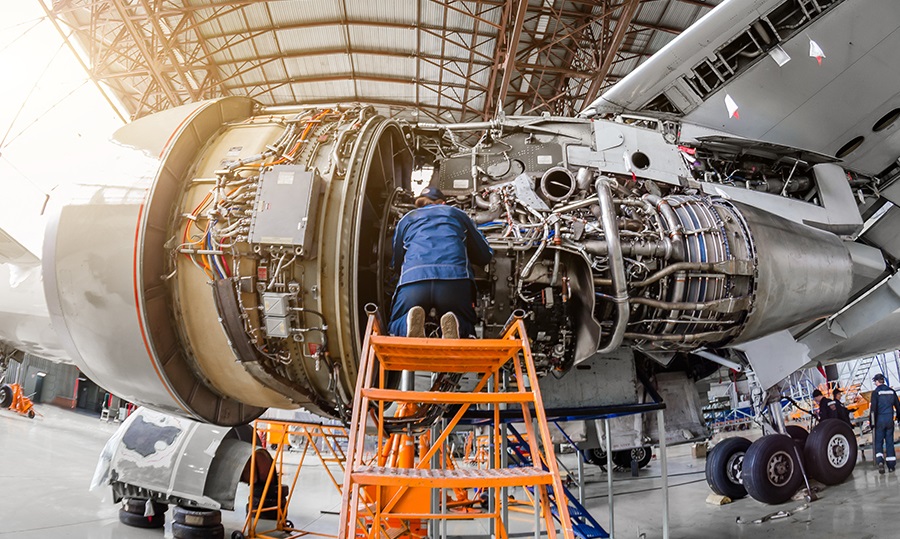
Choosing where to study aerospace engineering dictates your proximity to major defense contractors, commercial space startups, and federal research laboratories. Picking the right institution means balancing lab access, faculty research funding, and direct recruiting pipelines into firms like NASA, SpaceX, and Boeing.
The top aerospace engineering colleges combine rigorous theoretical coursework in aerodynamics and orbital mechanics with hands-on hardware exposure. Whether you want to design commercial aircraft or spacecraft propulsion systems, evaluating institutions requires looking past generic rankings to examine graduation rates, co-op programs, and alumni placement records.
Top-Tier Aerospace Engineering Institutions
Elite aerospace programs stand out through exceptional research budgets, specialized wind tunnel testing facilities, and active student project teams that build rockets, satellites, and autonomous aircraft.
Massachusetts Institute of Technology
MIT consistently anchors national and global engineering rankings through its Department of Aeronautics and Astronautics. Undergraduates gain access to state-of-the-art subsonic and supersonic wind tunnels, composite fabrication labs, and the MIT Space Propulsion Laboratory. Faculty members lead cutting-edge research in autonomous flight systems and plasma thrusters. Students frequently transition directly into major aerospace firms or top-tier graduate programs due to the school's unmatched industry reputation.
Georgia Institute of Technology
The Daniel Guggenheim School of Aerospace Engineering at Georgia Tech offers one of the largest and most comprehensive programs in the country. Located in Atlanta, the department maintains deep research partnerships with federal agencies and regional aviation leaders. Undergraduates choose specialized threads spanning aerodynamics, propulsion, structural design, and system engineering. The school's co-op and internship programs allow students to alternate semesters of study with hands-on industry work at companies like Lockheed Martin and Gulfstream.
Purdue University
Purdue University holds a legendary legacy in American aviation and space exploration, earning its moniker as the "Cradle of Astronauts." The School of Aeronautics and Astronautics features extensive laboratory space for propulsion testing, structural dynamics, and flight simulation. Purdue emphasizes collaborative design capstones where senior students build and test functional aerospace hardware. Its strong ties to Midwest manufacturing and defense hubs provide steady pipelines for career placement.
Evaluating Program Specializations: Aeronautics vs. Astronautics
Aerospace engineering splits into two core sub-disciplines: aeronautics (atmospheric flight) and astronautics (space flight). While most undergraduate curricula cover both fields during the first two years, institutions vary widely in their upper-level focus.
- Aeronautics focus: Programs heavy in aeronautics emphasize fluid dynamics, airfoil design, jet propulsion, and avionics control systems. Look for schools featuring active wind tunnel facilities and flight test laboratories.
- Astronautics focus: Space-focused programs prioritize orbital mechanics, spacecraft thermal management, rocket propulsion, and attitude determination. Universities with active satellite development programs or student rocket clubs provide crucial hands-on experience in this track.
What Makes an Aerospace Program Worth the Investment
Tuition rates and living expenses for engineering degrees vary significantly between public flagship universities and private institutions. Calculating return on investment involves analyzing placement metrics rather than relying solely on prestige.
High-performing programs provide dedicated career fairs exclusively for engineering majors, bringing recruiters from defense contractors, commercial space operators, and federal agencies directly to campus. Look for schools where students participate in multidisciplinary design teams, such as Formula SAE, Design-Build-Fly competitions, or student-led rocket launch initiatives. Practical experience building physical hardware often matters more to employers than theoretical coursework alone.
Common Mistakes When Choosing an Engineering College
Choosing a university based purely on a generalized undergraduate ranking can lead to mismatched expectations.
- Ignoring ABET accreditation: Ensure the program holds accreditation from ABET, as unaccredited degrees can disqualify graduates from obtaining professional engineer licensure or federal employment.
- Overlooking class size and bottleneck courses: Large public universities sometimes feature massive weed-out classes during the first two years, making it difficult to secure spots in required laboratory sections.
- Neglecting geographic proximity: Studying in regions with high concentrations of aerospace employers—such as Southern California, Seattle, Houston, or the Washington D.C. corridor—significantly simplifies the process of securing local internships during the academic year.
Frequently Asked Questions
Do I need a graduate degree to work in aerospace engineering?
Most entry-level engineering roles—including structural analysis, systems engineering, and flight test operations—require only a Bachelor of Science degree. However, specialized research, advanced propulsion design, and guidance navigation roles often favor candidates with a Master of Science or a Ph.D.
Is hands-on student project experience important for hiring?
Recruiters heavily weigh practical experience over GPA alone. Participation in student rocketry clubs, formula racing teams, or CubeSat development projects demonstrates an ability to work in teams and troubleshoot physical hardware under tight constraints.
How do in-state and out-of-state tuition costs compare for top public programs?
Public flagships like Georgia Tech, Purdue, and the University of Michigan offer exceptional value for state residents, though out-of-state tuition rates often approach private school pricing. Out-of-state students should weigh total program cost against local internship availability and institutional recruiting strength before committing.
Can mechanical engineering majors work in the aerospace industry?
Yes. Many aerospace firms hire mechanical engineering graduates for thermal, structural, and manufacturing roles. However, dedicated aerospace degrees provide specialized coursework in compressible flow, orbital mechanics, and flight dynamics that give graduates an advantage in propulsion and vehicle design.
To explore the official standards for engineering curricula, visit the ABET Accreditation Board. For insights into federal research partnerships, review updates from NASA.



