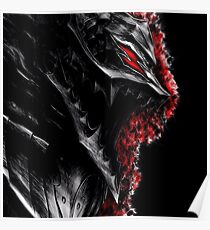
Continuing Kentaro Miura's legendary dark fantasy epic is one of the most unprecedented editorial undertakings in modern manga history. When Studio Gaga and Kouji Mori took over the serialization in Hakusensha's Young Animal magazine, readers faced a mix of profound grief and cautious optimism. This transition isn't just about finishing a story; it's about preserving a masterpiece under immense creative pressure.
Understanding the current state of the series requires looking past surface-level announcements. We need to examine how Kouji Mori's lifelong friendship with Miura shapes the plot notes, how Studio Gaga's artists replicate an impossibly detailed pen-and-ink style, and what readers can actually expect from the ongoing serialization arc.
The Unique Production Model Behind the New Chapters
Following Kentaro Miura's passing in May 2021, Hakusensha faced a difficult choice. They could leave the masterpiece unfinished, or they could attempt a continuation based on remaining notes and verbal instructions. They chose the latter, establishing a collaboration between Studio Gaga—Miura's lifelong assistants—and Kouji Mori, a fellow manga artist and Miura's closest confidant since childhood.
Mori stated publicly that Miura shared the entire overarching narrative of Berserk with him during their decades-long friendship. Because of this, the new chapters don't rely on guesswork or fan fiction ideas. They follow plot beats directly outlined by the author before his death.
However, translating spoken outlines and rough sketches into finished manga pages is grueling. Studio Gaga artists draw every panel by hand, attempting to match Miura's distinct cross-hatching, heavy shading, and expressive character designs. While early post-Miura chapters drew mild scrutiny for minor line-weight variations, subsequent issues show the team locking into a rhythm that honors the original aesthetic.
Plot Developments and the Current Arc
The continuation picks up during the Elf Island arc, resolving the immediate emotional fallout of Griffith's actions and Casca's abduction. Readers spent years wondering how Guts would process his crushing defeat aboard the Sea Horse.
The new chapters address this immediately. Guts' physical and psychological breakdown serves as the focal point. Without spoiling specific panel dialogue, the narrative shifts toward an agonizing confrontation with the realities of power, fate, and the God Hand. The pacing reflects the sparse nature of Miura's remaining notes, meaning scenes move efficiently from one emotional beat to the next without the sprawling side tangents characteristic of earlier volumes.
- Guts' physical weapon, the Dragonslayer, becomes a heavy symbol of his diminishing stamina.
- Casca's agency remains a central narrative priority, steering clear of reductive damsel tropes.
- The Falcon of the Millennia Empire army looms larger, accelerating the convergence of fantasy politics and cosmic horror.
Common Misconceptions About the Post-Miura Era
Online discussion boards often misrepresent how these chapters get made. Clearing up these misunderstandings helps set realistic expectations for the fanbase.
Many assume that Hakusensha hired ghostwriters to invent new plot twists. In reality, Mori explicitly refuses to add original plot points that Miura didn't mention. If an idea wasn't discussed with Mori during their decades of collaboration, it stays out of the script.
Another frequent myth is that production follows a predictable monthly schedule. Berserk chapters now release irregularly in Young Animal. Studio Gaga prioritizes artistic quality over speed, which leads to unpredictable publication gaps. Expecting a steady chapter every four weeks only leads to frustration.
The Emotional Weight for Longtime Readers
Reading current Berserk issues feels heavy. For fans who followed Guts' journey for twenty or thirty years, turning the page means confronting the finality of Miura's absence. Every intricate panel of armor or shadowed expression carries the dual weight of fiction and real-world loss.
This emotional resonance creates a split fan reaction. Some readers feel immense gratitude that the journey isn't cut short at a bleak cliffhanger. Others struggle to separate the continuation from the original author's hand, viewing the new chapters as an epilogue rather than a true continuation. Both viewpoints are valid. The art sparks intense community discussions because Berserk always demanded deep emotional investment from its audience.
Frequently Asked Questions
Is Kouji Mori changing the original ending of Berserk?
Mori maintains that he is only scripting the exact narrative endpoints that Miura described to him over their 40-year friendship. He has stated he won't invent new subplots or alter the intended destination.
How often do new chapters of Berserk release?
There is no fixed schedule. Studio Gaga publishes new chapters irregularly in Young Animal as artwork is completed to meet strict visual standards.
Will the entire remaining story be adapted?
Yes, Hakusensha and Studio Gaga intend to adapt all remaining major plot beats from Miura's outlines, bringing the narrative to its planned conclusion.
Where can I read the official English releases?
Official English translations are published simultaneously with Japan by Dark Horse Comics through digital platforms like Manga Plus and Kindle.


