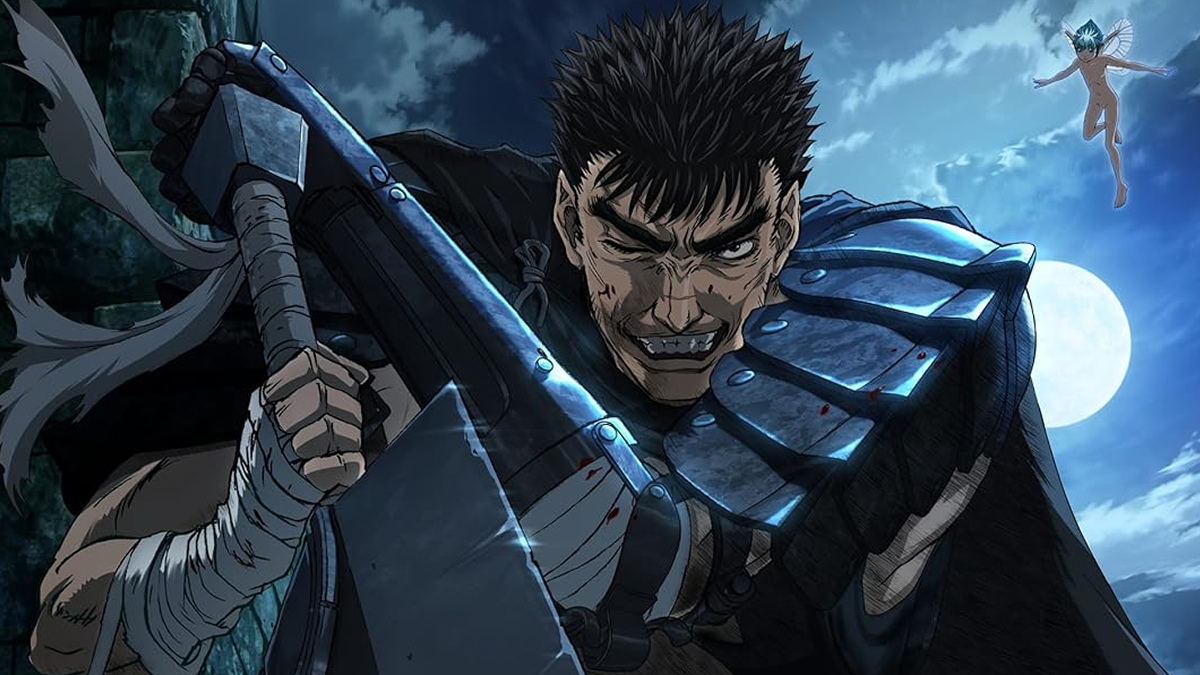
Kentaro Miura didn't start Berserk with a quiet introduction. The very first page of the manga drops readers straight into the charred ruins of a broken world, introducing Guts not as a traditional hero, but as a scarred mercenary moving through a bleak landscape. Published in 1989 in Monthly Animal House, this opening sequence served as a stark declaration that Kentaro Miura was building something entirely outside the conventional shonen playbook of the era.
Understanding this single opening page requires looking past its surface-level shock value. It acts as a visual thesis statement for the entire dark fantasy epic, establishing themes of isolation, violence, and relentless endurance before a single line of exposition is spoken.
The Visual Language of the Opening Pages
The introductory sequence relies heavily on heavy ink-work, stark contrasts, and suffocating panel layouts. Rather than easing the audience into a comfortable fantasy realm, Miura opts for oppressive textures. Every cross-hatch and shadow reinforces an atmosphere of dread.
- The Silhouette of Exhaustion: Guts is framed against a desolate backdrop, his posture drooping with physical and psychological exhaustion. His iconic Dragonslayer sword and prosthetic cannon arm hint at a violent past without spelling it out.
- The Absence of Color and Hope: The stark black-and-white contrast emphasizes a world stripped of vibrancy. The stark lighting choices isolate the protagonist, making him feel tiny against an indifferent universe.
- The Pacing of Silence: Miura uses sparse dialogue in these early pages, letting the heavy atmosphere and detailed linework carry the emotional weight. Readers are forced to linger on the ruined environment.
This deliberate visual restraint sets a specific tone. Instead of overwhelming the audience with exposition about kingdoms and magic systems, Miura focuses purely on human vulnerability and survival. Further insights on this are covered by Associated Press.
Historical Context of 1980s Manga
To understand why this opening was revolutionary, we have to look at the Japanese manga landscape in the late 1980s. Mainstream magazines were dominated by optimistic, high-energy action series where protagonists fought for friendship and clear-cut justice.
- Berserk rejected these comfortable formulas entirely.
- Miura leaned into the seinen demographic, targeting older readers who wanted mature storytelling, complex moral ambiguity, and unvarnished realism.
- The dark fantasy boom in cinema and tabletop gaming during the 1980s also influenced Miura, yet he infused these elements with a distinctly Japanese artistic sensibility and psychological depth.
By subverting expectations right from the first page, Miura carved out a unique space for seinen manga that prioritized artistic grit and philosophical questioning over simple escapism.
How the Opening Foreshadows the Golden Age and Beyond
The opening sequence acts as a flash-forward, showing Guts long after his life has been upended by tragedy. This narrative choice fundamentally alters how readers experience the subsequent story arcs, particularly the massive Golden Age arc.
When we eventually see Guts laughing alongside Griffith and the Band of the Hawk, we already know the bitter end that awaits them. Every moment of camaraderie carries an underlying tension because the audience has already witnessed the solitary, hardened monster Guts is forced to become.
"In a world governed by causality and cruel gods, survival is the only true act of rebellion."
This structural choice turns the narrative into a tragedy of inevitability. We aren't asking if disaster will strike; we are watching to see how the characters endure the collapse.
Common Misconceptions About the Beginning of Berserk
Many new readers stumble when approaching the series because the publication history has evolved over decades.
- The Prototype vs. The Serialization: Some confuse the original 1988 Berserk Prototype (published in Monthly ComiComi) with chapter one of the main series. While the prototype laid down initial character concepts, the 1989 serialization refined the tone significantly.
- The Black Swordsman Arc: A common point of confusion is whether the story starts correctly. The manga opens with the gritty Black Swordsman arc before flashing back to the Golden Age. This non-linear storytelling was a deliberate choice by Miura to hook readers with high-stakes mystery before explaining why Guts became so hardened.
Frequently Asked Questions
Why does Berserk start with the Black Swordsman arc instead of chronologically?
Starting in media res allows Miura to establish the stakes, tone, and Guts' brutal personality immediately. It creates an aura of mystery around how the cheerful mercenary band from the past turned into the grim lone wolf of the present.
Was the first page drawn digitally or traditionally?
Every panel of the early chapters was meticulously hand-drawn using traditional ink, G-pens, and screentones. Miura's legendary attention to detail became a trademark of his workflow as assistants joined his studio later on.
Where can I read about the creation history of Berserk?
Official interviews with Kentaro Miura, such as those published in Hakusensha art books and anniversary guidebooks, offer deep insights into his inspirations and drawing techniques during the late 1980s.
How did the first page influence modern dark fantasy?
The bleak aesthetic, uncompromising violence, and psychological focus established in these early pages laid the groundwork for countless subsequent dark fantasy manga, anime, and even video games like the Dark Souls series.


