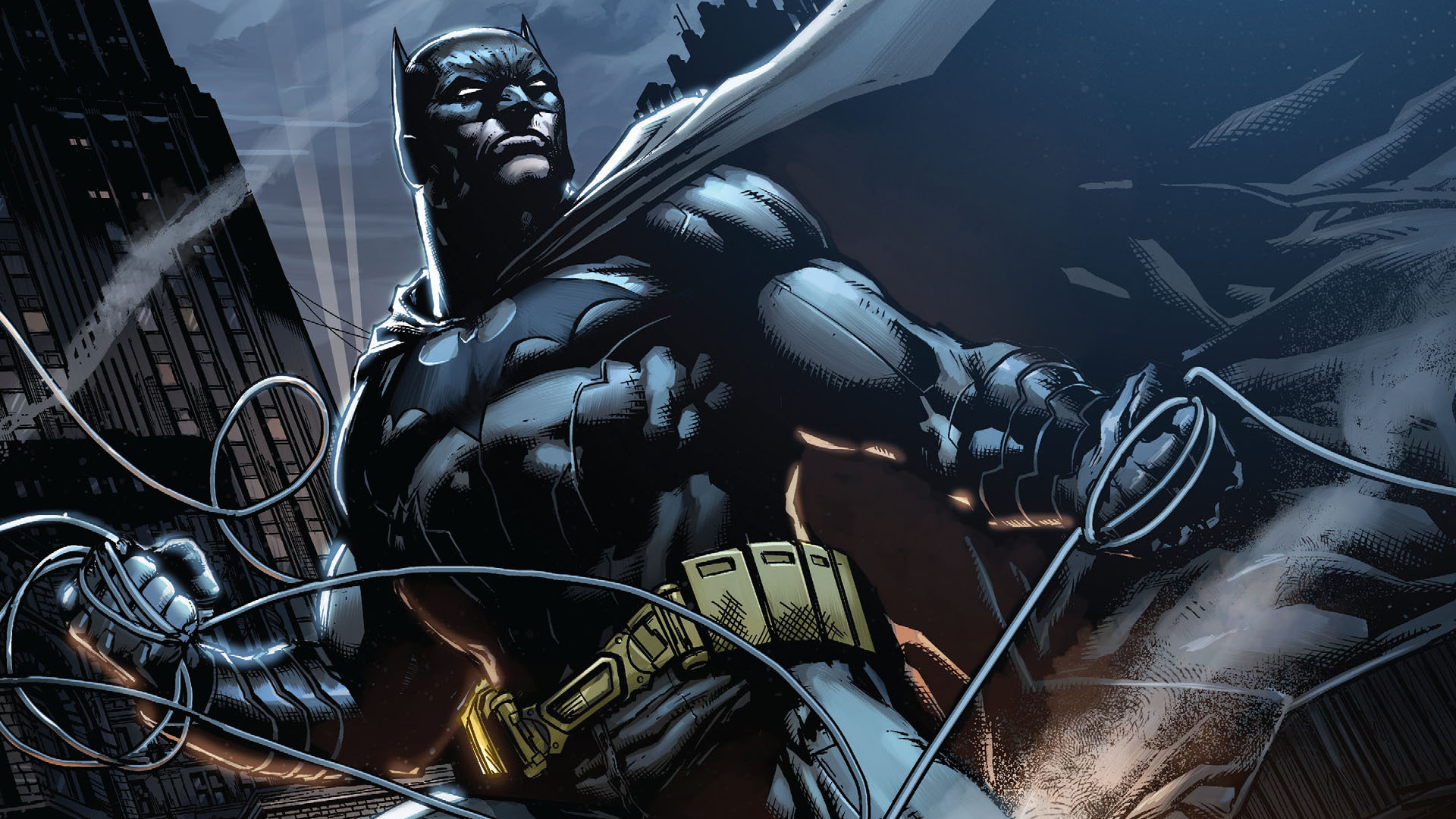
When Warner Bros. swapped Tim Burton for Joel Schumacher, the studio pivoted from gothic shadow to neon-soaked pop art. The Batman Forever cast reflects that exact structural shift. Released in the summer of 1995, the film replaced Michael Keaton with Val Kilmer, brought in high-wattage box office titans like Jim Carrey and Tommy Lee Jones, and introduced Chris O'Donnell as the Boy Wonder. Looking back, this eclectic group of performers captures a fascinating transition period for Hollywood comic book adaptations, where theatrical camp met big-budget spectacle.
Evaluating how this ensemble functions requires looking past the neon glow and green hair dye. Some actors leaned heavily into the stylistic chaos, while others tried to anchor the comic book narrative in genuine psychological conflict. Examining each major performance reveals why this 1995 blockbuster remains a polarizing landmark in superhero cinema history.
Val Kilmer as Bruce Wayne and Batman
Stepping into the boots left behind by Michael Keaton was never going to be easy. Val Kilmer inherited a complex role right at the peak of his leading-man status. Unlike Keaton's brooding, introverted billionaire, Kilmer played Bruce Wayne with a smoother, slightly detached charm. He managed to project the internal division of a man haunted by his parents' murder while wearing a heavily redesigned suit that severely limited his physical movement.
Kilmer's performance balances the dual identity effectively. In the civilian scenes, he exudes classic 1990s charisma, particularly during his interactions with Nicole Kidman's Dr. Chase Meridian. Under the cowl, he brings a quiet intensity, even if the script and direction often sidelined his internal arc in favor of bombastic action sequences. He didn't try to replicate Keaton's manic edge; instead, he treated Bruce Wayne as a weary corporate aristocrat who was slowly figuring out how to live with his trauma rather than just bleed from it.
Jim Carrey and Tommy Lee Jones: The Villains
The main engine driving the film's theatrical tone was its villainous duo. Jim Carrey stepped into the role of Edward Nygma, transforming from a meek Wayne Enterprises employee into the neon-clad Riddler. Fresh off massive hits like Ace Ventura and The Mask, Carrey leaned entirely into his rubber-faced, fast-talking persona. Every scene with Carrey bursts with manic energy, chewing up the scenery and matching the chaotic production design of Gotham City.
On paper, Tommy Lee Jones as Two-Face/Harvey Dent should have provided a dark, gritty counterweight to Carrey's high-flying antics. However, behind-the-scenes friction heavily influenced the dynamic. Reports from the set indicated that Jones wasn't a fan of Carrey's over-the-top comedic style, leading to a palpable lack of chemistry between the two villains on screen. Jones played Harvey Dent with a booming, Joker-esque theatricality that shocked many fans who expected a more grounded, mafia-style tragic villain reminiscent of Billy Dee Williams' setup in the 1989 original.
Nicole Kidman and Chris O'Donnell: Supporting Dynamics
The supporting players had the difficult task of rounding out Bruce Wayne's personal life. Nicole Kidman brought a distinct cinematic glamour to Dr. Chase Meridian, a psychologist obsessed with both Batman and Bruce Wayne. Kidman played the role with a sharp wit and confidence, turning what could have been a standard damsel-in-distress archetype into an active participant who understood the psychological burden of the cape and cowl.
Chris O'Donnell entered the fray as Dick Grayson, a young circus acrobat whose family tragedy mirrors Bruce's own. Casting a twenty-something actor as a teenager was standard Hollywood practice at the time, and O'Donnell brought genuine youthful angst and athletic energy to the role. While his introduction streamlined the traditional Robin origin story for pacing purposes, it gave the film a surrogate family dynamic, reminding Bruce Wayne that he didn't have to carry his crusade entirely alone.
The Veteran Anchor: Michael Gough and Pat Hingle
No discussion of this 1995 ensemble is complete without acknowledging the institutional memory provided by Michael Gough and Pat Hingle. Returning as Alfred Pennyworth and Commissioner Gordon for a third consecutive outing, they acted as the emotional glue tying the Burton era to the new Schumacher direction.
Gough's portrayal of Alfred remained the absolute heart of the franchise. His quiet, dignified advice scenes with Val Kilmer gave the film its few moments of genuine emotional resonance. Hingle's Commissioner Gordon provided steady police procedural familiarity, anchoring the cartoonish elements of Gotham with a weathered, reliable presence.
Frequently Asked Questions
Why did Michael Keaton leave the role before this movie?
Michael Keaton walked away from the franchise due to creative differences with new director Joel Schumacher. Keaton grew concerned when the tone shifted away from the dark, psychological atmosphere established by Tim Burton, and he also reportedly disliked the direction of the script.
Did Jim Carrey and Tommy Lee Jones get along during filming?
Real-world tension existed between the two lead actors on set. Tommy Lee Jones reportedly struggled with Jim Carrey's explosive comedic energy, leading to a famously tense working relationship during production.
How did the cast impact the film's overall tone?
The cast directly bridged the gap between serious superhero drama and mainstream pop-art camp. While actors like Val Kilmer and Nicole Kidman tried to maintain emotional stakes, performers like Jim Carrey steered the movie into a vibrant, high-energy blockbuster style that defined mid-90s studio filmmaking. For more details on the production history, you can explore the DC Comics Official Site.
Fubu Toy review This video provides a deep dive into the behind-the-scenes creative decisions, cast dynamics, and production design choices that shaped the 1995 blockbuster.



