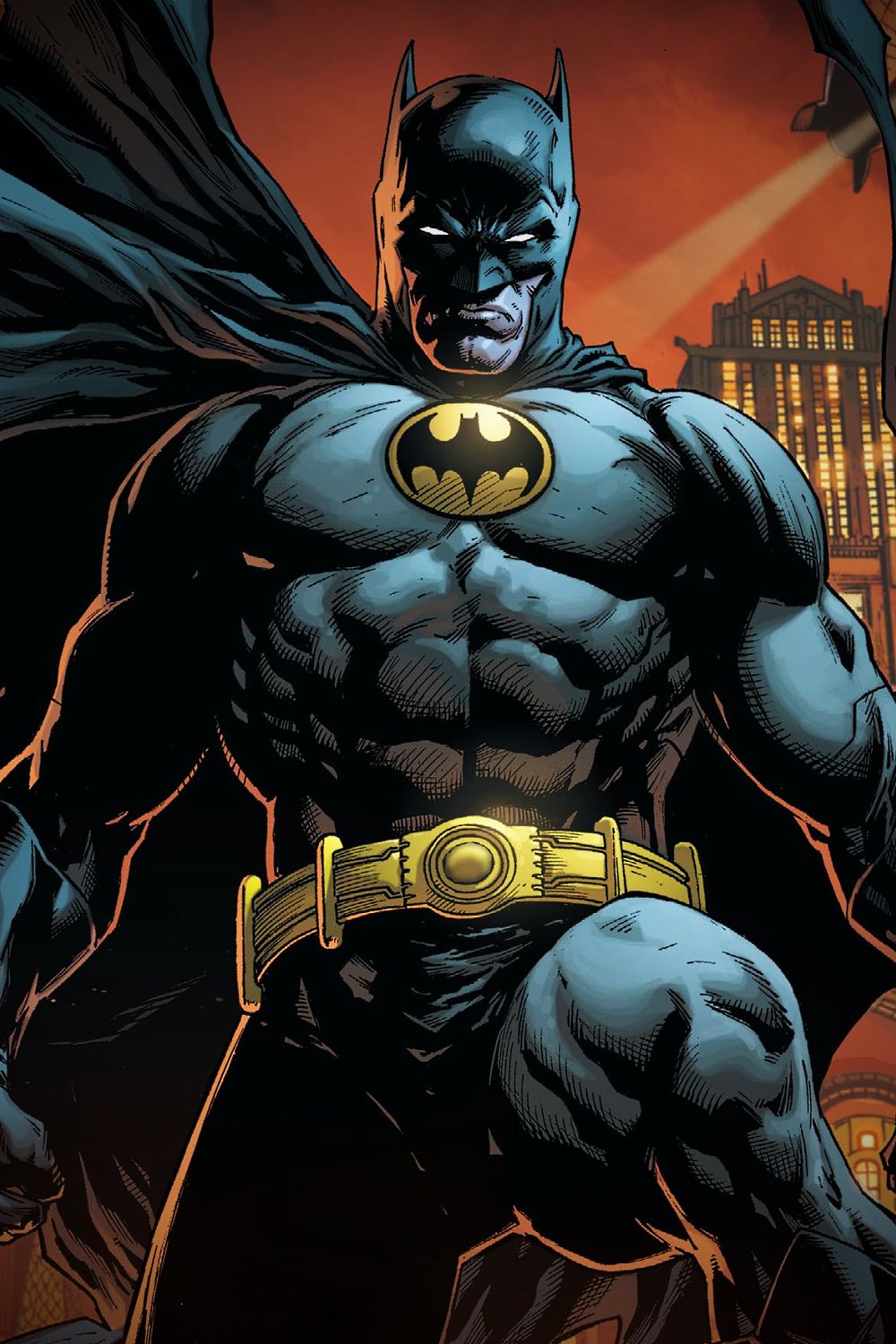
Bruce Wayne and Selina Kyle don't belong together. That simple contradiction drives one of the most durable dynamics in comic book history. He's an armored vigilante bound by strict morals; she's a world-class thief who considers personal property negotiable.
Their dynamic survives because it defies simple resolution. They aren't standard heroes, and their romance refuses to follow a predictable script. For over eight decades, writers have tested whether a life built on absolute justice can accommodate someone who lives outside the law.
The Roots of an Unlikely Attraction
Their history begins in 1940's Batman #1 by Bill Finger and Bob Kane. Selina Kyle appeared simply as "The Cat," an unnamed jewel thief hiding behind an old woman's disguise. From their very first rooftop encounter, the friction was immediate.
Unlike the Joker or the Riddler, who existed purely as obstacles to defeat, Catwoman sparked an immediate human reaction in the Dark Knight. Batman wasn't trying to lock her away forever; he was drawn to her wit and independence.
Early Golden Age stories relied on a playful cat-and-mouse formula. Bruce Wayne and Selina shared a flirtatious tension that blurred the line between law enforcement and courtship. By hiding their alter egos, they found a strange honesty they couldn't access in ordinary society.
The Core Conflict: Justice Versus Survival
The primary obstacle in their relationship isn't external villains—it's their opposing views on morality.
Batman operates under an absolute prohibition against killing, treating his rule as the fragile line keeping him from becoming the monsters he fights. His crusade is born from absolute trauma and demands absolute discipline.
Selina Kyle operates on pragmatism. Raised in the East End slums of Gotham, she learned early that survival requires flexibility. Stealing from the wealthy isn't a grand ideological crusade; it's a means of taking control of a life that dealt her a bad hand.
This creates a constant ethical tug-of-war. Batman sees a crime that needs stopping; Catwoman sees a system that deserves exploiting. When they work together, they constantly test each other's boundaries. Selina pushes Bruce to loosen his rigid worldview, while Bruce tries to pull Selina toward a higher standard of accountability.
Landmark Comic Book Milestones
Several creators pushed the pairing past standard pulp tropes, defining the modern emotional stakes of their connection.
In Frank Miller and David Mazzucchelli's Batman: Year One, Selina's origins were re-imagined. She transitioned from a glamorous burglar into a survivor of Gotham's underworld, drawing inspiration for her persona from the darkness around her. Her early clashes with a younger, reckless Bruce Wayne established a mutual respect born from shared stubbornness.
Jeph Loeb and Tim Sale's The Long Halloween deepened this bond by placing them on the same side during a grueling year-long murder investigation. Sharing the trenches against holiday-themed killers forced them to rely on each other in ways that went beyond stolen glances on gargoyles.
Tom King's 2016 Batman run brought the relationship to its narrative peak, placing their romance center stage. King explored what happens when two deeply traumatized people try to build a domestic life. The infamous unfulfilled wedding in Batman #50 proved that neither character knows how to function without their mission, exposing the tragedy at the heart of their bond.
Evolution Across Film and Television
Adapting this dynamic to live-action and animation forced creators to strip away comic book excess and focus on the core psychological push-and-pull.
The 1960s television series played the relationship for camp, with Julie Newmar's Catwoman trading sharp one-liners with Adam West's earnest Caped Crusader. It was lighthearted, but it cemented the idea that Batman enjoyed the sparring match far more than he should have.
Tim Burton's Batman Returns injected gothic tragedy into the pairing. Michelle Pfeiffer and Michael Keaton played two deeply fractured people wearing literal masks to cope with their inner turmoil. Their famous rooftop confrontation—"We're the same, [self-defense],"—grounded the romance in shared psychological damage.
Christopher Nolan's The Dark Knight Rises took a grounded, pragmatic approach. Anne Hathaway's Selina Kyle wasn't driven by theatricality; she was a professional thief looking for a clean slate. Her chemistry with Christian Bale's weary Bruce Wayne was built on mutual survival, ending with a hard-earned quiet retirement in Florence.
The Psychological Underpinnings
Carl Jung's psychological framework offers a clear lens for this pairing. Batman represents the ego—hyper-rational, repressed, and rigidly disciplined. Catwoman represents the shadow—instinctual, free, chaotic, and driven by hidden desires.
Bruce Wayne spends every waking hour crushing his own impulses in the name of order. When he looks at Selina Kyle, he sees total freedom. She takes what she wants, answers to no one, and refuses to carry the guilt of the world on her shoulders.
Selina, meanwhile, is drawn to Bruce's unbreakable anchor. In a city of chaos, his absolute reliability provides a strange kind of safety. They complete a circuit, each representing the missing half of the other's internal conflict.
Frequently Asked Questions
Do Batman and Catwoman ever get married?
They came close in Batman #50 (2018), where Selina left Bruce at the altar. She concluded that if they were genuinely happy and at peace, Batman wouldn't be able to protect Gotham effectively, choosing to sacrifice their happiness for the greater good of the city.
Does Batman trust Catwoman?
It's a conditional trust. Batman trusts Selina with his life and his identity, but he never fully trusts her impulse control. He always keeps one eye open, knowing her survival instincts could lead her back to a life of crime at any moment.
Why doesn't Batman arrest Catwoman permanently?
Beyond his personal feelings, Batman recognizes the nuance in her crimes. Selina rarely engages in violent felonies or endangers innocent lives, focusing instead on high-end property theft. He views her as a rehabilitation project and a moral gray area rather than an irredeemable threat like the Joker.
Are Batman and Catwoman currently together in the comics?
Continuity shifts frequently, but recent runs tend to favor an on-again, off-again partnership. They recognize their romantic pull is permanent, even when their current missions or moral disagreements force them onto opposite sides of the law.