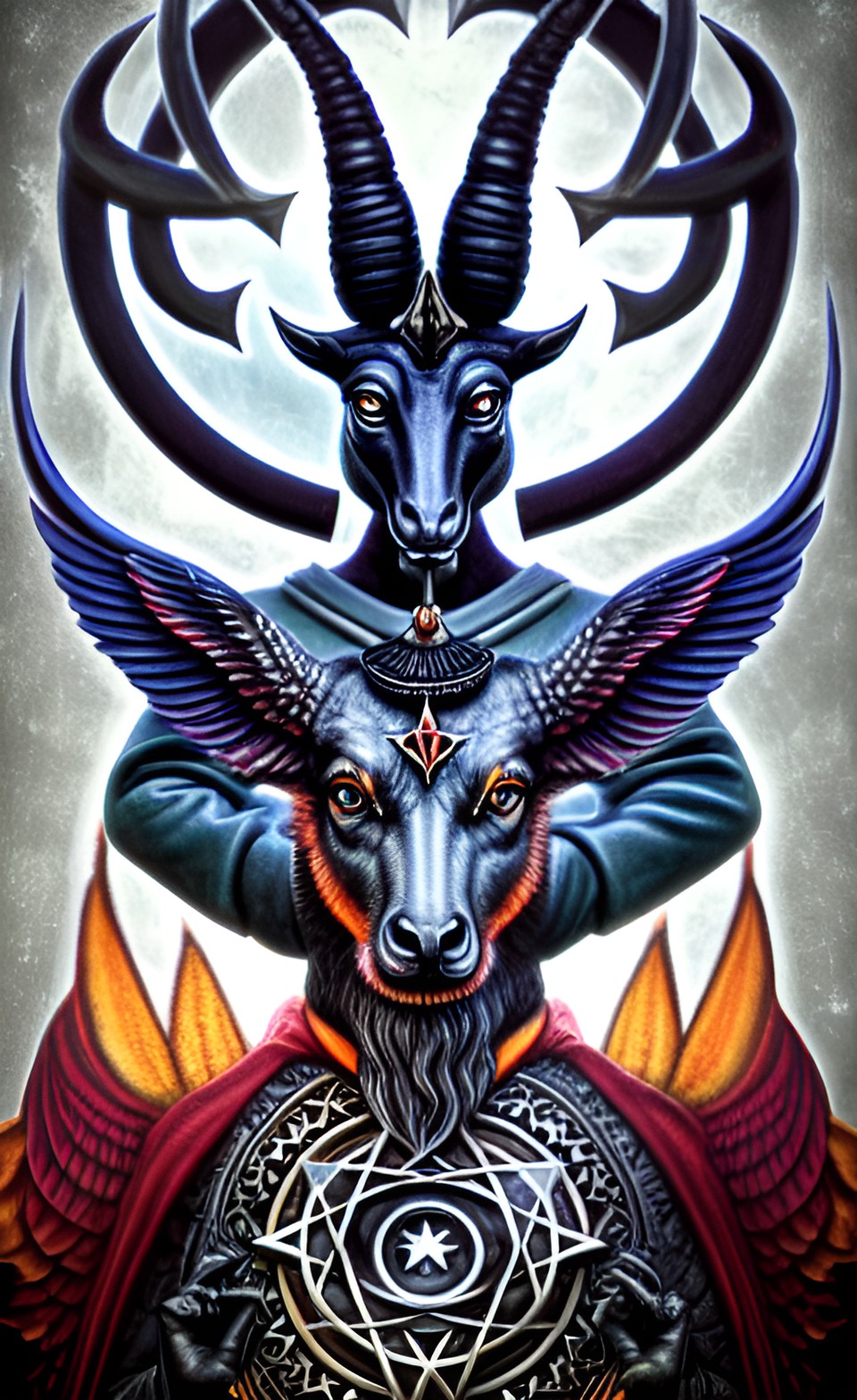
Baphomet is one of the most polarizing and misunderstood figures in modern cultural history. Often mistaken for a literal Christian devil or a mascot for malicious cults, this winged, goat-headed icon actually began as a medieval corruption of a name, was later reinvented by a 19th-century French occultist as an allegory for universal balance, and now serves as a secular legal and philosophical banner.
To understand Baphomet today, we have to look past sensationalized headlines and trace its real evolution through the Inquisition, esoteric literature, and modern public battles over religious pluralism.
Origins in Medieval Persecution and the Templar Trials
The history of Baphomet starts in 1307, when King Philip IV of France—deeply in debt to the military-monastic order known as the Knights Templar—moved to arrest its members on fabricated charges of heresy, sodomy, and idolatry. During the subsequent Inquisition trials, tortured prisoners were coerced into confessing that they worshipped a mysterious pagan idol referred to as Baphomet.
Historians generally agree that Baphomet was never a genuine object of Templar worship. Linguistic analysis suggests the word was an Old French corruption of "Mahomet" (a Westernized variation of the Prophet Muhammad), reflecting medieval European anxieties about Islamic practices or distorted accounts of crusader interactions in the Levant. For centuries, the name remained a minor historical footnote in court transcripts rather than a physical image.
Éliphas Lévi and the Creation of the Modern Icon
The physical appearance of Baphomet as a winged, goat-headed androgyne did not exist during the Middle Ages. It was invented in 1854 by the French occultist and ceremonial magician Éliphas Lévi in his treatise Dogme et Rituel de la Haute Magie. Lévi sketched the figure to serve as an elaborate hieroglyph of equilibrium.
Lévi named his drawing the Baphomet of Mendes, consciously linking it to ancient Egyptian fertility worship. Every single detail of the illustration was packed with philosophical and alchemical allegory:
- The Goat Head: Symbolized the sum of humanity's sins, bearing the burden of ignorance while maintaining intellectual clarity through the flame of intelligence between its horns.
- The Dual Arms: One arm pointed up toward a white moon (solve, or to separate), while the other pointed down toward a dark moon (coagula, or to bring together), illustrating the alchemical principle of polarity.
- The Androgynous Body: Combined male and female physical attributes to represent the ultimate synthesis of opposites—strength and mercy, masculine and feminine, spirit and matter.
Lévi never intended his creation to represent an evil entity. Instead, he framed it as a synthetic image of cosmic harmony, arguing that the true adversary of existence was ignorance rather than any supernatural force of malice.
Adaptation into Modern Secular and Religious Movements
By the mid-20th century, Lévi's drawing transitioned from esoteric philosophy into popular counterculture. In 1969, Anton LaVey adopted a modified version of Lévi's design—enclosed inside an inverted pentagram flanked by Hebrew letters—as the official symbol of the Church of Satan. Within this framework, Baphomet ceased to represent a neutral alchemical balance and instead became an archetype for carnal existence, individualism, and the rejection of dogmatic authority.
Decades later, organizations like The Satanic Temple utilized the imagery in high-profile public disputes regarding the separation of church and state. By erecting statues of Baphomet in public squares alongside Christian monuments, these groups aimed to challenge government-sponsored religious displays and defend the constitutional principle of equal public forum access for all beliefs.
Common Misconceptions About Baphomet
Public discussion around Baphomet is frequently distorted by misinformation. Recognizing these distinctions is essential for separating cultural myth from documented history.
- It is not an ancient demon: Baphomet did not originate in ancient folklore, nor is it listed in classical demonology grimoires prior to the 14th-century Templar trials.
- It is distinct from the Christian Satan: While modern religious groups use Baphomet as an icon, its original design by Lévi was purely philosophical, representing balance, nature, and the unification of opposites rather than a theological embodiment of absolute evil.
- The Knights Templar were innocent of the charge: The confessions regarding Baphomet were extracted through systematic torture under the direct political and financial pressure of the French crown.
Frequently Asked Questions
What does the word Baphomet actually mean?
Etymologists and historians generally agree that Baphomet is a medieval corruption of the name Muhammad. Other fringe historical theories suggest it derives from Greek roots meaning "baptism of wisdom", though documentary evidence points directly to linguistic alterations during the Crusades.
Did the Knights Templar worship a goat-headed idol?
No. The goat-headed imagery was invented more than 500 years after the dissolution of the Templars. The medieval charges mention an idol, but no physical artifact matching Lévi's description was ever recovered or verified.
Why do modern groups use Baphomet in public spaces?
Secular and activist organizations use the imagery primarily as a rhetorical tool in legal battles over religious freedom. By demanding the right to display the statue where government property hosts religious monuments, they leverage public discomfort to test the boundaries of constitutional pluralism.
Is Baphomet considered a religious deity?
In esoteric traditions, it is treated as a symbolic allegory for the balance of nature and consciousness. In nontheistic religious organizations, it serves as a mascot for rationalism and personal autonomy rather than a sentient deity requiring worship. You can read more about historical shifts in religious philosophy through resources provided by Britannica and academic studies archived by JSTOR.



