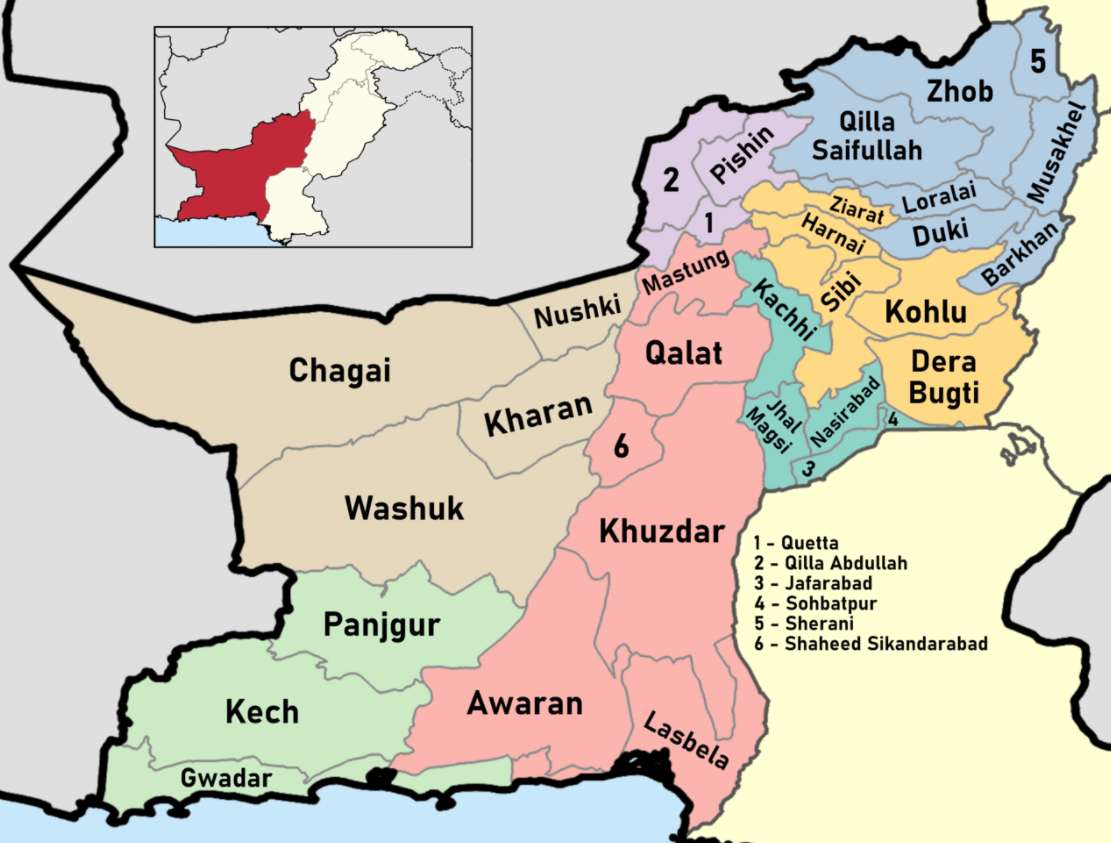
Balochistan spans a vast, arid terrain across southwestern Asia, partitioned today among Pakistan, Iran, and Afghanistan. As the largest province of Pakistan by land area, it features rugged mountain ranges, desolate plateaus, and a long Arabian Sea coastline. Despite its harsh climate, the region holds deep historical roots, mineral wealth, and a distinct tribal identity that defines the Baloch people.
Understanding this territory requires looking past the surface stereotypes of an empty desert. The region preserves remnants of some of the earliest human settlements on earth, serves as a critical geopolitical crossroads, and maintains a cultural heritage built on oral poetry, intricate handicrafts, and nomadic traditions.
Ancient Roots and the Mehrgarh Civilization
Human occupation in Balochistan stretches back into the Paleolithic era. Archaeological digs reveal that the region wasn't always just an isolated expanse of stone and sand. The standout site of Mehrgarh, located on the Kachi Plain, dates back to roughly 7000 BCE.
Mehrgarh represents one of the earliest known farming and herding settlements in South Asia. Long before the rise of the Indus Valley Civilization, early inhabitants here grew barley and wheat, herded cattle, and crafted advanced pottery. When the Indus Valley cities flourished, Balochistan acted as a vital overland corridor linking the river basins of the east to the Iranian plateau and Mesopotamia. Trade caravans moved lapis lazuli, turquoise, and chank shells through these mountain passes.
Classical antiquity brought new conquerors. Alexander the Great marched his army through the grueling Gedrosian desert (modern Makran), losing a significant portion of his men to thirst and rugged terrain. Later, Hindu dynasties like the Pāratarājas ruled parts of the region, leaving behind distinct coinages that historians use to trace trade and lineage before the spread of Islam in the 7th century.
Geography and Extreme Climate
The topography of Balochistan is defined by harsh contrasts. Mountain ranges like the Sulaiman Mountains in the northeast and the Kirthar Range form natural barriers, while the central plateau drops into arid basins. Along the south lies the Makran Coastal Range, bordering the Arabian Sea.
- The Highlands: Cities like Quetta experience freezing winters with heavy snowfall, contrasting with dry, warm summers.
- The Plains and Deserts: Lower districts like Sibi and parts of Chagai record some of the highest temperatures in South Asia.
- The Coastline: The Makran coast features unique mud volcanoes, hammerhead peninsulas, and small fishing villages like Gwadar, which has transformed into a focal point for modern maritime trade.
Water scarcity remains the primary environmental challenge. Traditional irrigation relies on karez systems—underground canals channeling water from mountain foothills to desert fields, minimizing evaporation under the intense sun.
Society, Language, and Tribal Structure
The demographic fabric of Balochistan is shaped by ethnicity and tribal organization. The primary groups include the Baloch, the Brahvi, and various Pashtun communities inhabiting the northern fringes.
The Baloch people speak Balochi, a Northwestern Iranian language divided into several regional dialects like Makrani and Rakhshani. Meanwhile, the Brahvi people speak a Dravidian language, an anomaly in a region dominated by Indo-Iranian tongues.
Society traditionally revolves around the tribal system led by tribal elders or sardars. Code of conduct codes like Baloch Mayar dictate daily life, emphasizing hospitality (Mahman Nawazi), asylum (Bohah), and revenge or justice (Badal). Even as urbanization pulls more residents into cities like Quetta and Khuzdar, tribal ties continue to govern local politics and social hierarchy.
Economy, Natural Wealth, and Modern Pressures
Balochistan sits atop immense natural wealth, though much of its population remains economically marginalized. The province supplies a large portion of natural gas to the region, famously anchored by the Sui gas field discovered in the 1950s. Beyond energy, the mountains contain rich deposits of copper, gold, coal, chromite, and marble. Mega-projects like the Reko Diq and Saindak mines target these vast mineral reserves.
Geopolitically, the region's position near the Strait of Hormuz makes it a focal point for international trade. The development of the deep-water port in Gwadar forms a cornerstone of the China-Pakistan Economic Corridor (CPEC), designed to link western China to the Arabian Sea. However, rapid industrialization and resource extraction frequently spark local friction regarding economic benefits, employment distribution, and environmental degradation.
For a broader academic perspective on regional demographics and historical context, consult the Library of Congress Country Studies. To review developmental frameworks, the Government of Balochistan Official Portal provides administrative updates.
Frequently Asked Questions
What languages are spoken in Balochistan?
Balochi is the primary language spoken by the ethnic Baloch population. Brahvi and Pashto are also spoken by large communities within the province, alongside Urdu as the national and inter-ethnic medium.
Why is Gwadar Port important?
Gwadar provides a direct maritime outlet on the Arabian Sea near major oil shipping lanes. Its deep-water facilities serve as a commercial transit hub connecting Central Asia and western China to global maritime routes.
Is Balochistan part of only one country?
No. While the largest share forms a province in southwestern Pakistan, historical Balochistan extends westward into the Sistan and Baluchestan province of Iran and parts of southern Afghanistan.
What was the Mehrgarh civilization?
Mehrgarh is a Neolithic site in Balochistan dating back to 7000 BCE. It provides crucial archaeological evidence of early agriculture, animal domestication, and crafts that predated the urban phase of the Indus Valley Civilization.



