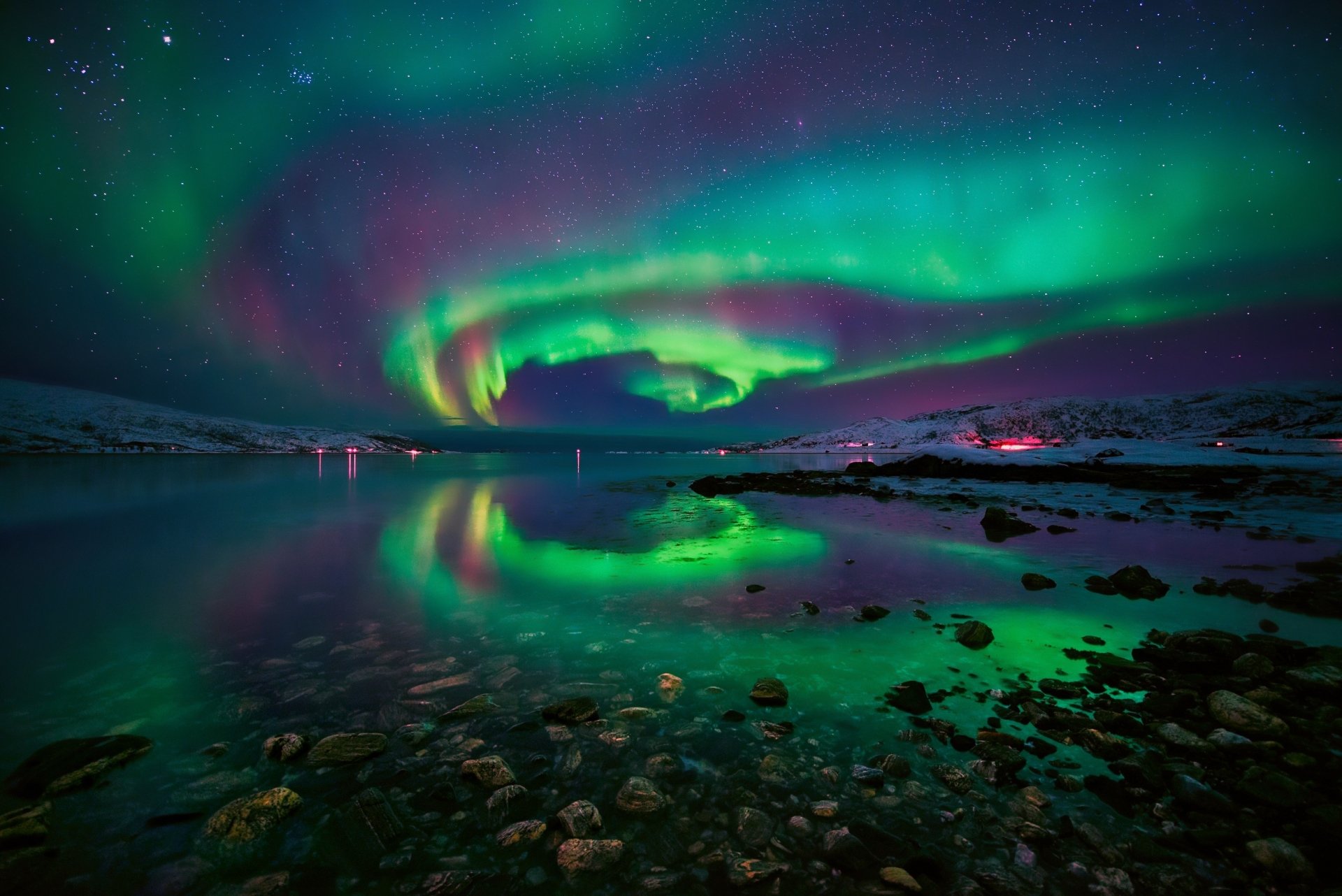
Catching the aurora borealis in Massachusetts demands patience, a watchful eye on space weather, and a bit of geographic luck. While high-latitude regions like Alaska or Norway experience frequent curtains of green and violet light, Massachusetts sits much further south at a geomagnetic latitude of roughly fifty-two degrees. Seeing the northern lights here isn't impossible, but it requires a significant geomagnetic storm—typically reaching a planetary Kp index of 7 or higher—to push the auroral oval far enough south.
Understanding how solar activity translates to New England skies helps separate realistic planning from wishful thinking. When major coronal mass ejections erupt from the Sun, the resulting geomagnetic disturbance compresses Earth's magnetic field and stretches the auroral oval toward lower latitudes. For observers in Boston, Worcester, or the Berkshires, ordinary space weather conditions won't cut it. You need a G3-class strong storm or higher, events that happen only a handful of times during a solar cycle, though major solar maximum periods substantially increase those odds.
What Causes the Aurora Borealis to Reach New England
The science behind mid-latitude auroras starts millions of miles away on the surface of the Sun. Solar flares and coronal holes release high-speed streams of charged particles into the solar wind. When these particles collide with Earth's magnetosphere, they interact with oxygen and nitrogen molecules in the upper atmosphere, producing vibrant displays of light.
The planetary Kp index measures these disturbances on a scale from 0 to 9. Because of Massachusetts's geographic position, a quiet or unsettled Kp index of 1 through 4 yields zero visible activity overhead or on the horizon. Even a Kp of 5 or 6 usually keeps the green glow locked over Canada or the northern border states. Only when the index spikes to 7, 8, or 9 do the lights dip far enough south to become visible from New England. During extreme events like the historic May 2024 geomagnetic storms, skies across Massachusetts lit up with magenta and green hues visible even from coastal beaches and urban parks.
Best Locations in Massachusetts for Dark Skies
Light pollution remains the biggest enemy of mid-latitude stargazing. To spot a faint auroral arc hugging the northern horizon, you need to escape the orange glow of Boston, Worcester, and Springfield. Ideal viewing sites feature an open, unobstructed view to the north and low ambient light levels.
- Mount Greylock Summit: Standing as the highest point in the state, this location in the Berkshires provides a high-altitude vantage point looking north over the Hoosac Valley toward Vermont.
- Quabbin Reservoir: The Enfield Lookout and surrounding protected watershed areas offer vast stretches of dark terrain with virtually no artificial lights reflecting off the water to the north.
- Parker River National Wildlife Refuge: Situated on Plum Island, this barrier beach faces the open ocean to the northeast, putting you far away from coastal municipal light pollution.
- Race Point Beach: Located at the very tip of Cape Cod in Provincetown, this spot provides a wide ocean horizon with water views spanning north and west.
Timing Your Hunt: Seasons and Hours
Seasonality plays a major role in your chances of success. The equinox periods—stretching from late September through October and again from March through April—historically produce the highest frequency of geomagnetic storms. During these months, the tilt of Earth's magnetic field allows solar wind particles to couple more efficiently with the magnetosphere.
Night length also matters. While autumn and spring offer balanced hours of darkness, winter provides the longest continuous dark windows, though cloud cover can frequently obstruct the view. When a major storm watch is issued by the National Oceanic and Atmospheric Administration (NOAA), the best viewing hours typically occur within a few hours of local magnetic midnight, generally between 10:00 PM and 2:00 AM.
How to Track Solar Storms and Forecasts
Checking the weather forecast isn't enough; you must monitor space weather sources actively. Relying on casual weather apps will leave you blind to solar activity. Instead, use specialized tools to track real-time conditions.
- Monitor the NOAA Space Weather Prediction Center dashboard for geomagnetic storm watches (G-scale) and Kp index projections.
- Check real-time solar wind data for the interplanetary magnetic field component known as Bz. When Bz turns strongly negative southwards, it unlocks the Earth's magnetic shield and allows solar particles to pour in.
- Consult local cloud cover maps to ensure clear skies align precisely with the peak hours of an active storm.
Photography Tips: Seeing What Your Eyes Miss
Human eyes struggle to perceive faint colors in low-light conditions, often interpreting a distant mid-latitude aurora as a dull gray cloud or a stationary fog bank. Modern digital cameras and smartphones possess a massive advantage here because their sensors can gather light over multi-second exposures.
If you suspect an aurora is happening, mount your camera on a tripod or hold your smartphone steady, set it to night mode with a 3-to-5-second exposure, and point it toward the northern horizon. If the resulting image reveals a distinct pink, purple, or green tint in the sky, you've successfully captured an invisible aurora.
Frequently Asked Questions
Can you predict the northern lights weeks in advance?
No. While scientists can track active sunspots rotating across the face of the Sun, predicting the exact arrival time and intensity of a coronal mass ejection is only possible a few days—and often just hours—before impact.
Do I need special equipment to see the aurora?
You don't need telescopes or binoculars. In fact, optical aids narrow your field of view too much. A wide-angle view of the northern horizon works best, supplemented by a camera or phone running night mode to reveal hidden colors.
Why do auroras look different in Massachusetts than in Alaska?
When viewed from high northern latitudes, the aurora appears directly overhead in dynamic, shifting curtains and pillars. From Massachusetts, you are viewing the very top edge of the auroral oval from hundreds of miles away, which usually translates to a low-lying colorful glow or faint vertical rays on the northern horizon.
Are northern lights harmful to humans on the ground?
Not at all. Earth's thick atmosphere and magnetic field absorb these high-energy particles entirely, protecting all life on the surface while creating a stunning visual phenomenon high above.



