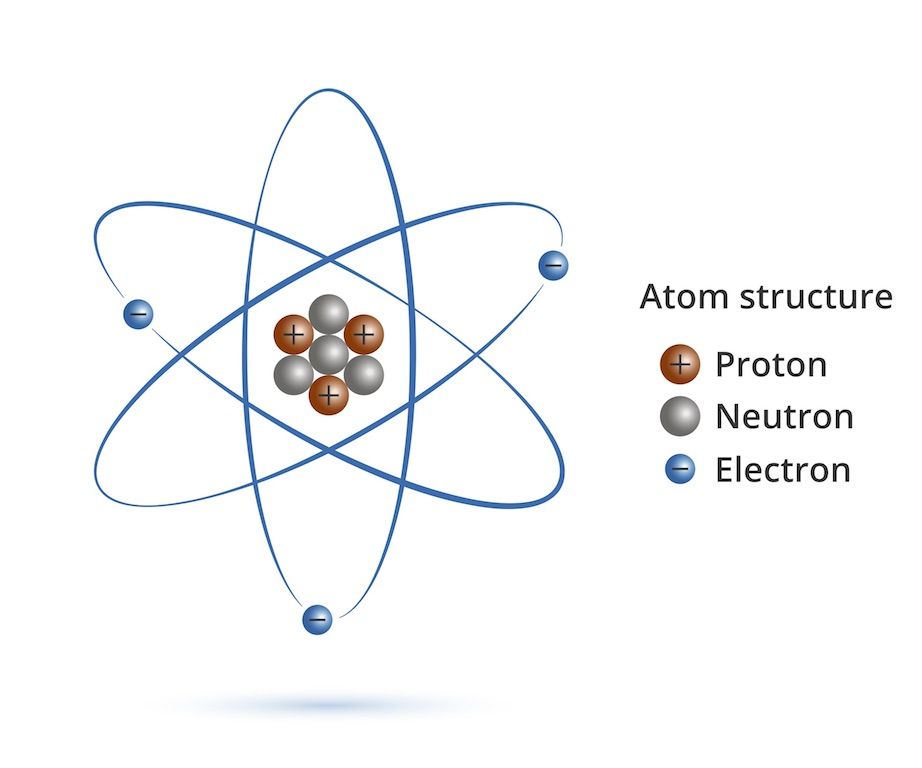
When people compare atomic and nuclear bombs, they usually picture two distinct tiers of apocalyptic destruction. In reality, every atomic bomb is a type of nuclear weapon, but not every nuclear weapon is an atomic bomb. The fundamental distinction boils down to splitting heavy atoms versus fusing light ones. That mechanical difference creates an exponential gap in destructive power.
Atomic bombs rely entirely on nuclear fission, splitting heavy elements like uranium-235 or plutonium-239. Nuclear weapons as a broader category include thermonuclear devices (or hydrogen bombs), which use a fission reaction to trigger a much larger secondary fusion reaction. While a first-generation atomic bomb measures its yield in thousands of tons of TNT equivalent (kilotons), a thermonuclear weapon measures its output in millions of tons (megatons).
The Core Physics of Fission: Atomic Bombs
An atomic bomb works by forcing a subcritical mass of fissile material into a supercritical state instantly. When a stray neutron strikes the nucleus of a uranium-235 atom, the nucleus destabilizes and splits into two smaller fragments, releasing free neutrons and a massive burst of binding energy.
Those released neutrons crash into neighboring atoms, causing them to split and creating a self-sustaining chain reaction. This entire sequence happens in less than a millionth of a second.
The two historical atomic bombs used in combat—the devices dropped on Hiroshima and Nagasaki—utilized different materials and mechanisms.
- Little Boy (Hiroshima): A gun-type uranium-235 bomb with a yield of roughly 15 kilotons.
- Fat Man (Nagasaki): An implosion-type plutonium-239 design yielding about 21 kilotons.
Even though these weapons flattened entire cities, their destructive capacity is physically capped. As a fission chain reaction proceeds, the expanding metal blows itself apart too quickly for all the fuel to react. Usually, less than twenty percent of the fissile material actually splits before the core disperses.
The Evolutionary Leap: Thermonuclear Weapons
To bypass the structural limits of fission, physicists developed the thermonuclear weapon. These devices combine two distinct reactions into a multi-stage system.
The primary stage is a conventional atomic bomb. When it detonates, it generates immense temperatures and a flood of X-rays. These X-rays are channeled inside a specially shaped casing to compress a secondary stage containing hydrogen isotopes, specifically deuterium and tritium, bound in lithium deuteride.
This radiation pressure compresses the fusion fuel to extreme densities, igniting nuclear fusion. Fusion is the process that powers stars like the sun, forcing light atomic nuclei together to form helium. This reaction yields an enormous surge of high-energy neutrons.
In a standard three-stage thermonuclear design, those fast neutrons strike a final tamper made of depleted uranium, causing that outer shell to undergo fast fission. This creates a powerful multi-stage cascade: fission triggers fusion, and fusion amplifies fission on a massive scale.
Direct Comparison: Yield and Destructive Punch
The punch packed by these two weapon classes differs by orders of magnitude. You can understand the scale by looking at standard measurements maintained by institutions like the Atomic Archive.
- Yield Scale: Atomic bombs max out in the low-to-mid kiloton range. Thermonuclear weapons routinely exceed one megaton, making them dozens or hundreds of times more powerful.
- The Tsar Bomba Benchmark: Tested by the Soviet Union in 1961, the largest thermonuclear device ever detonated yielded 50 megatons. That single device was roughly 3,300 times more powerful than the Hiroshima bomb.
- Efficiency: Thermonuclear weapons burn their fuel much more thoroughly than pure fission weapons, extracting exponentially more energy from a fraction of the weight.
Common Misconceptions About Nuclear Power
People often assume that modern military arsenals still stock thousands of basic atomic bombs. In reality, advanced military powers retired pure fission weapons decades ago. Every strategic warhead deployed today utilizes thermonuclear physics, even when dialed down to lower yields for tactical precision.
Another frequent error is confusing radiation output with explosive power. While an atomic bomb produces significant local radioactive fallout from fission fragments, a high-yield thermonuclear weapon derives a massive percentage of its total explosive energy from clean fusion, though the final uranium tamper still produces severe radioactive contamination. Organizations such as the Federation of American Scientists provide extensive breakdowns on modern global stockpiles and warhead architecture.
Frequently Asked Questions
Can an atomic bomb detonate a hydrogen bomb on its own?
Yes, but only through precise engineering. The primary atomic stage must detonate within microseconds to supply the exact thermal X-ray pulse required to compress the secondary fusion stage.
Why don't countries use pure fusion bombs?
Nuclear fusion requires temperatures of millions of degrees to initiate. Because conditions on Earth don't naturally reach that threshold, a fission trigger is structurally mandatory to kickstart the process.
Are tactical nuclear weapons atomic or thermonuclear?
Many modern tactical warheads use variable-yield thermonuclear designs. They can be adjusted downward to produce lower explosive yields while keeping the underlying multi-stage physics intact.
How much physical space do these weapons take up?
Because thermonuclear designs use physics more efficiently, a modern hydrogen warhead can fit onto the tip of an intercontinental ballistic missile, weighing less than a thousand pounds while delivering a multi-megaton payload.



