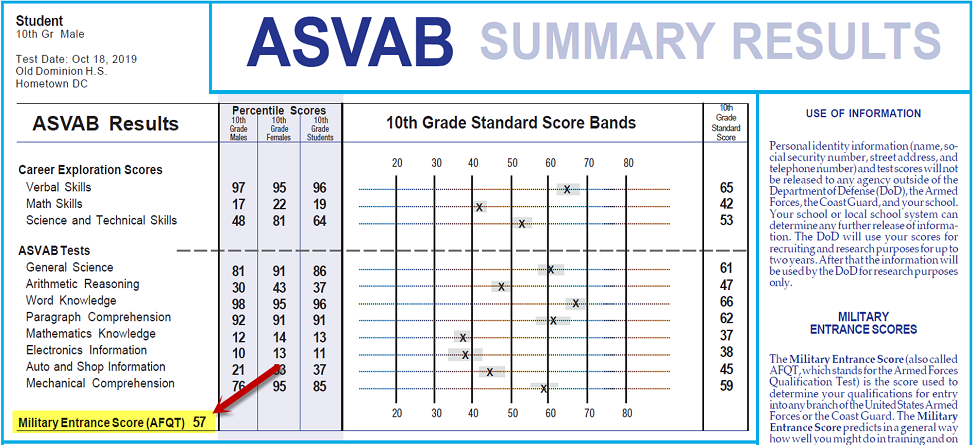
When you're planning to enlist, cracking the code on ASVAB score requirements for Air Force jobs is the most important step in mapping out your military future. You can't just pass by the skin of your teeth and expect to land a complex cyber or aviation role. The score you earn dictates your entire career path, from mechanical maintenance to intelligence analysis.
To walk through the doors of the United States Air Force, you need to clear two distinct hurdles. First, you must meet the general enlistment threshold. Second, you need specific line scores to qualify for individual jobs. If you're a high school senior or graduate, you'll need a minimum Armed Forces Qualification Test (AFQT) score of 31. If you hold a GED, that minimum bumps up to 50. Hitting these baseline numbers gets you in the door, but it's your MAGE scores that truly open up the job catalog.
Understanding the ASVAB and AFQT Baseline
The Armed Services Vocational Aptitude Battery isn't a traditional pass-or-fail test. Instead, it's a multi-aptitude battery that measures your natural strengths and predicts how well you'll perform in military training.
The AFQT score—which combines your results from Arithmetic Reasoning, Mathematics Knowledge, Paragraph Understanding, and Word Knowledge—determines your basic eligibility. According to the U.S. Air Force official guidelines, that 31 or 50 score is non-negotiable for initial enlistment. But don't make the mistake of thinking a 31 gets you into any job you want. That baseline score simply means you're eligible to join; it often limits your actual job choices to a very narrow pool.
The MAGE Categories: Breaking Down Line Scores
Air Force jobs aren't assigned based on your overall AFQT percentile alone. Instead, the branch uses composite scores known as MAGE categories to match your skills with specific career fields. Each category groups specific ASVAB subtests to evaluate your aptitude in different working environments.
- Mechanical (M): Evaluates your understanding of general science, mechanical concepts, and shop information. Jobs in this category include aircraft maintenance, vehicle mechanics, and equipment operations.
- Administrative (Ad): Relies heavily on verbal expression. It's used for personnel, administration, and information management careers.
- General (G): Combines verbal expression and arithmetic reasoning. This broad category covers security forces, intelligence, medical services, and logistics.
- Electronics (E): Measures general science, arithmetic reasoning, mathematics knowledge, and electronics information. You'll need strong electronics scores to qualify for cyber systems, avionics, and communications career fields.
How Line Scores Work in Practice
Let's look at a concrete example. Suppose you want to work in cyber operations. You might have an overall AFQT score of 70, which is fantastic. However, if your Electronics (E) line score falls below the required threshold for that specific cyber job, the system won't let you book it.
Every Air Force Specialty Code (AFSC) has a minimum score requirement across these four areas. Technical fields like cyber security or aerospace medical plumbing demand much higher line scores—often in the 70s, 80s, or 90s—than general administrative roles. You can review official career descriptions and specific prerequisites through Air Force Enlisted Jobs.
Common Mistakes Applicants Make
Many recruits stumble during the testing phase because they mismanage their preparation. Avoiding these common traps can save you from a disappointing job selection process.
- Studying the whole test equally: If you're aiming for a mechanical career, spending 80 percent of your study time on paragraph comprehension is a waste of energy. Focus heavily on the subtests that feed your target MAGE score.
- Ignoring the GED penalty: GED holders face a higher AFQT cutoff (50 instead of 31). If you have a GED, you can't afford to take the practice tests lightly.
- Rushing the test: The ASVAB is timed tightly. Pacing yourself is just as important as knowing the material. If you get stuck on a difficult math question, guess intelligently and move on so you don't run out of time on easier problems down the road.
- Locking into a job before seeing scores: Keep an open mind. Until your recruiter pulls your official line scores at the Military Entrance Processing Station (MEPS), you won't know your true purchasing power.
Preparing to Retest
What happens if you take the ASVAB and your scores aren't high enough for the job you want? Don't panic. You have options, but they require patience.
The military has strict waiting periods for retesting. If you want to take the test again to improve your scores, you generally have to wait at least one calendar month before your first retest, and subsequent waits can stretch longer. Use that waiting period wisely. Invest in Department of Defense study resources or high-quality practice guides to target your weak spots.
Frequently Asked Questions
Can I choose my Air Force job on the day of the test?
No. Your test scores are just the first step. Once you're at MEPS and your scores are locked in, you'll work with a recruiter to list available jobs based on your qualifications, physical exam results, and current Air Force openings.
Do college credits change my ASVAB score requirements?
College credits don't change your ASVAB score, but having college hours or a degree can sometimes help you enlist at a higher pay grade (rank). However, the baseline ASVAB and line score requirements for specific jobs remain fixed regardless of your college background.
Are officer ASVAB requirements different?
Officers don't take the standard ASVAB. If you're pursuing an officer commissioning path, you'll take the Air Force Officer Qualifying Test (AFOQT) instead, which features a completely different scoring and evaluation structure.
How long are my ASVAB scores valid?
Your ASVAB scores remain valid for two years for enlistment purposes. If you don't enlist or enter the delayed entry program within that window, you'll need to retake the test.



