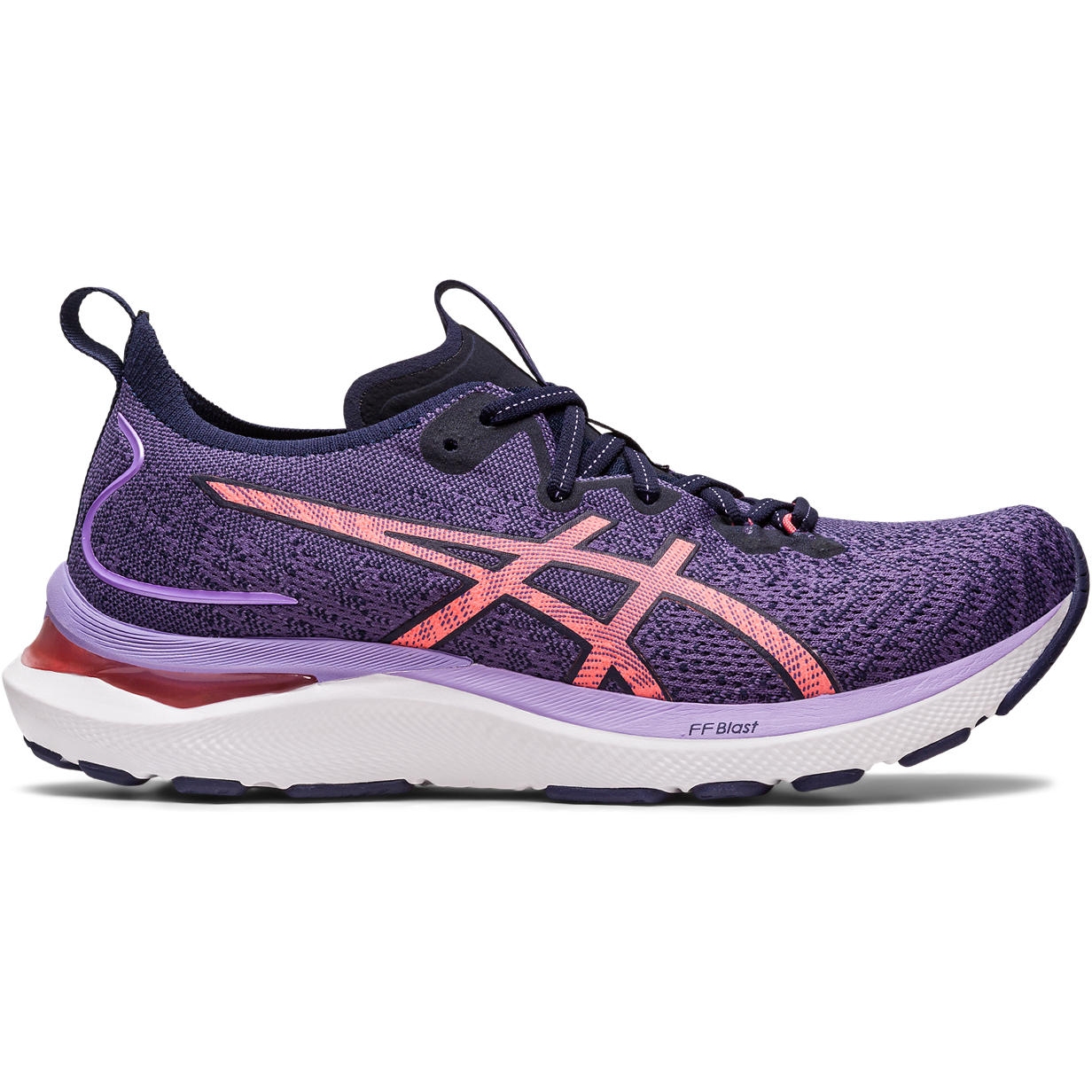
Choosing the right athletic footwear shapes your entire training experience. When you're logging high weekly mileage or tackling uneven terrain, your shoes either protect your joints or amplify impact fatigue. ASICS built its reputation on biomechanical precision and rigorous materials science. If you're trying to figure out which model matches your stride, you need to look past the marketing and examine how their proprietary foams and stability systems actually function under foot.
Founded in Kobe, Japan in 1949, ASICS takes its name from the Latin acronym Anima Sana In Corpore Sano—a sound mind in a sound body. While many brands chase aesthetic trends, ASICS invests heavily in its Institute of Sport Science, where researchers capture motion-capture data to analyze pronation, shock absorption, and energy return. Knowing the engineering behind these models helps you select a pair that prevents injury and lasts through hundreds of miles of pavement pounding.
Core Footwear Technologies Explained
Understanding an ASICS shoe requires looking at the proprietary compounds packed into the midsole and outsole. The brand doesn't rely on a single foam formulation; instead, they mix impact-dissipating gel with responsive foams to balance soft cushioning and energy return.
GEL Technology and Impact Mitigation
Introduced decades ago, ASICS GEL cushioning remains a distinct element in their lineup. It's not liquid gel, but rather a specialized silicone-based material strategically placed in high-impact zones like the rearfoot and forefoot.
When your heel strikes the pavement, vertical ground reaction forces spike dramatically. The silicone pads deform upon impact, absorbing and horizontally dissipating vertical shock waves before they travel up your tibia and knee joints. This makes GEL-heavy models ideal for heel strikers and runners recovering from impact-related injuries like shin splints.
FlyteFoam and FF Blast Compounds
Traditional EVA foams pack down and lose resilience over time. To combat this, ASICS developed FlyteFoam, which incorporates organic super fibers to maintain structural integrity under continuous compression.
- FlyteFoam Lyte: The lightest variation, utilizing sustainable nanocellulose fibers to reduce weight without sacrificing durability.
- FlyteFoam Blast (and FF Blast+): A softer, higher-rebound foam that delivers a trampoline-like bounce. You'll find this compound in daily trainers where energy return and plush comfort matter most.
- FF Turbo: Their premier race-day foam, engineered for maximum energy return and minimal weight in carbon-plated marathon shoes.
Stability Systems: Guidance Truss System and 3D Space Construction
Pronation isn't a flaw—it's your foot's natural shock-absorption mechanism. However, excessive overpronation causes the ankle to roll inward too far, straining the plantar fascia and calf muscles.
ASICS manages this through mechanical design rather than rigid, intrusive posting. The Guidance Truss System is a rigid resin piece under the midfoot arch that prevents the shoe from twisting mid-stride. Paired with 3D Space Construction, which features specific indentation shapes molded into the midsole, the shoe compresses differently based on gender-specific biomechanics and weight distribution.
Major ASICS Product Lines Decoded
With dozens of models on shelves, picking the right tier can feel overwhelming. The lineup is split into distinct families tailored to specific gaits, distances, and surfaces.
Neutral and Cushioned Trainers
If your foot maintains a neutral arch or supinates (rolls outward), you want maximum shock absorption without motion-control interference.
- Gel-Nimbus: The flagship max-cushion daily trainer. It features thick layers of FlyteFoam Blast+ and rearfoot GEL, making it the go-to option for high-mileage recovery runs and long training blocks.
- Gel-Cumulus: A lighter, more versatile alternative to the Nimbus. It offers a balanced, smooth ride that transitions well from easy runs to gym sessions.
Stability and Overpronation Support
Runners who need help keeping their ankles aligned find reliable performance in ASICS' stability stable.
- Gel-Kayano: The benchmark stability shoe in the running industry. It uses a wider platform and geometric midsole shaping to gently guide your foot through a neutral path without feeling stiff or heavy.
- GT-2000: A lighter, slightly more responsive stability trainer that serves as an accessible entry point for runners needing moderate arch support.
Speed and Race-Day Performance
When you want to drop your pace, heavy daily trainers get in the way. ASICS' fast category strips away excess weight.
- Metaspeed Sky+ and Edge+: Carbon-plated marathon racers. The Sky is built for runners with a long stride length who increase speed by lengthening their stride, while the Edge is designed for cadence runners who speed up by increasing step frequency.
- Magic Speed: A more durable, nylon-plated trainer that brings carbon-plated propulsion into weekly speed workouts at a lower price point.
Trail Running and Off-Road Resilience
Pavement shoes lack the traction and upper durability required for technical dirt trails.
- Fujispeed: A lightweight trail racer featuring a Pebax plate and aggressive lugs for fast climbs.
- Gel-Trabuco: A workhorse trail shoe equipped with a rock protection plate and ASICSGRIP rubber outsole, ensuring solid footing on wet rock and loose gravel.
Common Mistakes When Choosing ASICS Shoes
Even with advanced footwear technology, runners frequently make avoidable purchasing errors that lead to discomfort or premature wear.
- Buying solely by size instead of volume: ASICS shoes generally run true to size, but upper mesh tightness varies. If you have a wide midfoot or high instep, sticking to a standard width in performance models can cause numbness. Look for dedicated wide (2E) or extra-wide (4E) options.
- Confusing cushion depth with stability: A plush shoe like the Nimbus feels incredible in a retail store, but if you severely overpronate, running long distances in a purely neutral max-cushion shoe can overload your medial tendons. Match your shoe category to your gait, not just your preference for softness.
- Ignoring outsole wear patterns: Check your old running shoes. If the outer heel and inner forefoot show heavy degradation, you need a stability model. If wear is concentrated strictly on the outer edge, stick to neutral options. You can read more about proper footwear selection guidelines from the American Podiatric Medical Association.
Frequently Asked Questions
How many miles do ASICS running shoes typically last?
Most performance running models last between 400 and 500 miles (approx. 640 to 800 kilometers). As the internal foam cells compress and lose their rebound properties, cushioning degrades even if the outer rubber looks fine. If you feel unusual joint soreness after runs, your midsole foam is likely exhausted.
Should I size up in ASICS running shoes?
Many runners size up by a half-size compared to their casual dress shoes. Your feet swell during long runs as blood flow increases, and a thumb's width of space between your longest toe and the front of the shoe prevents painful black toenails during descents.
What is the difference between ASICS Neutral and Stability shoes?
Neutral shoes provide cushioning and flexibility without correcting your natural foot roll. Stability shoes incorporate structural elements—like wider base platforms, firmer midsole foam on the medial side, or midfoot shank plates—to prevent excessive inward rolling for moderate to severe overpronators. Official brand specifications and tech breakdowns are detailed directly on the ASICS Official Site.
Can I use running shoes for cross-training and gym workouts?
Long-distance running shoes feature high, soft midsoles and curved heel bevels designed for linear forward momentum. Using them for lateral movements, weightlifting, or agility training can lead to ankle instability. For weight training, look for flat-soled cross-trainers instead.