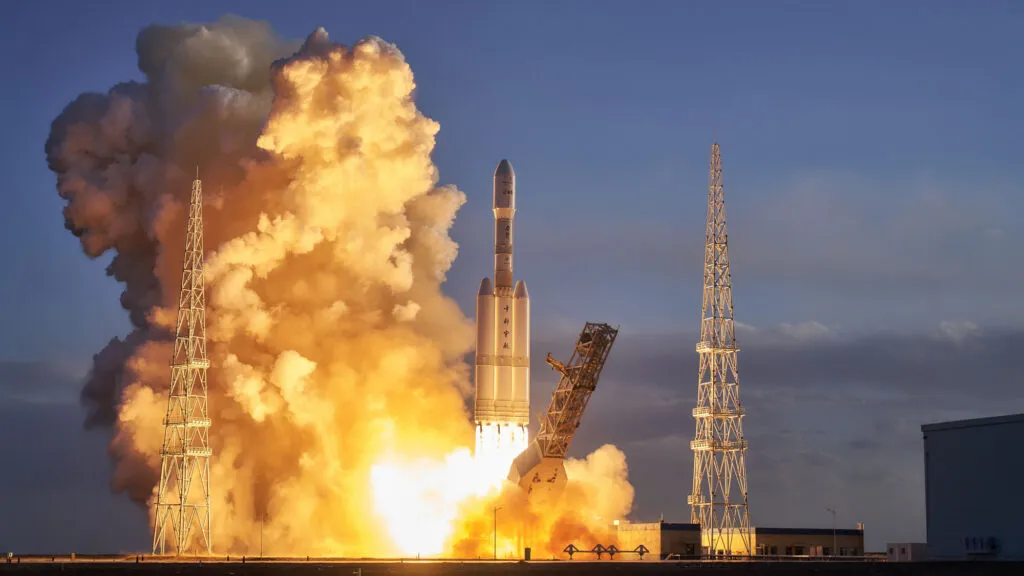
The Artemis III launch date is targeted for no earlier than mid-to-late 2027, shifting the timeline for humanity's next chapter of deep-space exploration. Following strategic updates by space agency leadership, this mission serves as a critical low Earth orbit test flight rather than an immediate surface landing. By validating commercial human landing systems before attempting a descent, the program prioritizes crew safety and technical reliability.
Understanding the schedule requires looking past generic countdown timers and examining the actual milestones. Hardware is stacking at Kennedy Space Center, a four-person crew is assigned, and flight plans involve multi-vehicle rendezvous. Here is a breakdown of what to expect from the upcoming flight, how the architecture changed, and what it means for the broader lunar return.
The Revised Artemis III Mission Profile
Plans evolved significantly when mission planners restructured the sequence of flights. Originally envisioned as the historic return to the lunar surface, Artemis III now functions as a risk-reduction and orbital demonstration mission.
Instead of flying all the way to the Moon, the crewed Orion capsule will remain in low Earth orbit for a 14- to 17-day mission. The primary objective is to test vital rendezvous, docking, and life-support interfaces between the NASA-built Orion spacecraft and commercial lunar landers built by SpaceX and Blue Origin.
This orbital test prepares the groundwork for Artemis IV, which is slated for early 2028 as the actual crewed landing mission. Testing these complex systems close to home allows engineers to iron out flaws without risking a deep-space emergency.
Flight Sequence and Spacecraft Involvement
The 2027 mission coordinates three separate launch vehicles and three distinct spacecraft architectures. The logistical choreography is complex:
- The First Launch: An uncrewed commercial rocket lifts off first, carrying a test version of the Blue Origin lunar lander into orbit.
- The Second Launch: NASA's heavy-lift Space Launch System (SLS) rocket launches the Orion spacecraft with the four-person crew on board from Kennedy Space Center.
- The Orbital Docking: Orion approaches and docks with the Blue Origin vehicle. The crew enters the lander to validate environmental controls and life-support subsystems.
- The Third Launch: A SpaceX Starship variant launches into orbit a few days later, allowing Orion to perform a subsequent rendezvous and docking test.
Following these hardware demonstrations, Orion re-enters Earth's atmosphere to test an upgraded heat shield before splashing down in the Pacific Ocean.
The Assigned Flight Crew
NASA announced the prime crew roster for the mission, bringing together veterans and newer specialists from international space partnerships.
- Randy Bresnik (Commander): A retired U.S. Marine Corps aviator and veteran of space shuttle and International Space Station expeditions.
- Luca Parmitano (Pilot): An European Space Agency astronaut from Italy with extensive long-duration orbital flight experience.
- Frank Rubio (Mission Specialist): An Army physician who holds the American record for the longest single spaceflight aboard the space station.
- Andre Douglas (Mission Specialist): An engineer specializing in robotics making his first flight into space.
Why the Schedule Shifted
Shifting the timeline wasn't a casual decision. Developing human-rated landing systems capable of descending safely to the lunar south pole requires rigorous uncrewed testing.
Space agencies and commercial partners face strict safety thresholds. By inserting an orbital checkout phase, engineers can verify propellant transfer, power generation, and communication redundancies. Rushing straight to a surface landing without these orbital rehearsals would introduce unacceptable risks to the crew.
Track official updates directly through the NASA Artemis Mission Page.
Frequently Asked Questions
When will the actual moon landing happen now?
The first crewed lunar landing of the program is planned for Artemis IV, which targets an early 2028 window. That mission will use the data and confidence gained from the 2027 orbital tests.
Will the Artemis III crew wear new spacesuits?
Yes. While the crew won't walk on the lunar surface during this specific flight, they will test new advanced survival and mobility suits designed for future surface operations inside the spacecraft cabin.
Where will the SLS rocket launch from?
The Space Launch System will lift off from Launch Complex 39B at the Kennedy Space Center in Florida, utilizing hardware assembled inside the Vehicle Assembly Building.
How long will the mission last?
The flight plan spans approximately two weeks, giving the crew enough time to complete multiple docking checks, habitat evaluations, and system diagnostics in low Earth orbit.