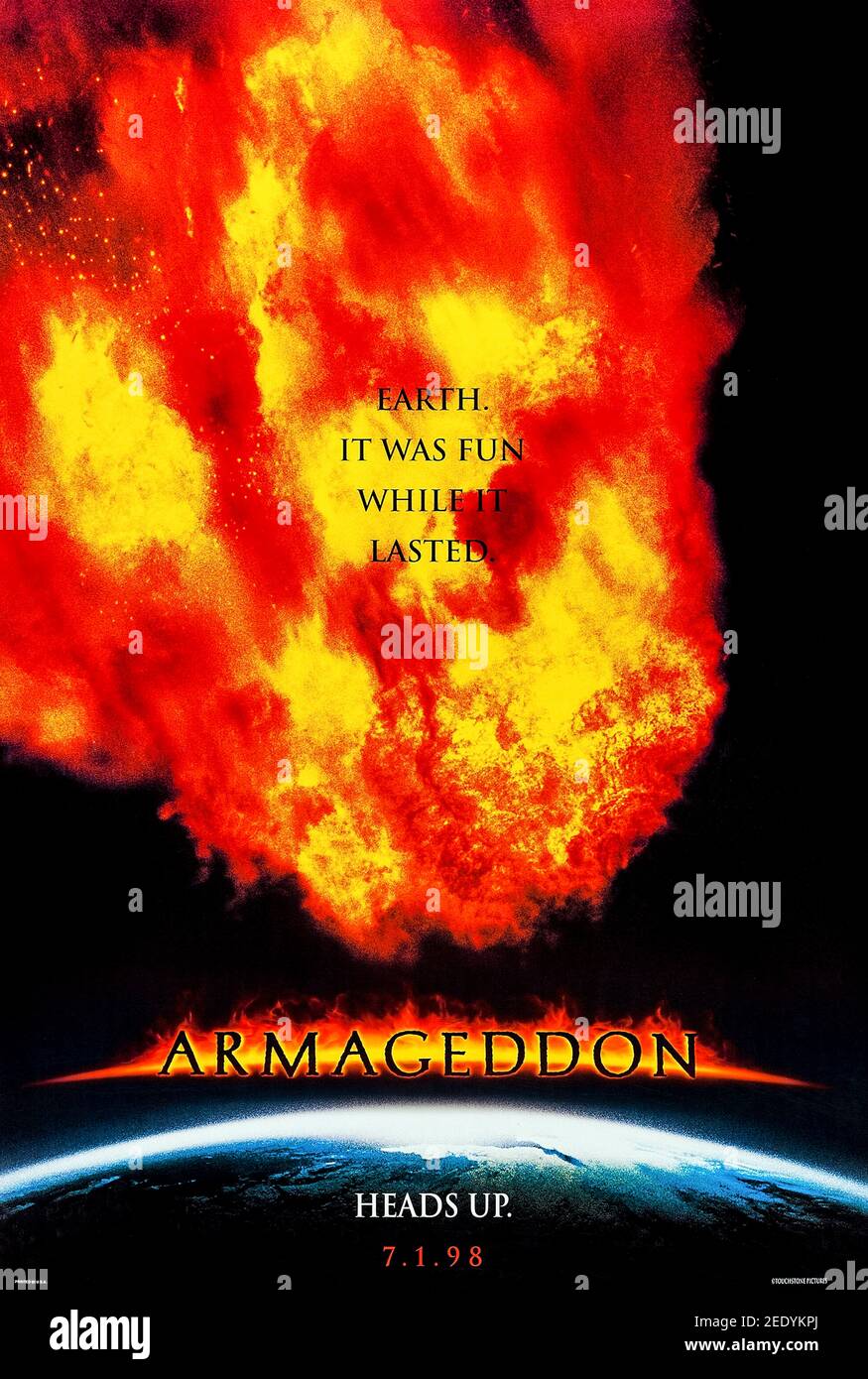
When Michael Bay's blockbuster disaster film hit theaters, the climax featured a high-stakes gambit: drill deep into a rogue asteroid and detonate a nuclear weapon at its core. The sequence remains a high-water mark of late-90s cinematic spectacle, blending emotional sacrifice with grand-scale destruction. Yet, the mechanics of this famous sequence raise persistent questions about how real physics measures up against Hollywood fiction.
Understanding this sequence requires looking beyond the pyrotechnics to examine why the plan was structured the way it was, how real-world orbital mechanics handle planetary threats, and where the film deviates sharply from actual science.
The Core Strategy of the Mission
The premise relies on a simple analogy delivered by Billy Bob Thornton's character: setting off a firecracker in an open palm causes a minor burn, but closing your fist and containing the blast creates devastating localized pressure. The NASA team determines that a surface detonation won't work because a massive celestial body would absorb or deflect the energy without changing its trajectory.
To overcome this, Harry Stamper and his crew of deep-core drillers must pilot the Freedom and Liberty space shuttles to the asteroid, land on volatile terrain, and sink a borehole thousands of feet deep into a pre-identified geological fault line. If you want more about the background here, Associated Press provides an excellent breakdown.
- The Fault Line: The script emphasizes that the nuclear charge must be placed inside a natural fracture to split the mass cleanly in two.
- The Split: By fracturing the asteroid symmetrically, the momentum of the two resulting halves is supposed to carry them wide of Earth on either side, saving the planet from total extinction.
- The Timing Constraint: The window for detonation is razor-thin. If they trigger the device too early, the fragments remain too close together and still strike Earth; too late, and the shockwave is useless because the impact is imminent.
The Cinematic Drama Versus Real Orbital Mechanics
While the pacing and tension are masterclass action filmmaking, the underlying science takes massive liberties. Real astronomers and physicists have spent decades analyzing the viability of nuclear deflection, pointing out several major flaws in the movie's approach.
Asteroid Composition and Fracturing
In reality, large asteroids are rarely solid rocks with convenient, predictable fault lines running straight through their centers. Many are "rubble piles"—loose conglomerates of boulders, dust, and gravel held together loosely by weak gravity. Detonating a nuclear device inside a rubble pile wouldn't split it into two neat halves. Instead, it would scatter a cloud of radioactive debris or create a shotgun effect, sending hundreds of smaller, highly destructive fragments directly toward Earth.
The Scale of the Threat
The film describes the asteroid as being the size of Texas, which measures roughly 800 by 750 miles. An object of that magnitude is actually a dwarf planet (comparable to Vesta or Ceres). Delivering enough kinetic or nuclear energy to alter the course of an object with that much mass would require an arsenal thousands of times larger than any nuclear stockpile currently in existence.
Gravity and Surface Conditions
Throughout the drilling sequence, the crew deals with localized gas outgassing and heavy machinery behavior, but the artificial gravity on the asteroid fluctuates for dramatic convenience. In a true low-gravity environment, heavy equipment and drilling rigs would immediately float away unless securely anchored with substantial downward thrusters or physical harpoons.
Real-World Planetary Defense
Real space agencies approach asteroid mitigation very differently than Hollywood. The approach focuses on early detection and gentle deflection rather than explosive destruction.
- Kinetic Impactors: Agencies test methods like slamming a high-speed spacecraft directly into an asteroid to alter its orbital velocity over time. A small nudge applied years or decades in advance is enough to make a rogue body miss Earth entirely.
- Gravity Tractors: A heavy spacecraft could hover near an asteroid for an extended period, using its minor gravitational pull to gradually tow the object onto a safe trajectory.
- Nuclear Stand-Off Detonation: If a threat is detected late, scientists have modeled detonating a nuclear device near (not inside) the asteroid. The intense X-ray flash vaporizes the surface material on one side, creating a jet-propulsion effect that pushes the asteroid off course safely.
Common Misconceptions About the Climax
Audiences often misinterpret specific details about how the mission concludes.
- Why didn't they just use missiles from Earth? The film establishes that traditional surface-to-space missiles lack the payload capacity and precision to penetrate deep enough to alter a massive core.
- Was the sacrifice necessary? Within the narrative framework, the remote detonator is damaged during a rough landing and subsequent seismic disruption. Someone has to stay behind to manually trigger the device at the exact millisecond required to clear the threshold, forcing Bruce Willis's character to take the final slot.
Frequently Asked Questions
Could a nuclear bomb actually destroy an asteroid in real life?
It depends entirely on the size and composition of the asteroid. For smaller, solid asteroids spotted with enough warning, a nuclear device could fragment or deflect them. For planet-killers, a single bomb is completely insufficient.
How far in advance do scientists detect dangerous asteroids?
Programs sponsored by NASA and other international bodies scan the night sky continuously. Most Near-Earth Objects (NEOs) are cataloged decades before they pose any theoretical risk, allowing ample time for mitigation strategies long before a crisis occurs.
Why do movies favor nuclear explosions over slow deflection?
Explosions create immediate visual stakes, high-tension countdowns, and clear narrative obstacles. A slow orbital deflection that takes twenty years to measure a change in trajectory doesn't translate well into a two-hour summer blockbuster.
What is the actual planetary defense protocol today?
Organizations like NASA's Planetary Defense Coordination Office monitor space telemetry daily. If a confirmed impact threat ever arises, the preferred strategy is a multi-year deflection mission using kinetic impactors rather than a crewed demolition mission.



