Understanding arm muscles goes beyond chasing size or filling out a shirt sleeve. Whether you're lifting heavy boxes, throwing a ball, or pressing overhead, your upper limbs rely on a sophisticated system of flexors, extensors, and stabilizers. Knowing how these structures interact changes how you approach training, injury prevention, and athletic performance.
The arm is divided into distinct anatomical compartments that work in constant opposition and cooperation. When you bend your elbow, push a heavy door, or rotate your wrist, you're engaging a kinetic chain running from your shoulder down to your fingers. Let's break down the mechanics, muscle groups, and practical training applications for complete arm development.
The Upper Arm Architecture
The upper arm, known scientifically as the brachium, houses the primary muscle groups responsible for moving the elbow joint. These muscles are split into an anterior compartment on the front and a posterior compartment on the back.
Biceps Brachii: The Flexor and Supinator
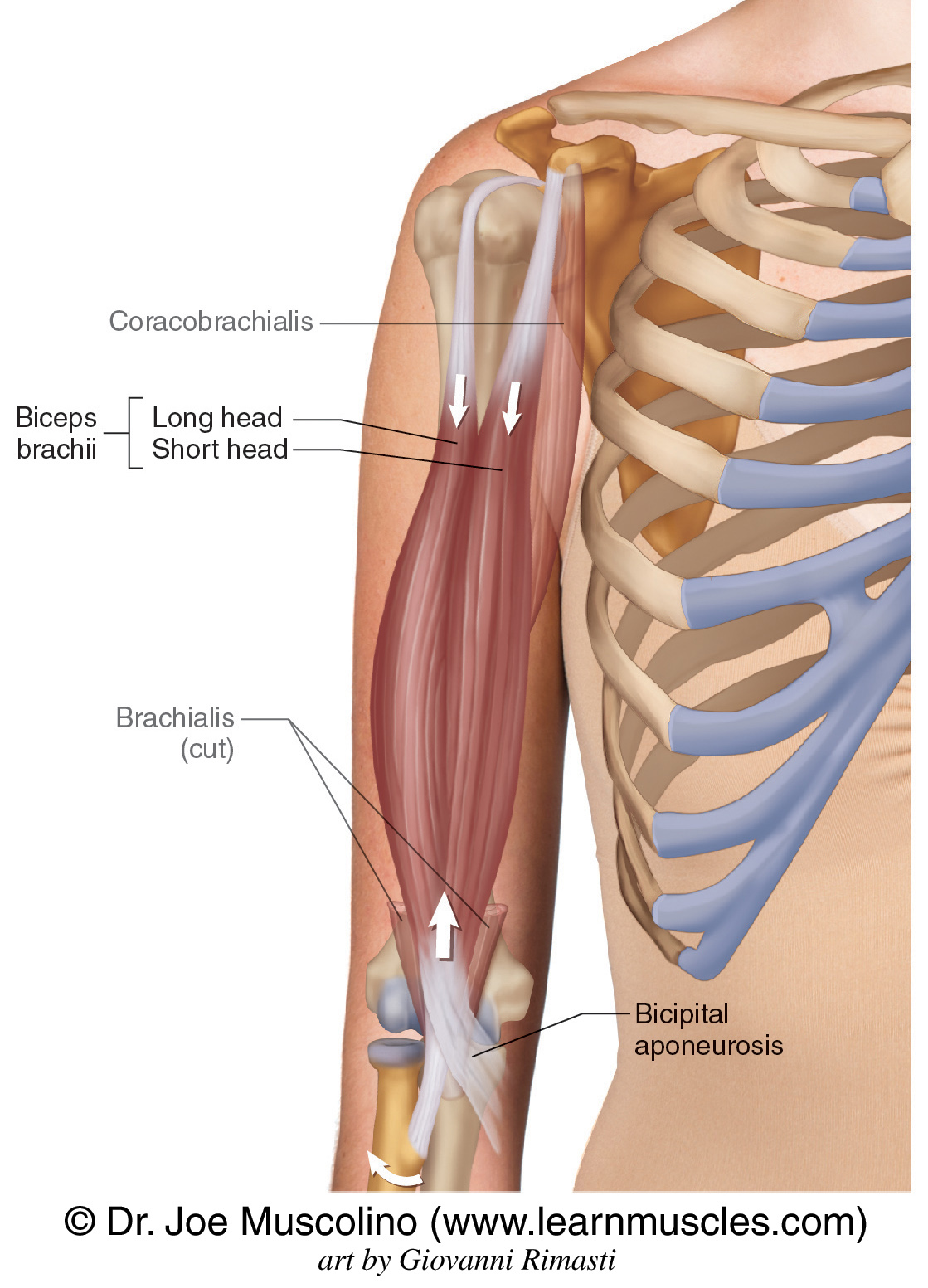
The biceps brachii gets plenty of attention, but its anatomy is often misunderstood. It consists of two distinct heads—the long head and the short head—that originate on the scapula and merge into a single tendon inserting at the radius.
While most people think the biceps only bends the elbow, its secondary job is just as important: supination, or rotating the forearm so your palm faces upward. For instance, when you turn a screwdriver or open a jar, your biceps contracts to assist that rotational torque. Because the long head crosses the shoulder joint, shoulder position changes how much tension the muscle experiences during exercise.
Brachialis: The Deep Powerhouse
Tucked underneath the biceps lies the brachialis. It attaches strictly from the lower half of the humerus to the ulna, making it a pure elbow flexor regardless of whether your palm faces up, down, or sideways.
When you develop the brachialis, it pushes the biceps upward, creating greater overall arm thickness and width from the side view. Hammer curls and reverse-grip movements target this deep muscle directly, building the structural foundation required for heavier pulling strength.
Triceps Brachii: The Extension Engine
Comprising roughly sixty percent of upper arm mass, the triceps brachii is responsible for straightening the arm. True to its name, it has three heads: the long head, lateral head, and medial head.
- Long head: Crosses the shoulder joint, assisting in shoulder extension and stabilization.
- Lateral head: Located on the outer side, responsible for the horseshoe shape visible from the side.
- Medial head: Positioned deeper near the elbow, active in every form of elbow extension.
You can't push heavy loads or lock out a press without robust triceps. Neglecting any of these heads limits your pressing power in compound movements like the bench press or overhead press.
The Forearm and Grip Mechanics
Moving past the elbow brings us to the antebrachium, or forearm. This complex area contains over twenty muscles split into flexors on the front and extensors on the back, controlling everything from wrist stability to fine finger dexterity.
The flexor compartment originates at the medial epicondyle of the humerus and powers your grip. Whether you're holding a barbell or carrying groceries, these muscles endure immense isometric tension. Conversely, the extensor compartment originates at the lateral epicondyle, straightening the wrist and fingers. Imbalances between these opposing compartments often lead to common overuse issues like tennis elbow, making structured forearm work a smart addition to any routine.
Practical Training Applications
To build functional, balanced arms, your training needs to mirror how these muscles operate in daily life. Isolation exercises have their place, but a comprehensive program requires a mix of compound pushing and pulling.
For hypertrophy, combine compound staples like chin-ups and close-grip bench presses with targeted isolation work like dumbbell curls and triceps pushdowns. For joint health and functional strength, incorporate loaded carries and wrist movements to fortify the smaller stabilizers.
Common Training Mistakes
Many trainees stall their progress by making a few predictable errors when training their upper limbs:
- Ignoring elbow and shoulder positioning: Failing to alter arm angles means you miss out on recruiting specific muscle heads, such as emphasizing the long head of the triceps with overhead extensions.
- Using excessive momentum: Swinging heavy weights during curls shifts the load away from the target muscles and onto the lower back and shoulders.
- Neglecting the forearms: Relying entirely on lifting straps stunts grip strength development, leaving your lower arms vulnerable to fatigue during heavy pulls.
Frequently Asked Questions
Do I need direct arm exercises if I already do heavy compound lifts?
Compound movements like rows and presses work the biceps and triceps, but they often act as secondary movers. Direct isolation work ensures complete development, especially for the brachialis and the long head of the triceps.
Why do my elbows hurt when I train triceps?
Elbow discomfort during heavy pressing or extensions often stems from lack of warm-up, excessive load, or neglecting the opposing forearm flexors. Make sure to prioritize gradual warm-ups and balanced training volume.
How often should I train my arms per week?
Most lifters benefit from hitting arm muscles two to three times per week, integrating direct work at the end of upper-body sessions or dedicating brief blocks to them with adequate recovery time.
Can I spot-reduce fat from my upper arms?
Spot reduction is a physiological myth. Reducing arm fat requires an overall caloric deficit combined with consistent resistance training and proper nutrition, as outlined by the Centers for Disease Control and Prevention.



