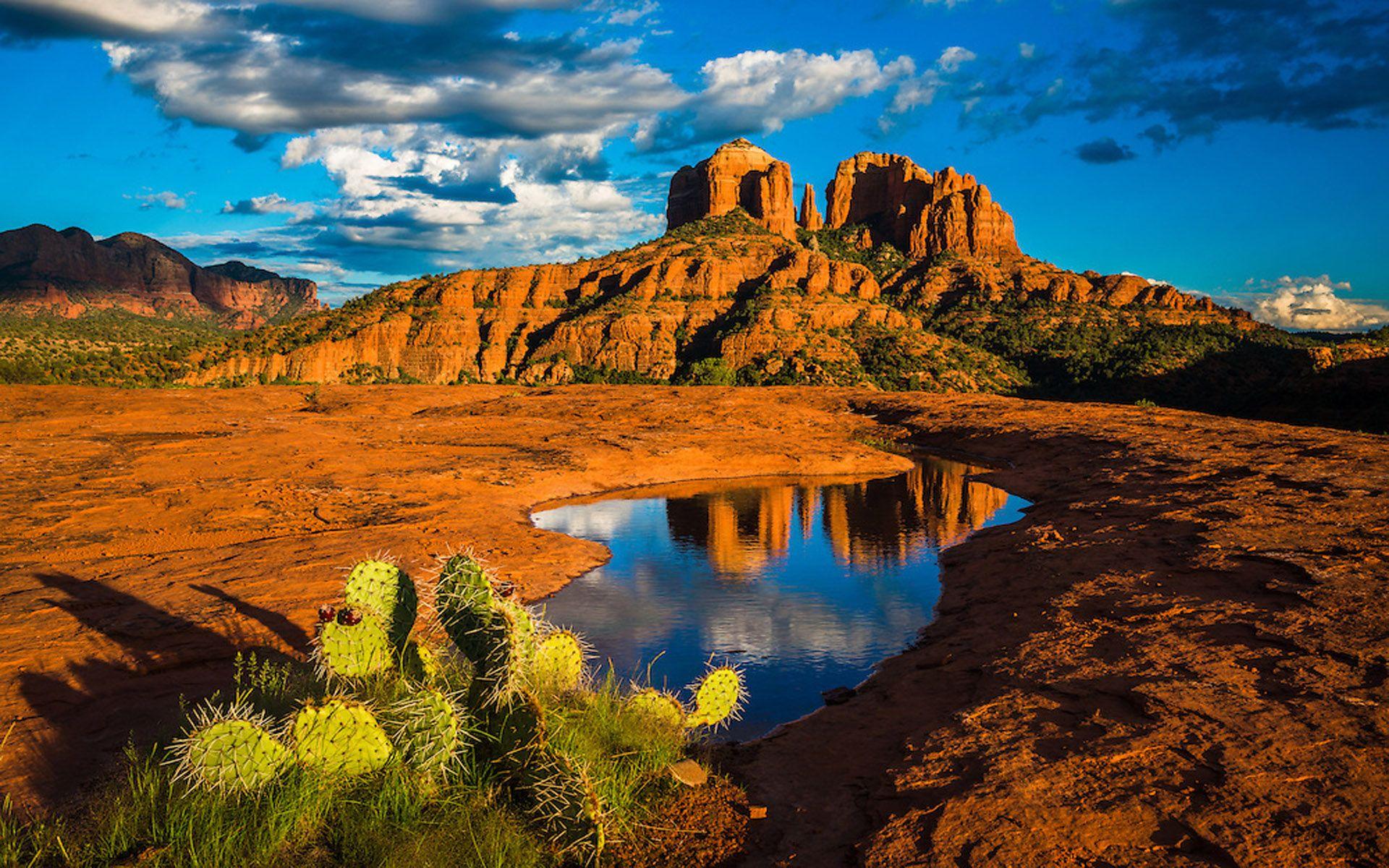
When people picture Arizona in December, they usually imagine sun-drenched pool parties, desert heat, and palm trees swaying in the afternoon breeze. That image holds true for parts of the state, like Phoenix or Tucson, where afternoon highs routinely hover in the comfortable mid-60s to low 70s. Yet, the Grand Canyon State harbors a sharp climatic secret. Step away from the southern desert valleys, and you'll find that winter brings freezing nights, biting winds, and deep blankets of mountain snow.
Understanding Arizona winter weather requires looking past the state's dry-heat reputation. Geography, elevation, and vast regional variations dictate what you'll actually experience on the ground. If you're planning a December trip, knowing how these climate zones interact will keep you from shivering in a light jacket or sweating through heavy layers where you least expect it.
The Great Arizona Climate Split
Arizona defies simple meteorological categorization because its landscape ranges from sub-sea-level desert basins to alpine peaks exceeding 12,000 feet. This dramatic shift in topography creates stark regional contrasts during the final month of the year.
In the southern deserts, December afternoons are crisp and clear. Cities like Phoenix and Yuma enjoy mild sunshine that makes outdoor exploring pleasant without the oppressive heat of summer. But just a few hours north, the terrain climbs onto the Colorado Plateau, where winter arrives in full force. To read more about the history of this, National Geographic Travel provides an informative summary.
- The Low Deserts: Expect daytime highs around 65 degrees Fahrenheit and nighttime lows dipping into the low 40s.
- The Transition Zone: Mid-elevation towns like Sedona and Prescott experience cooler days in the low 50s, with frost common overnight.
- The High Country: Flagstaff and the Grand Canyon South Rim regularly see daytime highs stuck in the low 40s, while nighttime lows plunge deep into the teens.
Grand Canyon Realities in December
The Grand Canyon serves as the ultimate example of how elevation rewrites Arizona's weather narrative. While travelers often assume the entire state stays warm year-round, the South Rim sits at roughly 7,000 feet above sea level.
In December, average daily highs on the South Rim sit near 43 degrees, and lows drop to around 17 degrees. Snowstorms are common, coating the red rock formations in striking white dust. Meanwhile, hikers who trek down into the Inner Canyon to Phantom Ranch find a completely different climate. Down at the river level, December highs reach a mild 56 degrees with overnight lows around 36 degrees.
This microclimate shift means you can experience winter snow at the rim and comfortable spring-like hiking conditions a few thousand vertical feet below. Check current trail conditions through the NPS Grand Canyon portal before attempting a descent.
Packing Strategies for Mixed Zones
Packing for an Arizona winter trip requires a modular approach. If your itinerary includes both Phoenix and Flagstaff, your suitcase needs to cover two distinct seasons.
- Layering is mandatory: Bring moisture-wicking base layers, a fleece or wool mid-layer, and a wind-resistant, insulated outer shell for northern elevations.
- Footwear matters: Leave the sandals at home if you're heading north. Waterproof hiking boots and traction devices like microspikes are essential if icy trails linger after a storm.
- Sun protection: Even when temperatures drop, Arizona's high-altitude sun remains intense. Pack polarized sunglasses and high-SPF sunscreen, especially if you're exploring snowy landscapes where glare multiplies.
- Vehicle readiness: If you're driving through northern mountain passes, check your tire tread and keep an ice scraper in the trunk. Sudden winter storms can trigger temporary highway restrictions. Monitor state road conditions via the ADOT Travel Information Site.
Common Planning Mistakes to Avoid
Travelers often stumble into predictable traps when booking a winter getaway to the Grand Canyon State.
The biggest error is assuming uniform weather. Packing only t-shirts and shorts because "Arizona is warm" will leave you miserable during a chilly evening in Flagstaff or Sedona. Another frequent mistake involves ignoring facility closures. For instance, the North Rim of the Grand Canyon closes its entrance road and all visitor facilities for the winter season starting in December, making it accessible only by rugged backcountry hiking or cross-country skiing.
Finally, don't underestimate how quickly the sun sets during December. Short daylight hours mean your outdoor adventure window closes much faster than it does in mid-summer, cutting down travel time between scenic viewpoints.
Frequently Asked Questions
Does it snow everywhere in Arizona during December?
No. Snow is common in high-elevation regions like Flagstaff, the White Mountains, and the Grand Canyon South Rim, but southern desert cities like Phoenix, Tucson, and Yuma virtually never see snow.
Can I hike the Grand Canyon in December?
Yes, winter is a fantastic time to hike because crowds thin out significantly. However, you must check trail conditions for ice on the upper stretches of the South Rim trails, and always carry extra layers for the chilly start.
Which part of Arizona is warmest in the winter?
The southwestern desert region, particularly around Yuma and the lower desert stretches near the Mexican border, consistently records the highest winter temperatures in the state.
Are park roads open during winter storms?
Main roads like those on the Grand Canyon South Rim are kept clear by snowplows, but temporary closures can happen during active blizzards. Always verify road status before heading into the mountains.


